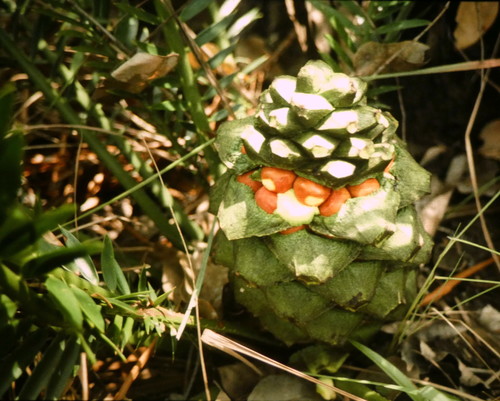
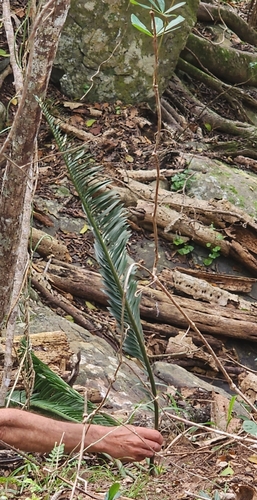
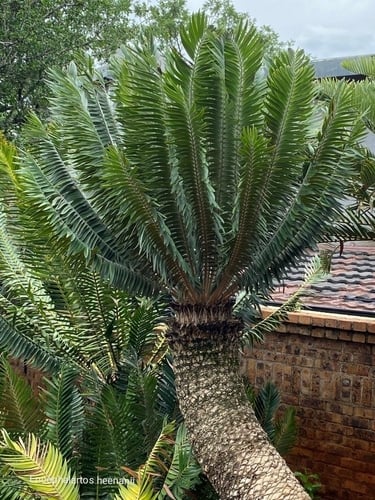
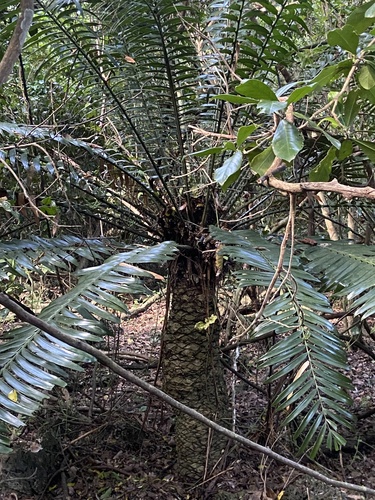
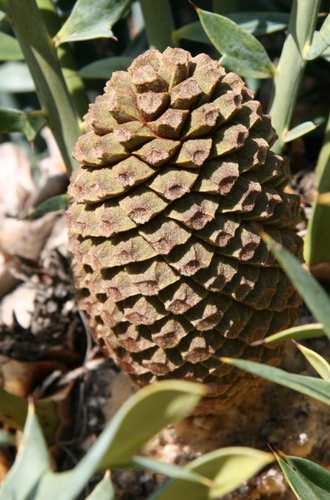
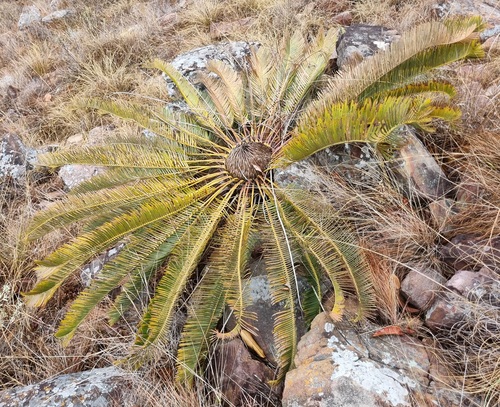
Zamia floridana
A. DC.
Seminole Bread
iNaturalist· cc-by
(c) Ashwin Srinivasan, some rights reserved (CC BY)
iNaturalist· cc-by
(c) Ashwin Srinivasan, some rights reserved (CC BY)
iNaturalist· cc-by
(c) Ashwin Srinivasan, some rights reserved (CC BY)
Description
A small cycad from subtropical and tropical regions. The plant yields starch from both its roots and trunk that can be processed into an arrowroot-type starch.
Edible Uses
The roots when properly prepared yield an arrowroot-type starch used for bread or porridge. The trunk also yields starch. Seeds and stem starch are edible portions.
Traditional Uses
The roots when properly prepared yield an arrowroot type starch used for bread or porridge. The trunk yields a starch.
This uses section is brief — help expand it
Known Hazards
The whole plant, except for the sarcotesta, the pulpy covering of the seeds, is very toxic, containing a toxin called cycasin which can cause liver failure that can lead to death, but if proper precautions are taken it can be leached with water due to it being a water-soluble molecule. The seeds also contain a toxic glycoside which causes headaches, vomiting, stomach pains and diarrhoea if ingested, and Beta-methylamino-alanine, which can cause central nervous system failure.
Distribution
It is a subtropical and tropical plant. In Rockhampton Botanical Gardens.
Where It Grows
Australia, Bahamas, Central America, Cuba, North America, Pakistan, Puerto Rico, USA, West Indies,
Notes
There are about 55 Zamia species.
Synonyms
Also Known As
Comptie, Coontie
References (12)
- Beckstrom-Sternberg, Stephen M., and James A. Duke. "The Foodplant Database." http://probe.nalusda.gov:8300/cgi-bin/browse/foodplantdb.(ACEDB version 4.0 - data version July 1994)
- Facciola, S., 1998, Cornucopia 2: a Source Book of Edible Plants. Kampong Publications, p 247
- Flora of Pakistan. www.eFloras.org (As Zamia angutifolia)
- Hedrick, U.P., 1919, (Ed.), Sturtevant's edible plants of the world. p 692 (As Zamia tenuis)
- Hibbert, M., 2002, The Aussie Plant Finder 2002, Florilegium. p 310
Show all 12 references Hide references
- Jones, D.L., 2000, Cycads of the world. Reed New Holland. p 280
- Kermath, B. M., et al, 2014, Food Plants in the Americas: A survey of the domesticated, cultivated and wild plants used for Human food in North, Central and South America and the Caribbean. On line draft. p 936
- Lim, T. K., 2015, Edible Medicinal and Non Medicinal Plants. Volume 9, Modified Stems, Roots, Bulbs. Springer p 87
- Morton,
- Prodr. 16(2):544. 1868
- Saunders, C.F., 1948, Edible and Useful Wild Plants. Dover. New York. p 28
- Wickens, G.E., 1995, Edible Nuts. FAO Non-wood forest products. FAO, Rome. p 179