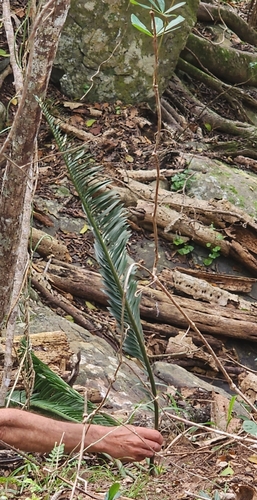
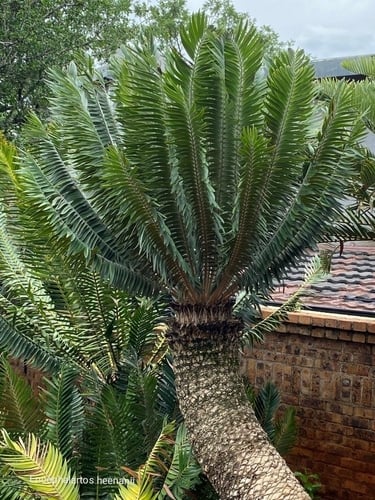
Zamia furfuracea
L. f.
Sago cycad, Cardboard palm cycad
iNaturalist· cc-by
(c) tanetahi, some rights reserved (CC BY)
iNaturalist· cc0
no rights reserved, uploaded by S.MORE
iNaturalist· cc-by-nc
(c) Jonathan Zavala, some rights reserved (CC BY-NC), uploaded by Jonathan Zavala
Summary
Source: WikipediaZamia furfuracea is a species of cycad endemic to southeastern Veracruz state in eastern Mexico.
Description
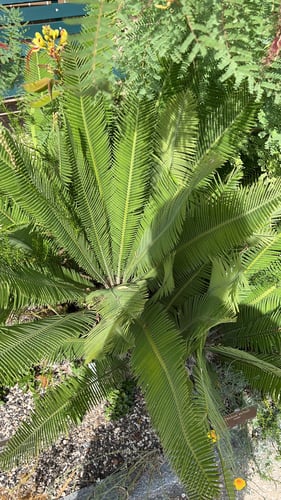
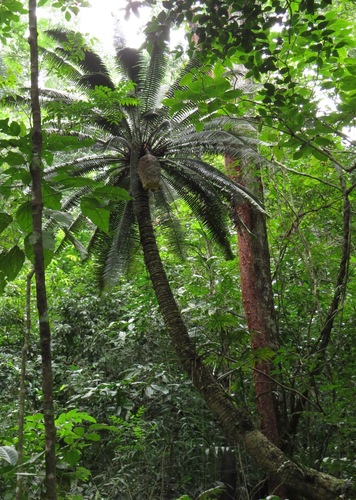
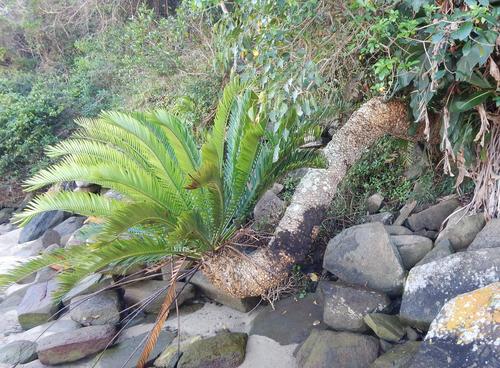
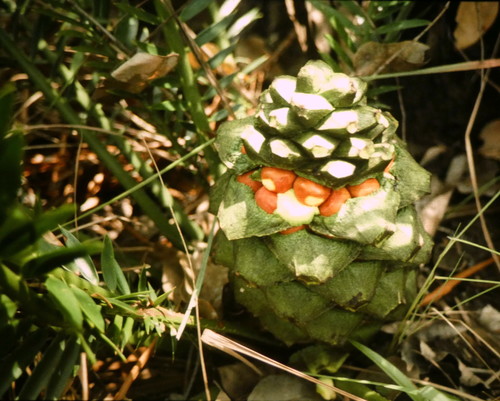
A small plant. It grows 0.9 m high and spreads 2 m wide. The stems are like cylinders and are underground. It forms spreading mounds. The leaves have leaflets along the stalk. The leaflets are broad, hairy and stiff. The leaflets are leathery and olive green. They are on spiny stalks. The fruit are pink to red cones. The seeds are 2 cm long and orange-red.
Edible Uses
The plant is a source of sago and starch.
Known Hazards
All parts of the plant contain Cycasin and an unknown nervous system toxin which are poisonous to animals, including humans. The seeds are poisonous enough to kill small mammals such as dogs and cats, and cause liver and kidney failure, as well as eventual paralysis in humans. Dehydration sets in very quickly. No treatment for the poisoning is currently known.
Distribution
A tropical plant. It can grow in warm temperate places. It needs well drained soil. It can tolerate light shade. It can tolerate drought. It suits hardiness zones 11-12. In XTBG Yunnan.
Where It Grows
Asia, Australia, Belize*, Central America, China, Hawaii, Indonesia, Jamaica, Marquesas, Marshall Islands, Mexico*, Micronesia, North America, Pacific, SE Asia, South America, USA, West Indies,
Cultivation
It is grown from seed. They can also be grown from suckers.
Production
Plants are slow growing.
Also Known As
Cardboard palm, Florida arrowroot, Sikas palem karton
References (10)
- W. Aiton, Hort. kew. 3:477. 1789
- Cundall, P., (ed.), 2004, Gardening Australia: flora: the gardener's bible. ABC Books. p 1493
- Hedrick, U.P., 1919, (Ed.), Sturtevant's edible plants of the world. p 691
- Hibbert, M., 2002, The Aussie Plant Finder 2002, Florilegium. p 310
- http://www.botanic-gardens-ljubljana.com/en/plants
Show all 10 references Hide references
- Kermath, B. M., et al, 2014, Food Plants in the Americas: A survey of the domesticated, cultivated and wild plants used for Human food in North, Central and South America and the Caribbean. On line draft. p 937
- Marinelli, J. (Ed), 2004, Plant. DK. p 381
- Staples, G.W. and Herbst, D.R., 2005, A tropical Garden Flora. Bishop Museum Press, Honolulu, Hawaii. p 77
- Sukarya, D. G., (Ed.) 2013, 3,500 Plant Species of the Botanic Gardens of Indonesia. LIPI p 832
- Vander Velde, N, 2003, The Vascular Plants of Majuro Atoll, Republic of the Marshall Islands. Atoll research Bulletin. No. 503. Smithsonian Institute. p 16