Dillenia scabrella
(D. Don.) Roxb. ex Wall.
wikimedia· cc0
Wikimedia Commons - Curtis, Charles M.; Drake, S. A.; Gorachaud.; Treuttel and Würtz.; Vishnupersaud.; Wallich, N.
Summary
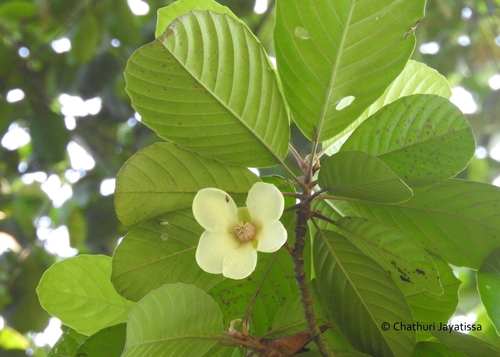
Source: WikipediaDillenia scabrella is an Asian tree species in the family Dilleniaceae. This species has been recorded from: Bangladesh, Cambodia, Laos, Myanmar, Thailand and Vietnam (where they are called sổ nhám).
Description
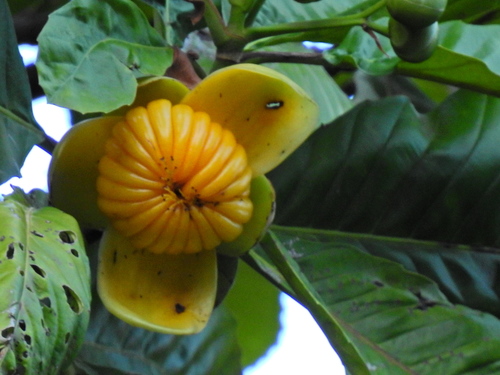
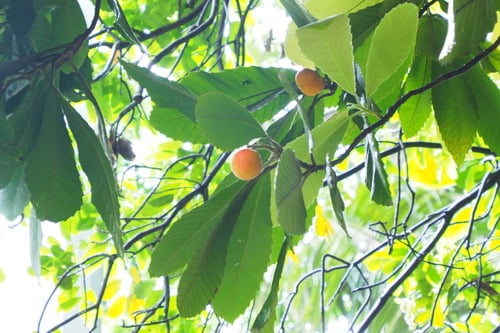
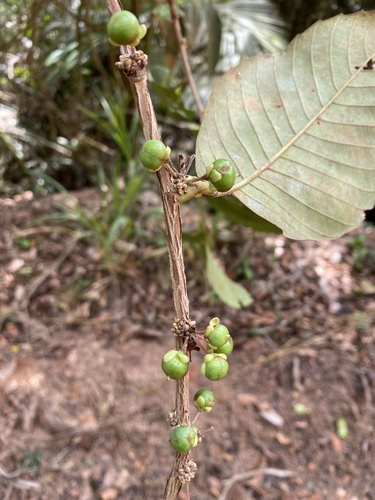
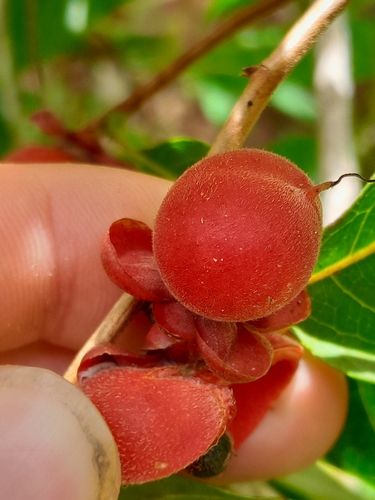
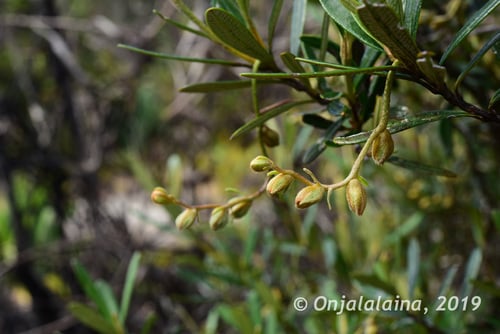
A tree that loses its leaves. It grows 20-30 m tall. The trunk branches early. The crown is spreading. The leaves are 18 cm long and grouped at the very ends of the twigs. The fruit are yellow. They can occur singly or in clusters of 2-7. The fruit is round but flattened. It is 8-10 cm across.
Edible Uses
Ripe fruit with a sour taste are eaten raw, cooked as a vegetable, or pickled; flowers are also eaten.
Traditional Uses
The ripe fruit are eaten. They have a sour taste. They can be eaten raw or cooked as a vegetable. They are also pickled. The flowers are eaten.
This uses section is brief — help expand it
Distribution
A tropical plant. It grows in dense forest. Trees are usually near river banks. Often they are on sites they are occasionally flooded. They require light and humidity.
Where It Grows
Asia, Cambodia, Himalayas, India, Indochina, Laos, Myanmar, Northeastern India, SE Asia, Vietnam,
Production
Trees are fast growing. In India plants flower and fruit March to July,
Other Information
Fruit are sold in markets.
Notes
There are about 60 Dillenia species.
Synonyms
Also Known As
Agatchi-badura, Akachi, Baji ou, Banji-oi, Banji-ou, Byu, Chirinso, Hargeza, Panilewa, Phlu phnom, Shiti kozu tilaba, So ba, So nham, So nuoc
References (17)
- Ambasta, S.P. (Ed.), 2000, The Useful Plants of India. CSIR India. p 173
- Baishya, S. Kr., et al, 2013, Survey of Wild Edible Fruits of Dhubri District, Assam, India. Plant Archives Vol 13 (1): 155-158
- Dobriyal, M. J. R. & Dobriyal, R., 2014, Non Wood Forest Produce an Option for Ethnic Food and Nutritional Security in India. Int. J. of Usuf. Mngt. 15(1):17-37
- Forest Inventory and Planning Institute, 1996, Vietnam Forest Trees. Agriculture Publishing House p 120
- Hedrick, U.P., 1919, (Ed.), Sturtevant's edible plants of the world. p 271
Show all 17 references Hide references
- Jeeva, S., 2009, Horticultural potential of wild edible fruits used by the Khasi tribes of Meghalaya. Journal or Horticulture and Forestry Vol. 1(9) pp. 182-192
- Mozhui, R., et al, 2011, Wild edible fruits used by the tribals of Dimapur district of Nagaland, India. Pleione 5(1): 56 - 64.
- Patiri, B. & Borah, A., 2007, Wild Edible Plants of Assam. Geethaki Publishers. p 18
- Pham-Hoang Ho, 1999, An Illustrated Flora of Vietnam. Nha Xuat Ban Tre. p 406
- Phangchopi, U., et al, 2015, Diversity of wild edible plants in Marat Longri Wildlife Sanctuary, Assam. Indian Journal of Natural Products and Resources Vol. 6(4), December 2015 pp. 305-313
- Phon, P., 2000, Plants used in Cambodia. © Pauline Dy Phon, Phnom Penh, Cambodia. p 234
- Sarma, H., et al, 2010, Updated Estimates of Wild Edible and Threatened Plants of Assam: A Meta-analysis. International Journal of Botany 6(4): 414-423
- Sawian, J. T., et al, 2007, Wild edible plants of Meghalaya, North-east India. Natural Product Radiance Vol. 6(5): p 415
- Singh, H. B., Arora, R. K., 1978, Wild edible Plants of India. Indian Council of Agricultural Research, New Delhi. p 54
- Singh, V. B., et al, (Ed.) Horticulture for Sustainable Income and Environmental Protection. Vol. 1 p 215
- Tsering, J., et al, 2017, Ethnobotanical appraisal on wild edible plants used by the Monpa community of Arunchal Pradesh. Indian Journal of Traditional Knowledge. Vol 16(4), October 2017, pp 626-637
- Wild edible plants of Himachal Pradesh