Dillenia philippinensis
Rolfe
Katmon, Philippines simpoh tree
iNaturalist· cc-by-nc
(c) lenisutcliffe, some rights reserved (CC BY-NC)
iNaturalist· cc-by-nc
(c) Ultraman Max, some rights reserved (CC BY-NC)
Summary
Source: WikipediaDillenia philippinensis (katmon) is a species of flowering plant in the family Dillenaceae. It is endemic to the Philippines and can be used for urban greening. Its fruit is known as elephant apple. Katmon grows in low to medium altitude forests throughout the Philippines, but does not survive the cold climates of the uplands. Katmon is featured on the reverse side of the Philippine twenty-five centavo coin since 2018 as part of the New Generation Currency Coin Series.
Description
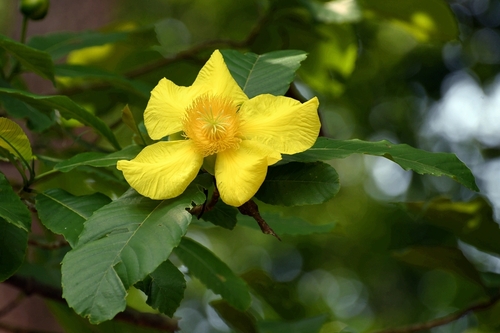
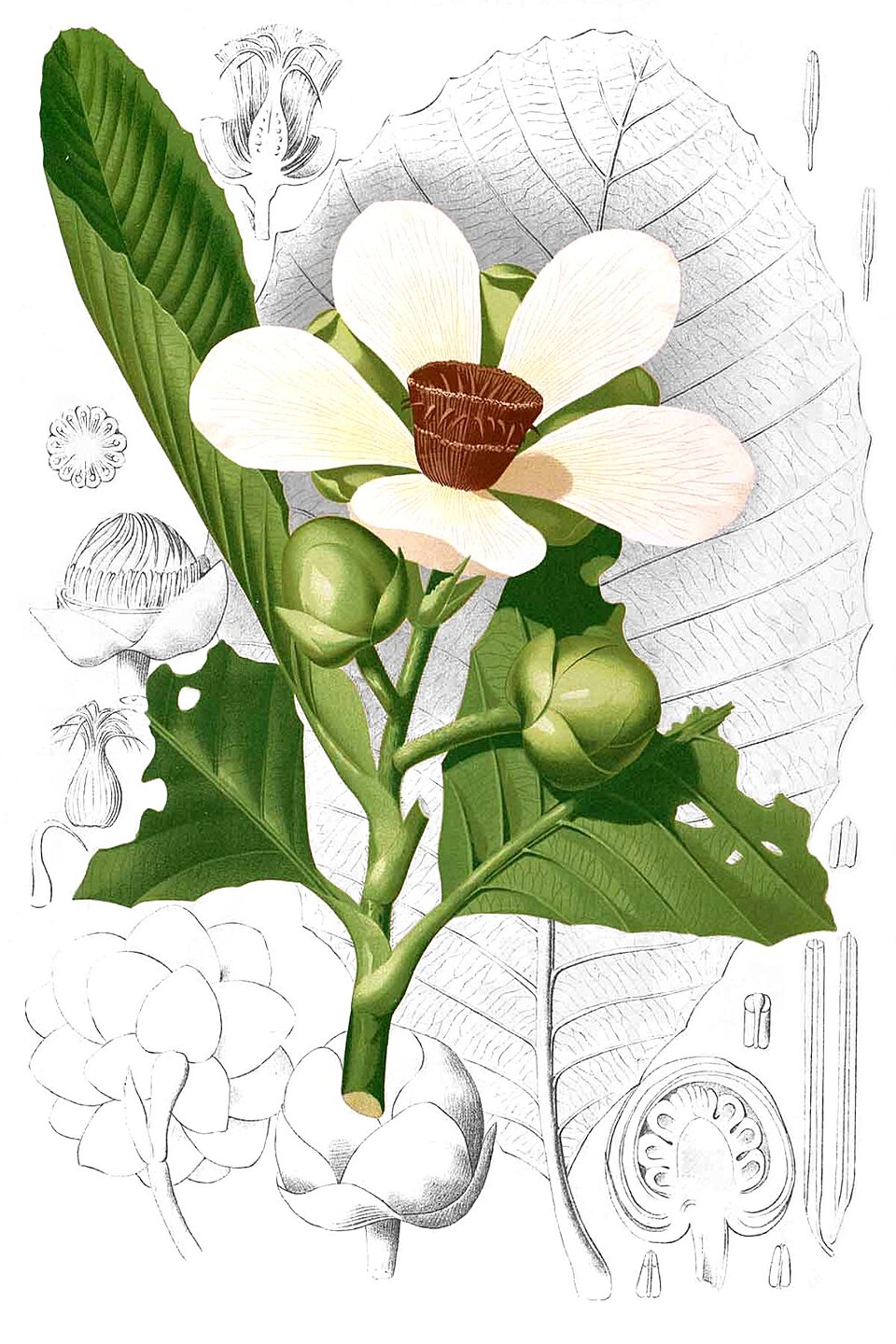
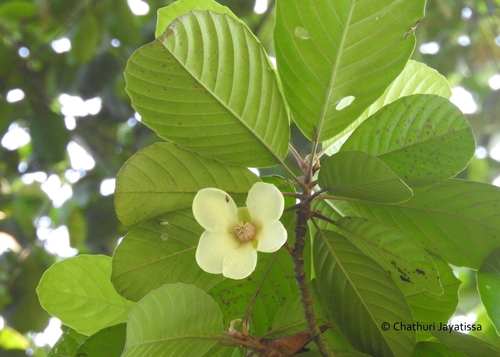
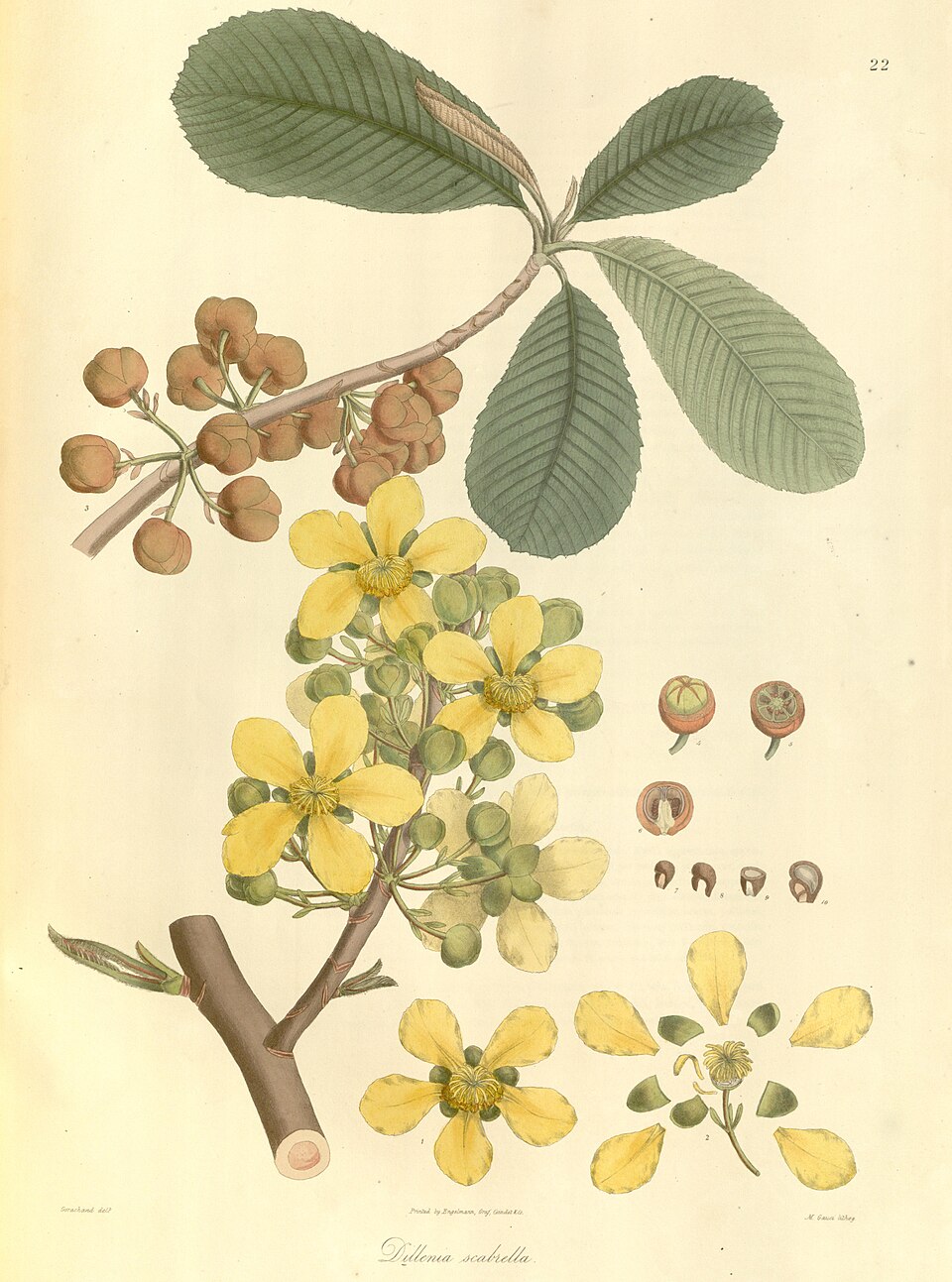
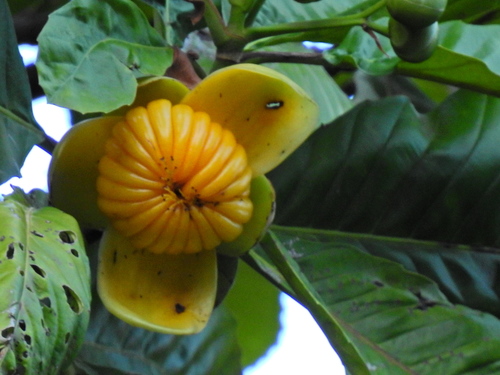
A medium sized shrubby tree. It grows 12 m high. The trunk can be 30 cm across. The bark is reddish. The leaves are leathery, shiny, oval and coarsely toothed. They are 10-20 cm long by 7-12 cm wide. The flowers are large showy and 15-18 cm across. The petals are white and the stamens purple. The fruit are round and enclosed by fleshy sepals. The fruit are 5 to 6 cm across with soft pulp. The fleshy sepals of the fruit are edible.
Edible Uses
The fleshy sepals of the fruit are edible and eaten raw. They are sour and can be used for flavouring fish dishes, jellies, preserves, curries, and drinks.
Traditional Uses
The fruit (fleshy sepals) are eaten raw and also used for flavouring fish dishes. They can be used in jellies, preserves, curries and drinks. They are sour.
Medicinal Uses
The fruit, called "elephant apple", has a diameter that is around five to six centimeters. It contains a soft, fleshy, green, and edible pulp with a flavor similar to a sour green apple. It is used to make sauces, jams, and flavoring for fish. The fruit's acid is mixed with sugar to make a traditional cure for cough. It is also used to clean the hair. The tree is harvested for its timber as it is suitable for furniture and cabinet making. The wood has a beautiful silver grain similar to a quartered oak. A red dye can also be obtained from the bark.
Distribution
A tropical plant. Very common and widely distributed in the islands of the Philippines at low and medium altitudes. In Brisbane Botanical gardens.
Where It Grows
Asia, Australia, Cuba, Hawaii, Indonesia, Pacific, Philippines*, SE Asia, Singapore, USA, West Indies,
Cultivation
Plants can be grown by seeds or cuttings.
Other Uses
A red dye is obtained from the bark. The fruit pulp is used as a hair shampoo. A useful timber. We do not have any more specific information on this species, but the following is a general description of the wood in this genus:- Excepting for a wide range of colour, from light brick red to very dark reddish brown, the wood of all the Philippine species of Dillenia is practically identical in general appearance as well as in structure, and is known in the Philippine market as catmon. The heartwood is light brick red to dark reddish brown; it is not sharply demarcated from the pale red sapwood. The texture is rather coarse in appearance; the grain sometimes fairly straight, but generally very curly and twisted, hence difficult to split; somewhat lustrous; without distinctive odour or taste. The wood is hard; heavy, somewhat durable and is not attacked by beetles. It seasons well, checking and warping very little. It is difficult to saw, the very fine sawdust tends to clog the saw, but is otherwise fairly easy to work. It can be used for posts above stumps; beams, joists, rafters; flooring; sheathing and ceiling; furniture and cabinetwork; musical instruments; paving blocks and mine timbers (impregnated). A wood that, on account of its unusual flake grain, should be much more used for cabinetwork and would make a most beautiful veneer.
Notes
There are about 60 Dillenia species.
Nutrition
| Part | Moisture | kJ | kcal | Protein | Vit A | Vit C | Iron | Zinc |
|---|---|---|---|---|---|---|---|---|
| Fruit | 91.7 | 121 | 29 | 0.3 | — | — | 0.1 | — |
Synonyms
Also Known As
Kagemgem, Kusikus, Palali, Pohon sempur filipina, Ukkapon, Uppakon
References (20)
- Barcelo, R., 2015, Phytochemical Screening and Antioxidant Activity of Edible Wild Fruits in Benguet, Cordillera Administrative Region, Philippines. Electronic Journal of Biology, 2015, Vol.11(3): 80-89
- Barwick, M., 2004, Tropical and Subtropical Trees. A Worldwide Encyclopedic Guide. Thames and Hudson p 145
- Brown, W.H., 1920, Wild Food Plants of the Philippines. Bureau of Forestry Bulletin No. 21 Manila. p 116
- Carig, Elizabeth T., 2020, Guidebook on Native Trees within the Quirino Forest Landscape. Plaridel, Bulacan, St. Andrew Publishing House. p 75
- Chua-Barcelo, R. T., 2014, Ethnobotanical survey of edible wild fruits in Benguet, Cordillera administrative region, the Philippines. Asian Pac. J. Trop. Biomed. 4(Suppl. 1):S525-S538
Show all 20 references Hide references
- Coronel, R.E., 1982, Fruit Collections in the Philippines. IBPGR Newsletter p 6
- Facciola, S., 1998, Cornucopia 2: a Source Book of Edible Plants. Kampong Publications, p 91
- Food Composition Tables for use in East Asia FAO http://www.fao.org/infoods/directory No. 855
- J. Linn. Soc., Bot. 21:307. 1884
- Menisa, A. A., et al, 2012, Survey and characterization of Indigenous Food Plants in Ilocos Norte, Philippines. SEARCA Discussion Paper series No. 2011-2
- Miguel, E., et al, 1989, A checklist of the cultivated plants of Cuba. Kulturpflanze 37. 1989, 211-357
- Monsalud, M.R., Tongacan, A.L., Lopez, F.R., & Lagrimas, M.Q., 1966, Edible Wild Plants in Philippine Forests. Philippine Journal of Science. p 458
- Oldfield, S., et al, 1998, The World List of Threatened Trees. World Conservation Press. p 176
- Staples, G.W. and Herbst, D.R., 2005, A tropical Garden Flora. Bishop Museum Press, Honolulu, Hawaii. p 270
- Sukarya, D. G., (Ed.) 2013, 3,500 Plant Species of the Botanic Gardens of Indonesia. LIPI p 231
- Tanaka,
- Uphof,
- USDA, ARS, National Genetic Resources Program. Germplasm Resources Information Network - (GRIN). [Online Database] National Germplasm Resources Laboratory, Beltsville, Maryland. Available: www.ars-grin.gov/cgi-bin/npgs/html/econ.pl (10 April 2000)
- Wiersema, J. H. & Leon, B., 2013, World Economic Plants. A Standard Reference CRC Press. 2nd Ed. p 246
- World Checklist of Useful Plant Species 2020. Royal Botanic Gardens, Kew