Dillenia reifferscheidtia
Fern.-Villar
wikimedia· cc0
Wikimedia Commons - Francisco Manuel Blanco (O.S.A.)
wikimedia· cc0
Wikimedia Commons - Francisco Manuel Blanco (O.S.A.)
Description
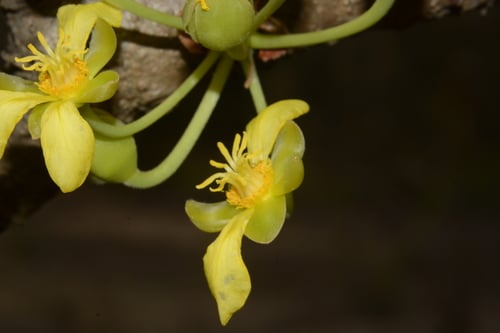
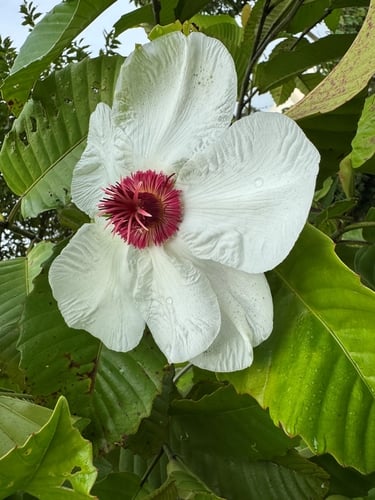
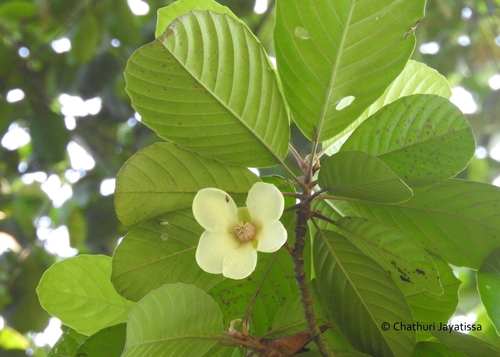
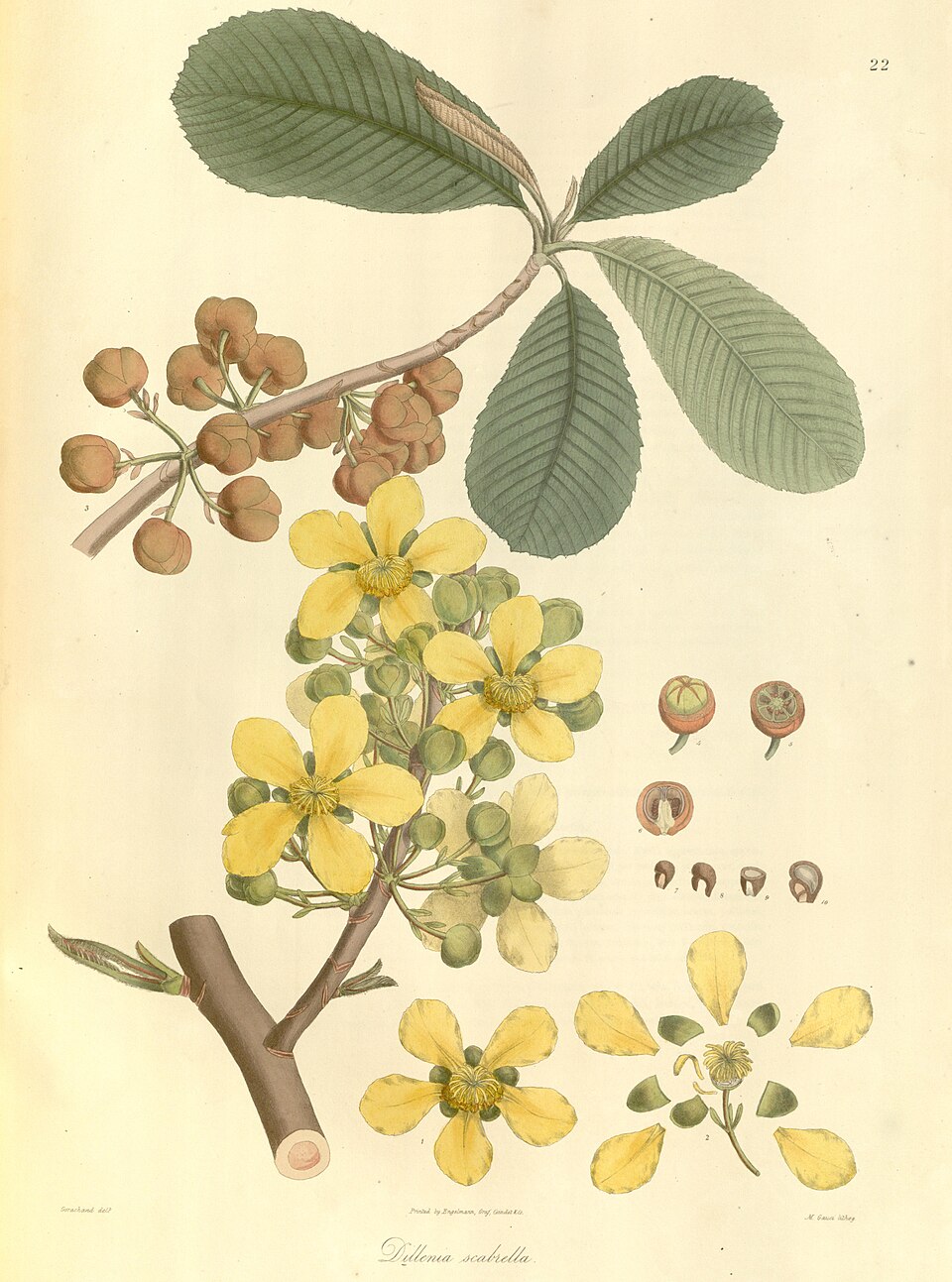
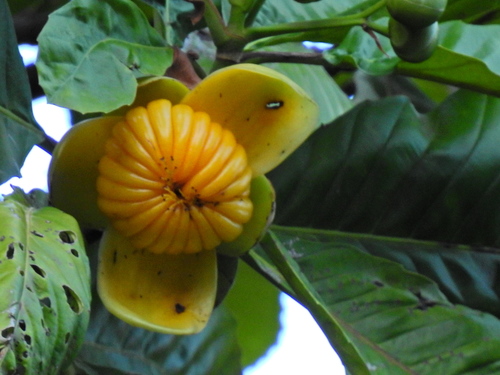
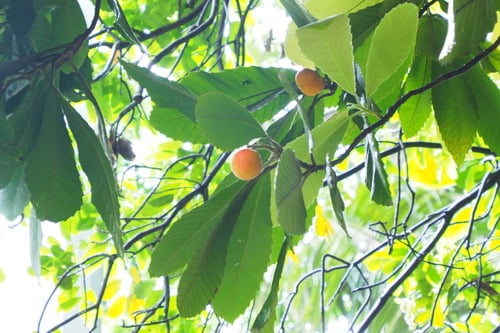
A large tree. It grows 11 m tall. The trunk can be 60 cm across. The leaves are alternate, smooth and very large. They are narrowly oval and 15-40 cm long by 10-30 cm wide. The leaf stalks have wings. The flowers are very large, white and showy. They can occur singly or as 2-3 together. The flowers are 7.5 cm across. The fruit are green and fleshy. It is like a flattened berry and 3.5 cm long by 6 cm wide. There are 5 seed in a section. The edible portion is green, juicy and acidic. The seeds are black.
Edible Uses
The fruit is eaten raw and used for jam or sauce, valued for its refreshing acidic juice.
Traditional Uses
The fruit are eaten raw and used for jam or sauce.
This uses section is brief — help expand it
Distribution
A tropical plant. They occur mostly at medium altitudes in the Philippines and are very common from central Luzon to southern Mindanao. It grows up to 200 m altitude.
Where It Grows
Asia, Pacific, Philippines*, SE Asia,
Cultivation
Plants can be grown from seeds. It can also be grown from cuttings of mature branches.
Other Information
The fruit are eaten for the refreshing acid juice.
Notes
There are about 60 Dillenia species.
Also Known As
Balali, Katmon-kalabau, Palali
References (7)
- Blanco. Fl. Philipp. Ed. Iii. Nov. App. 3. 1880
- Brown, W.H., 1920, Wild Food Plants of the Philippines. Bureau of Forestry Bulletin No. 21 Manila. p 116
- Monsalud, M.R., Tongacan, A.L., Lopez, F.R., & Lagrimas, M.Q., 1966, Edible Wild Plants in Philippine Forests. Philippine Journal of Science. p 459
- Oldfield, S., et al, 1998, The World List of Threatened Trees. World Conservation Press. p 176
- Polinag, M. A., 2003, Food from the Wilderness. Department of Environment and Natural Resources. Laguna.
Show all 7 references Hide references
- Verheij, E. W. M. and Coronel, R.E., (Eds.), 1991, Plant Resources of South-East Asia. PROSEA No 2. Edible fruits and nuts. Pudoc Wageningen. p 327
- World Checklist of Useful Plant Species 2020. Royal Botanic Gardens, Kew