Dillenia megalantha
Merr.
Philippine dillenia tree
gbif· cc0
President and Fellows of Harvard College
gbif· cc0
President and Fellows of Harvard College
gbif· cc0
President and Fellows of Harvard College
Description
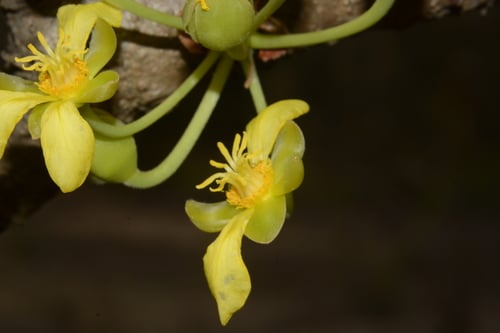
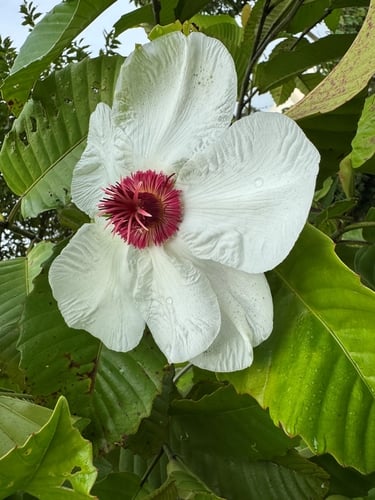
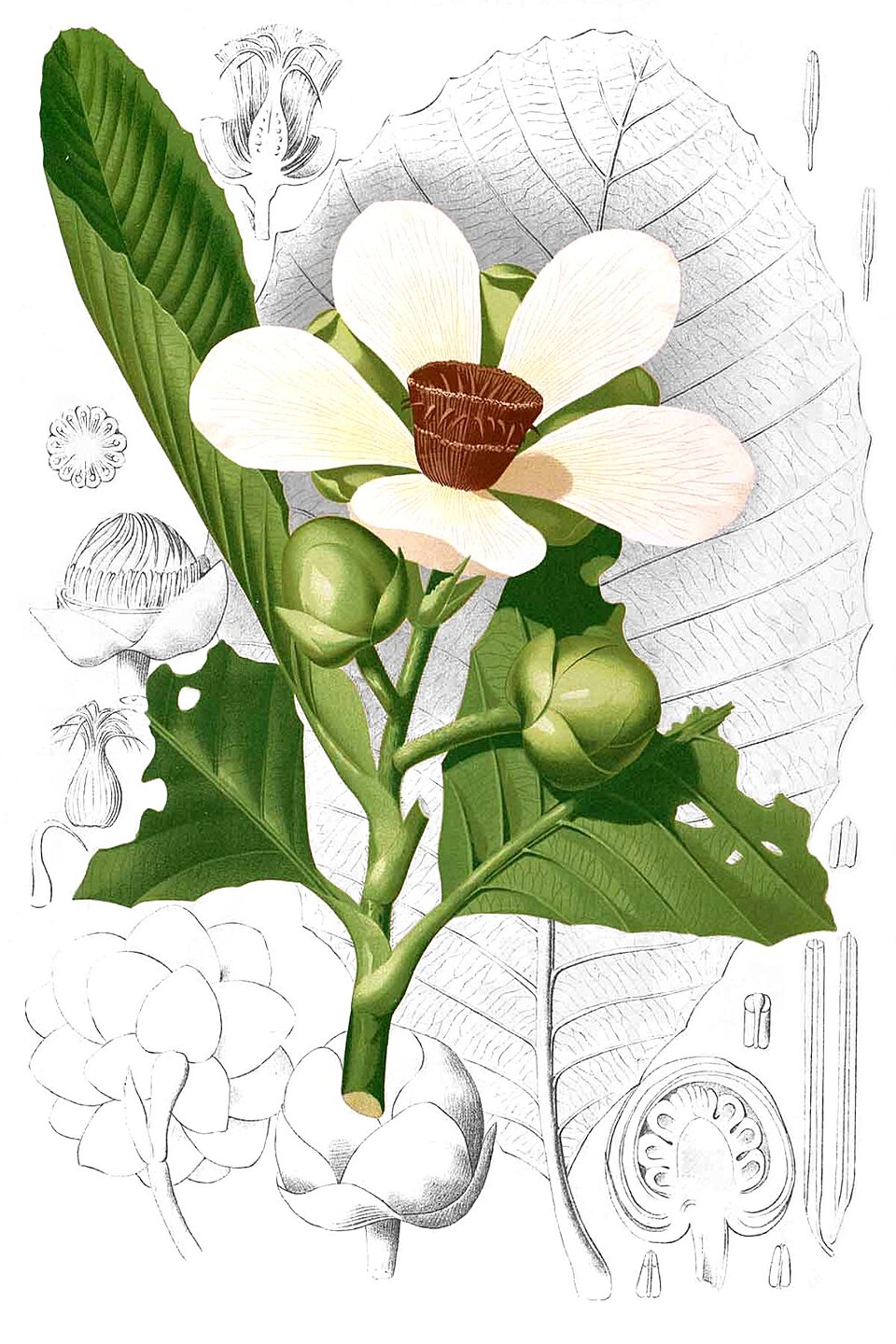
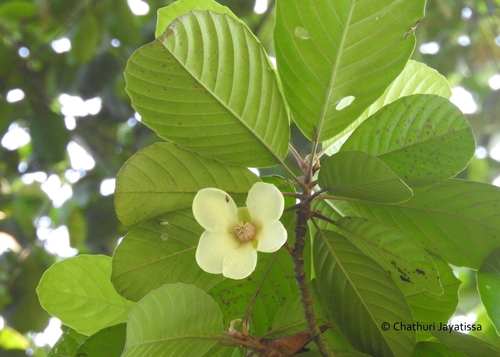
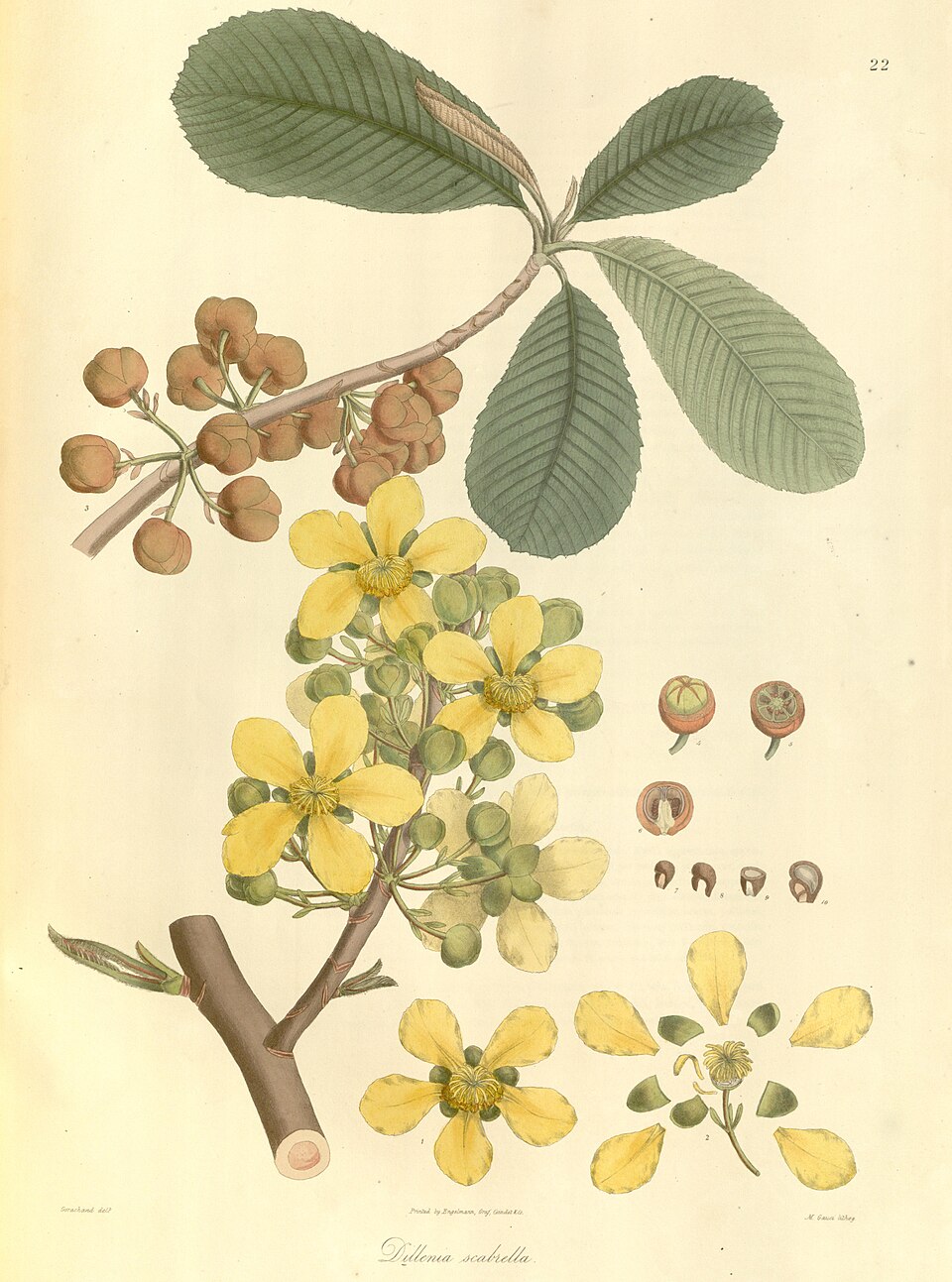
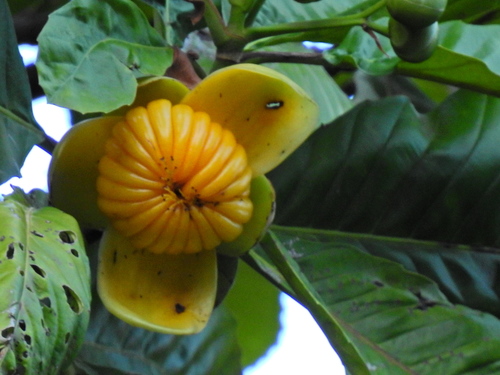
A medium sized tree. It grows 20-40 m tall. The trunk can be 40 cm across. The leaves are oblong and 25-70 cm long by 8-25 cm wide. The leaf stalks have wings. The leaves are leathery and prominently toothed. The flowers are yellow and 10 cm across. The fruit are large and round. It is 5-7.5 cm across. It has fleshy sepals around it. There is 1 seed. The seed are 6 mm long by 4 mm wide.
Edible Uses
Fruit - an acid flavour. Used for preserves. Fleshy and juicy. The green, berry-like, globose fruit is 5 - 7.5cm in diameter. Fleshy petals. Used in preserves.
Traditional Uses
The fleshy green portion of the fruit is eaten raw. It can be used for preserves.
This uses section is brief — help expand it
Distribution
A tropical plant. In the Philippines occurs only from Quezon, Camarines, Sorsogon, Samar and Leyte growing in primary forest at low altitudes. It grows up to 1000 m altitude.
Where It Grows
Asia, Indonesia, Pacific, Philippines*, SE Asia,
Cultivation
Plants can be grown by seeds and cuttings.
Other Uses
A commercial source of timber. We do not have any more specific information on this species, but the following is a general description of the wood in this genus:- Excepting for a wide range of colour, from light brick red to very dark reddish brown, the wood of all the Philippine species of Dillenia is practically identical in general appearance as well as in structure, and is known in the Philippine market as catmon. The heartwood is light brick red to dark reddish brown; it is not sharply demarcated from the pale red sapwood. The texture is rather coarse in appearance; the grain sometimes fairly straight, but generally very curly and twisted, hence difficult to split; somewhat lustrous; without distinctive odour or taste. The wood is hard; heavy, somewhat durable and is not attacked by beetles. It seasons well, checking and warping very little. It is difficult to saw, the very fine sawdust tends to clog the saw, but is otherwise fairly easy to work. It can be used for posts above stumps; beams, joists, rafters; flooring; sheathing and ceiling; furniture and cabinetwork; musical instruments; paving blocks and mine timbers (impregnated). A wood that, on account of its unusual flake grain, should be much more used for cabinetwork and would make a most beautiful veneer.
Notes
There are about 60 Dillenia species.
Also Known As
Katmon-bayani, Katmon, Pohon sempur filipina
References (5)
- Brown, W.H., 1920, Wild Food Plants of the Philippines. Bureau of Forestry Bulletin No. 21 Manila. p 116
- Monsalud, M.R., Tongacan, A.L., Lopez, F.R., & Lagrimas, M.Q., 1966, Edible Wild Plants in Philippine Forests. Philippine Journal of Science. p 458
- Sukarya, D. G., (Ed.) 2013, 3,500 Plant Species of the Botanic Gardens of Indonesia. LIPI p 229
- Verheij, E. W. M. and Coronel, R.E., (Eds.), 1991, Plant Resources of South-East Asia. PROSEA No 2. Edible fruits and nuts. Pudoc Wageningen. p 327
- World Checklist of Useful Plant Species 2020. Royal Botanic Gardens, Kew