Cucurbita ficifolia
Bouche
Malabar gourd, Fig-leaf gourd
iNaturalist· cc-by-nc
(c) maristg, some rights reserved (CC BY-NC)
iNaturalist· cc-by-nc-sa
(c) Barry Hammel, some rights reserved (CC BY-NC-SA)
iNaturalist· cc-by-nc
(c) Alfonso Gutiérrez Aldana, some rights reserved (CC BY-NC), uploaded by Alfonso Gutiérrez Aldana
Summary
Source: WikipediaCucurbita ficifolia is a species of squash, grown for its edible seeds, fruit, and greens. It has common names including black seed squash, chilacayote, cidra, fig-leaf gourd, and Malabar gourd. This species is grown widely from Argentina and Chile to Mexico. It is also cultivated in regions of the world including India, Japan, Korea, China, the Philippines, Ethiopia, Kenya, Tanzania, and Angola. No named agricultural cultivars have been recognized. Compared to other domesticated Cucurbita species, samples of C. ficifolia gathered throughout its range are relatively similar to one other in morphology and genetic composition. Variations do occur in fruit and seed color, some isozymes, and photoperiod sensitivity.
Description
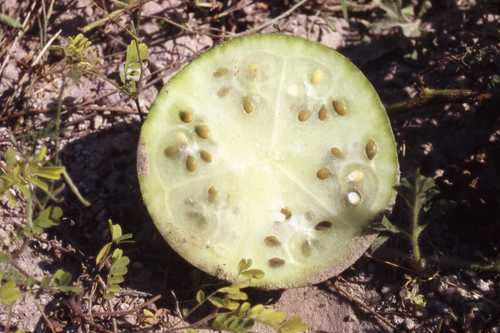
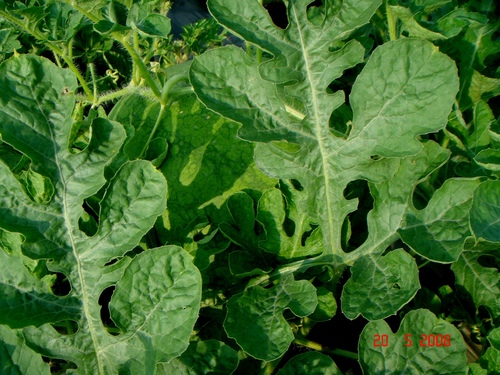
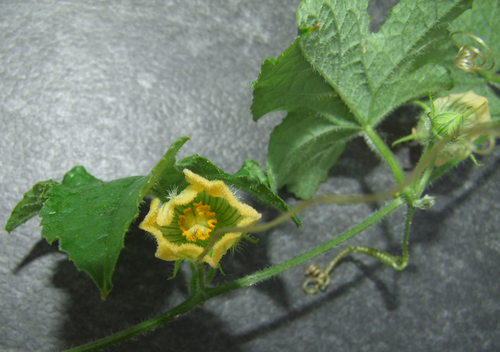
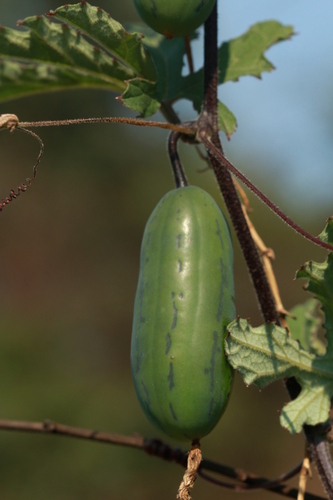
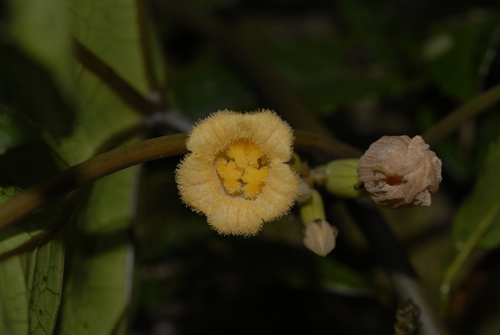
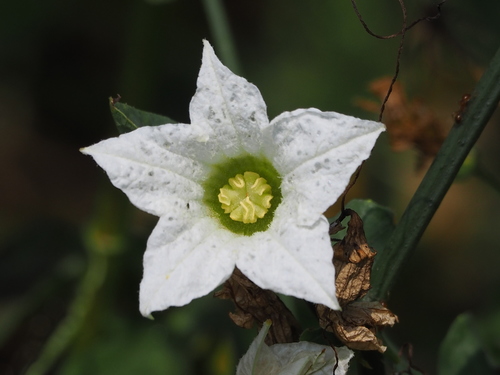
A pumpkin family plant. It is a creeping or climbing plant. It is a vine which grows to several metres long. It grows as an annual. It does not have swollen reserve roots. The plant is softly hairy. It has 5 vigorous angular stems. The leaf stalks are 5-25 cm long. The leaves are oval or heart shaped. They may or may not have white spots on the surface. The leaves have 3-5 rounded lobes. The central one is larger than the side ones. The tendrils are divided 3-4 times. The flowers occur singly in the axils of leaves. Flowers are yellow to orange. The male flowers have longer stalks. The fruit are large, bright green and mottled. The fruit contain white flesh and black seeds. The seeds are 15-25 mm long by 7-12 mm wide.
Edible Uses
The fruit is best used when young, at which stage it can be treated like a cucumber. Mature fruits are sometimes boiled and eaten, and a confection can be made from the flesh by boiling it with crude sugar. Mature fruit can be stored for 2 years or more and becomes sweeter with storage. Fruit diameter reaches up to 35cm. Seeds can be eaten raw and are rich in oil with a nutty flavour, though they are fiddly to use as they are small and covered with a fibrous coat. The seeds are also delicious when roasted and eaten like peanuts. An edible oil obtained from the seed is rich in oleic acid.
Traditional Uses
Young fruits can be eaten raw and ripe fruit are boiled. The flesh of the ripe fruit is used to prepare sweets. They are cut into pieces, soaked in lime for 12 hours then washed and boiled with sugar and apple twigs. The seeds can be roasted and eaten. The young stems are eaten The flowers are cooked and eaten.
Medicinal Uses
The seeds are vermifuge. The complete seed including the husk is ground into a fine flour, made into an emulsion with water, and eaten. A purgative must then be taken to expel tapeworms or other parasites from the body. As a treatment for internal parasites, the seeds are less potent than the root of Dryopteris felix-mas, but they are safer for pregnant women, debilitated patients, and children.
Known Hazards
The sprouting seed produces a toxic substance in its embryo.
Distribution
It suits high altitudes. It can tolerate low temperatures but not frosts. It grows between 1,000 and 3,000 m altitude in South America. In the Philippines it grows above 1,700 m above sea level. It needs soil temperatures above 15°C for seeds to germinate. It suits hardiness zones 8-11.
Where It Grows
Africa, Andes, Andorra, Angola, Argentina, Asia, Australia, Balkans, Bangladesh, Bolivia, Central America, Chile, China, Colombia, Costa Rica, Cuba, East Africa, Ecuador, Ethiopia, Europe, France, Germany, Guatemala, Honduras, India, Japan, Kenya, Macedonia, Mediterranean, Mexico*, North America, Pacific, Panama, Peru, Philippines, Portugal, SE Asia, South Africa, Southern Africa, South America, Tanzania, Venezuela, West Indies,
Cultivation
Requires a rich, well-drained moisture retentive soil and a very warm, sunny and sheltered position. Tolerates poor, wet and badly drained soils according to another report. Plants are not very frost-tolerant, they can be grown as an annual in temperate climates, and are sometimes cultivated for their edible fruit in warmer areas of the world. A very vigorous plant, it can produce shoots 25 metres long in 1 year from seed in Britain. This is the hardiest member of the genus but its fruits are coarse and stringy when grown in Britain so it is usually grown as an ornamental plant only. Plants are day-length sensitive, flowering only in late summer and autumn. This species does not hybridize naturally with other members of the genus though crosses have been made under controlled conditions. In America it takes 3 months from seed to first harvest and 6 months to obtain mature fruit. The average fruit size is 9 kilos and this contains 2 cups of seed.
Propagation
Sow seed in early to mid spring in a greenhouse in rich soil; germination should occur within 2 weeks. Sow 2 or 3 seeds per pot and thin to the strongest plant. Grow on quickly and plant out after the last expected frosts, providing cloche or frame protection for at least the first few weeks if growing outdoors.
Other Uses
The shell of the mature fruit is very hard and can be used as a container. An oil is obtained from the seed.
Production
Mature fruit will store for a year. A plant can produce 50 fruit. A fruit can contain 500 seed.
Other Information
It is a commercially cultivated vegetable.
Notes
There are 25 Cucurbita species.
Nutrition
| Part | Moisture | kJ | kcal | Protein | Vit A | Vit C | Iron | Zinc |
|---|---|---|---|---|---|---|---|---|
| Fruit | 90 | 170 | — | 2 | — | — | 7 | — |
Synonyms
Also Known As
Black-seed squash, Chilacayote, Chilacayote azteca, Chiverri, Cidra, Guia de chilacayota, Labu putih, Lacayote, Sidra, Zambo
References (42)
- Ali, A. M. S., 2005, Homegardens in Smallholder Farming Systems: Examples from Bangladesh. Human Ecology, Vol. 33, No. 2 pp. 245-270
- Arellanes, Y., et al, 2013, Influence of traditional markets on plant management in the Tehuacan Valley. Journal of Ethnobiology and Ethnomedicine 9:38
- Astrada, E., et al, 2007, Ethnobotany in the Cumbres de Monterrey National Park, Nuevo Leon, Mexico. Journal of Ethnobiology and Ethnomedicine 3:8
- Bianchini, F., Corbetta, F., and Pistoia, M., 1975, Fruits of the Earth. Cassell. p 106
- Caballero-Serrano, V., et al, 2019, Traditional ecological knowledge and medicinal plant diversity in Ecuadorian Amazon home gardens. Global Ecology and Conservation 17 (2019) e00524 p 9
Show all 42 references Hide references
- Castillo, R. O., 1995, Plant Genetic Resources in the Andes: Impact, Conservation, and Management. Crop Science 35:355-360
- Cobley, L.S. (rev. Steele, W.M.) 2nd Ed., 1976, An Introduction to the Botany of Tropical Crops. Longmans. p 134
- Cruz, I. M., et al, 2015, Edible fruits and seeds in the State of Mexico. Revista Mexicana de Ciencias Agricolas. Vol. 6. Num. 2 pp 331-346
- Cundall, P., (ed.), 2004, Gardening Australia: flora: the gardener's bible. ABC Books. p 441
- Edwards. S., et al, (Eds), 1995, Flora of Ethiopia and Eritrea. Vol.2, Part 2 Canellaceae to Euphorbiaceae. Uppsala, Sweden. p 53
- Esquinas-Alcazar, et al, 1983, Genetic Resources of Cucurbitaceae. International Board of Plant Genetic Resources.
- Estrada-Castillon, E., et al, 2014, Ethnobotany in Rayones, Nuevo Leon, Mexico. Journal of Ethnobiology and Ethnomedicine, 10:62
- Facciola, S., 1998, Cornucopia 2: a Source Book of Edible Plants. Kampong Publications, p 86
- Farfan, B., et al, 2007, Mazahua Ethnobotany and Subsistence in the Monarch Butterfly Biosphere Reserve, Mexico. Economic Botany 61(2) 2007, pp 173-191
- Grubben, G. J. H. and Denton, O. A. (eds), 2004, Plant Resources of Tropical Africa 2. Vegetables. PROTA, Wageningen, Netherlands. p 259
- Grubben, G.J.H., 2004. Cucurbita ficifolia Bouché. [Internet] Record from Protabase. Grubben, G.J.H. & Denton, O.A. (Editors). PROTA (Plant Resources of Tropical Africa), Wageningen, Netherlands. < http://database.prota.org/search.htm>. Accessed 15 October 2009.
- Hermandez Bermejo, J.E., and Leon, J. (Eds.), 1994, Neglected Crops. 1492 from a different perspective. FAO Plant Production and Protection Series No 26. FAO, Rome. p18, 74
- Kapelle, M., et al, 2000, Useful plants within a Campesino Community in a Costa Rican Montane Cloud Forest. Mountain Research and Development, 20(2): 162-171.
- Kays, S. J., and Dias, J. C. S., 1995, Common Names of Commercially Cultivated Vegetables of the World in 15 languages. Economic Botany, Vol. 49, No. 2, pp. 115-152
- Kiple, K.F. & Ornelas, K.C., (eds), 2000, The Cambridge World History of Food. CUP p 1774, 1858
- Nee, M., 1990, The Domestication of Cucurbita (Cucurbitaceae). Economic Botany, Vol. 44, No. 3, Supplement: New Perspectives on the Origin and Evolution of New World Domesticated Plants. pp. 56-68
- Pascual-Mendoza, S. et al, 2021, Traditional knowledge of edible plants in an indigenous community in the Sierra Norte of Oaxaca, Mexico. Plant Biosystems - An International Journal Dealing with all Aspects of Plant Biology
- Pena, F. B., et al, 1998, Los quelites de la Sierra Norte de Puebla, Mexico: Inventory Y Formas de Preparacion. Bol. Soc. Bot. Mexico 62:49-62
- Plants for a Future database, The Field, Penpol, Lostwithiel, Cornwall, PL22 0NG, UK. http://www.scs.leeds.ac.uk/pfaf/
- PROSEA handbook Volume 9 Plants yielding non-seed carbohydrates. p 188
- Roa, J. A. G. & Boada, D. S. G., 2018, Fundación para el Fortalecimiento de la Fruticultura y Plantas Alimenticias no Convencionales en Colombia.
- Ruiters-Welcome, A. K., 2019, Food plants of southern Africa. Ph.D. thesis. Univ. of Johannesburg p 49
- Segura, S., et al, 2018, The edible fruit species in Mexico. Genet Resour Crop Evol (2018) 65:1767–1793
- Siemonsma, J. S. and Piluek, K. (Eds), 1994, Plant Resources of South-East Asia No. 8 Vegetables. Prosea Foundation, Bogor, Indonesia, p 165
- Small, E., 2009, Top 100 Food Plants. The world's most important culinary crops. NRC Research Press. p 449
- Tindall, H.D., 1983, Vegetables in the tropics. Macmillan p. 161
- Torre, de la, L., et al, 2008, Enciclopedia de las Plantas Útiles del Ecuador. Herbario QCA. Pontificia Universidad Católica del Ecuador. p 298
- USDA, ARS, National Genetic Resources Program. Germplasm Resources Information Network - (GRIN). [Online Database] National Germplasm Resources Laboratory, Beltsville, Maryland. Available: www.ars-grin.gov/cgi-bin/npgs/html/econ.pl (10 April 2000)
- Vael, L., 2015, Ethnobotanical study of the plant use in the natural landscape of two mestizo communities in the Ucayali region of the Peruvian Amazon. Universiteit Gent.
- Van den Eynden, V., et al, 2003, Wild Foods from South Ecuador. Economic Botany 57(4): 576-603
- van Wyk, B., 2005, Food Plants of the World. An illustrated guide. Timber press. p 161
- Verh. Vereins Befourd. Gartenbaues Kounigl. Preuss. Staaten 12:205. 1837
- Welcome, A. K. & Van Wyk, B.-E., 2019, An inventory and analysis of the food plants of southern Africa. South African Journal of Botany 122 (2019) 136–179
- Wiersema, J. H. & Leon, B., 2013, World Economic Plants. A Standard Reference CRC Press. 2nd Ed. p 216
- Whitaker,T.W., & Bemis,W.P., 1979, Cucurbits, in Simmonds N.W.,(ed), Crop Plant Evolution. Longmans. London. p 65
- World Checklist of Useful Plant Species 2020. Royal Botanic Gardens, Kew
- Yang, Si-Lin and Walters, T. W., 1992, Ethnobotany and the Economic role of the Cucurbitaceae of China. Economic Botany, Vol. 46, No. 4, pp. 349-367