Coccinia adoensis
(Hochst ex A. Rich.) Cogn.
Mutkuru
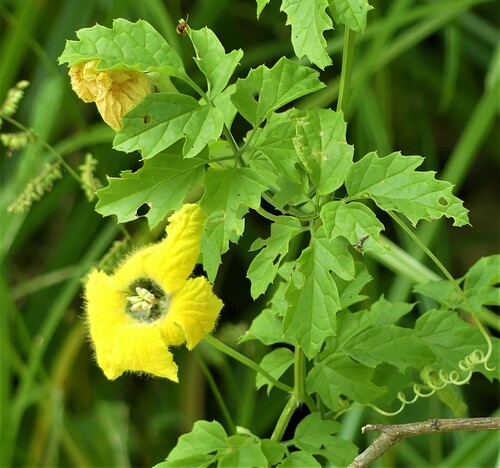
iNaturalist· cc-by-nc
(c) tjeerd, some rights reserved (CC BY-NC)
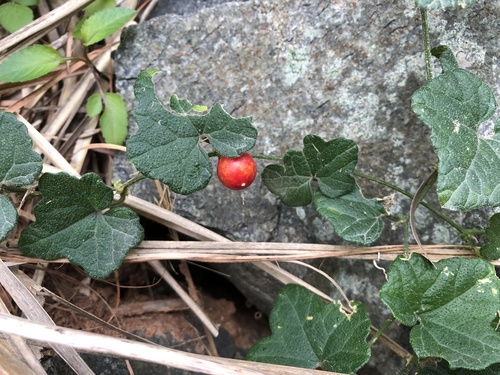
iNaturalist· cc-by-nc
(c) tjeerd, some rights reserved (CC BY-NC)
iNaturalist· cc-by-nc
(c) tjeerd, some rights reserved (CC BY-NC)
Description
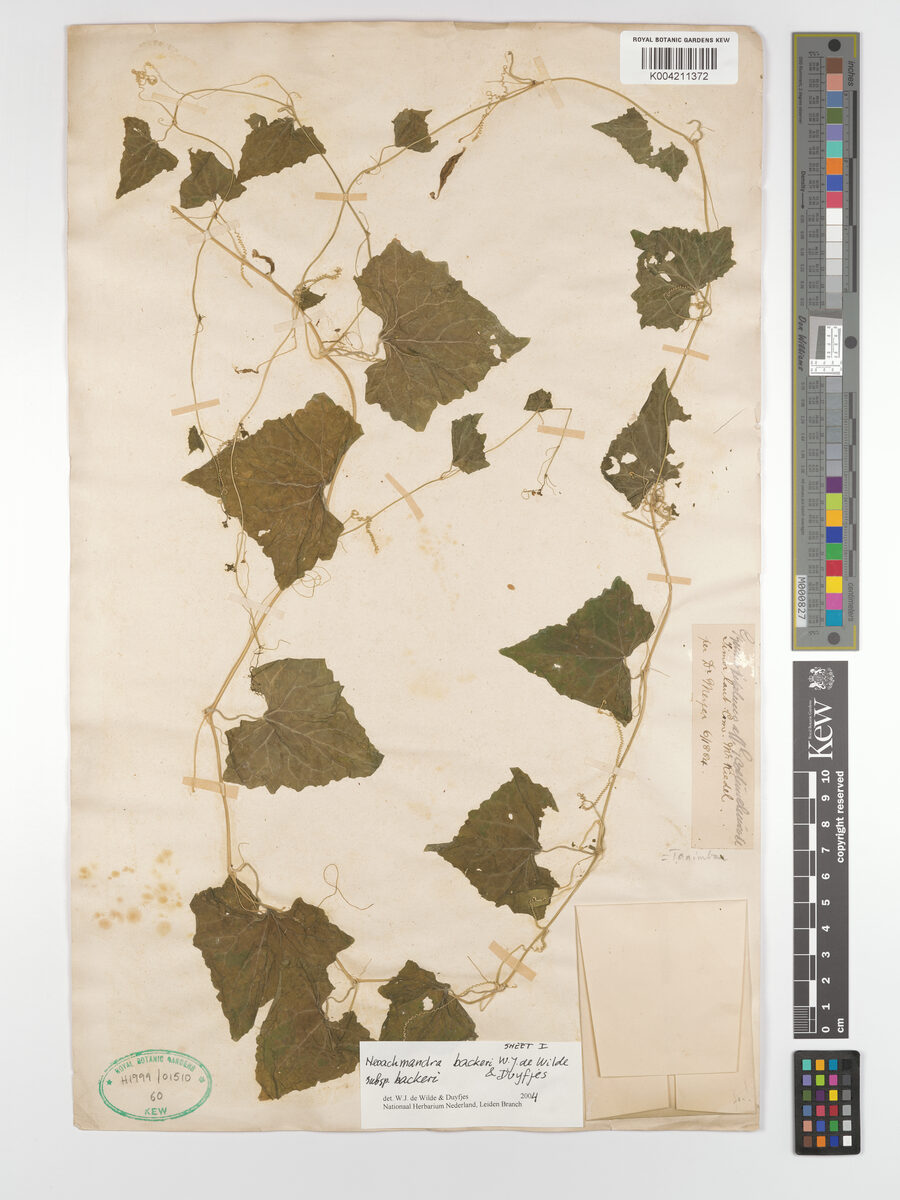
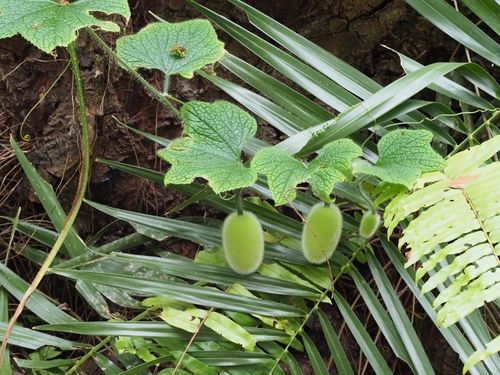
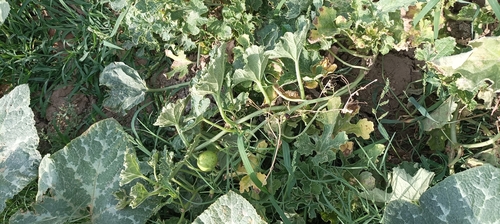
A pumpkin family herb. It is a slender climber. It has annual climbing stems. It grows up to 6 m long. The stems are furrowed and hairy when young. The leaves are deeply lobed and look like fingers on a hand. The edges of the leaves have shallow teeth. The leaf shape can vary on the one plant. The flowers are separately male and female on separate plants. Male flowers are yellow and in clusters. The female flowers are small, yellow and occur singly. The fruit is oblong and about 2.5-5 cm long. It is bright red when ripe.
Edible Uses
The genus Coccinia is best known for C. grandis, commonly known as "ivy gourd". Its fruits can be eaten raw when ripe or cooked when unripe. In the latter case, it is used in curries. Young leaves and shoots are also edible. All used plants are a good source of carotenoids. The tuber of Coccinia abyssinica is cooked and a source of starch for the Oromo people in Ethiopia. Local culinary uses also exist. However, many species and also populations within species can be bitter due to cucurbitacins. Coccinia grandis is also well known in ayurvedic medicine for diabetes treatment, and modern research seems to confirm that it might be of value in that application.
Traditional Uses
CAUTION: The roots are poisonous unless carefully cooked. The leaves are cooked and eaten. The fruit are eaten raw when ripe or cooked as a vegetable. The roots are eaten after processing. They need to be well cooked.
Medicinal Uses
A root-decoction, combined with leaf-sap, is used as a mouth-wash for treating tooth-abscesses. The leaves are crushed, mixed with water, and drunk as a cure for puff-adder bites. The unripe fruits contain cucurbitacin B and traces of cucurbitacin D. Cucurbitacins, which are known from many plants in the Cucumber family, as well as various other plant species, exhibit cytotoxicity (including antitumor activity), and anti-inflammatory and analgesic activities.
Distribution
A tropical plant. It occurs in medium to low rainfall areas. It grows with rainfalls of 450-800 mm. It grows from sea level to 2,140 m above sea level. It can grow in arid places. It often grows on termite mounds.
Where It Grows
Africa, Botswana, Cameroon, Central Africa, Central African Republic, CAR, Chad, Congo, East Africa, Eritrea, Eswatini, Ethiopia, Ghana, Kenya, Lesotho, Malawi, Mozambique, Namibia, Nigeria, South Africa, Southern Africa, Sudan, Swaziland, Tanzania, Uganda, West Africa, Zambia, Zimbabwe,
Cultivation
A plant of semi-arid areas in the tropics, where it is found at elevations up to 2,300 metres. Often found in deep shade in the wild. A dioecious species, both male and female forms need to be grown if fruit and seed are required.
Other Information
The fruit are eaten especially by children. The roots are a famine food.
Nutrition
| Part | Moisture | kJ | kcal | Protein | Vit A | Vit C | Iron | Zinc |
|---|---|---|---|---|---|---|---|---|
| Fruit | 92.9 | 445 | 106 | 15.7 | — | 19 | 0.6 | — |
| Roots | 81 | 289 | 68 | 1 | — | 81 | 0.4 | — |
Synonyms
Also Known As
Bukalabwambwa, Chinkhaka, Fwifwi, Lukokoti, Mphwimpwi, Mugwingwi, Nleza, Nyayambo, Tambalanjoka, Thong-diit
References (32)
- Asfaw, Z. and Tadesse, M., 2001, Prospects for Sustainable Use and Development of Wild Food Plants in Ethiopia. Economic Botany, Vol. 55, No. 1, pp. 47-62
- Burkill, H. M., 1985, The useful plants of west tropical Africa, Vol. 1. Kew.
- Edwards. S., et al, (Eds), 1995, Flora of Ethiopia and Eritrea. Vol.2, Part 2 Canellaceae to Euphorbiaceae. Uppsala, Sweden. p 162
- Fowler, D. G., 2007, Zambian Plants: Their Vernacular Names and Uses. Kew. p 22
- Fox, F. W. & Young, M. E. N., 1982, Food from the Veld. Delta Books. p 165
Show all 32 references Hide references
- Grivetti, L. E., 1980, Agricultural development: present and potential role of edible wild plants. Part 2: Sub-Saharan Africa, Report to the Department of State Agency for International Development. p 71, 73
- Grubben, G. J. H. and Denton, O. A. (eds), 2004, Plant Resources of Tropical Africa 2. Vegetables. PROTA, Wageningen, Netherlands. p 201
- Holstein, N., 2015, Monograph of Coccinia (Cucurbitaceae). PhytoKeys 54: 1–166
- INFOODS:FAO/INFOODS Databases
- Johns, T., and Kokwaro, J.O., 1991, Food Plants of the Luo of Siayo District, Kenya. Economic Botany 45(1), pp 103-113
- Kokwaro, J. O. and Johns. T., Luo Biological Dictionary. p 60
- Long, C., 2005, Swaziland's Flora - siSwati names and Uses http://www.sntc.org.sz/flora/
- Lulekal, E., et al, 2011, Wild edible plants in Ethiopia: a review on their potential to combat food insecurity. Afrika Focus - Vol. 24, No 2. pp 71-121
- Maguire, 1978,
- Malaisse, F., 1997, Se nourrir en floret claire africaine. Approche ecologique et nutritionnelle. CTA., p 59
- Malaisse, F., 2010, How to live and survive in Zambezian open forest (Miombo Ecoregion). Les Presses Agronomiques de Gembloux.
- Maundu, P. et al, 1999, Traditional Food Plants of Kenya. National Museum of Kenya. 288p
- Mutie, F. M., et al, 2023, Important Medicinal and Food Taxa (Orders and Families) in Kenya, Based on Three Quantitative Approaches. Plants 2023, 12, 1145
- Njoroge, G. & Newton, L. E. 1994, Edible and Poisonous Species of Cucurbitaceaea in the Central Highlands of Kenya. Journal of East African Natural History. 83:101-115
- Peters, C. R., O'Brien, E. M., and Drummond, R.B., 1992, Edible Wild plants of Sub-saharan Africa. Kew. p 99
- Pickering, H., & Roe, E., 2009, Wild Flowers of the Victoria Falls Area. Helen Pickering, London. p 57
- Plowes, N. J. & Taylor, F. W., 1997, The Processing of Indigenous Fruits and other Wildfoods of Southern Africa. in Smartt, L. & Haq. (Eds) Domestication, Production and Utilization of New Crops. ICUC p 188
- Royal Botanic Gardens, Kew (1999). Survey of Economic Plants for Arid and Semi-Arid Lands (SEPASAL) database. Published on the Internet; http://www.rbgkew.org.uk/ceb/sepasal/internet [Accessed 15th April 2011]
- Ruffo, C. K., Birnie, A. & Tengnas, B., 2002, Edible Wild Plants of Tanzania. RELMA p 208
- Ruiters-Welcome, A. K., 2019, Food plants of southern Africa. Ph.D. thesis. Univ. of Johannesburg p 48
- Scudder, 1962, 1971,
- Swaziland's Flora Database http://www.sntc.org.sz/flora
- von Katja Rembold, 2011, Conservation status of the vascular plants in East African rain forests. Dissertation Universitat Koblenz-Landau p 160
- Wehmeyer, A. S, 1986, Edible Wild Plants of Southern Africa. Data on the Nutrient Contents of over 300 species
- Welcome, A. K. & Van Wyk, B.-E., 2019, An inventory and analysis of the food plants of southern Africa. South African Journal of Botany 122 (2019) 136–179
- Williamson, J., 2005, Useful Plants of Malawi. 3rd. Edition. Mdadzi Book Trust. p 70
- World Checklist of Useful Plant Species 2020. Royal Botanic Gardens, Kew