Barringtonia calyptrocalyx
K. Schum.
gbif· cc0
President and Fellows of Harvard College
gbif· cc0
President and Fellows of Harvard College
gbif· cc0
President and Fellows of Harvard College
Description
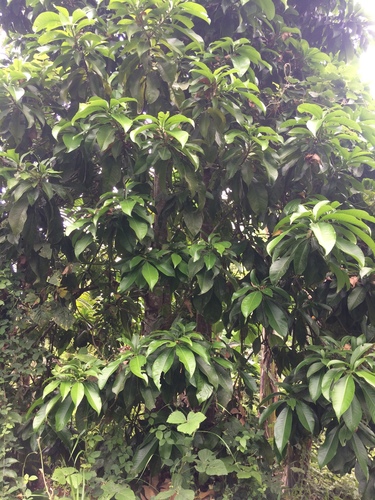
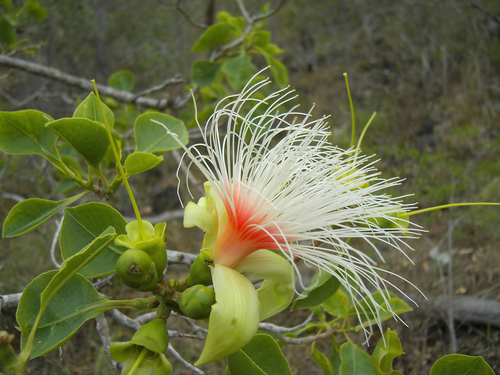
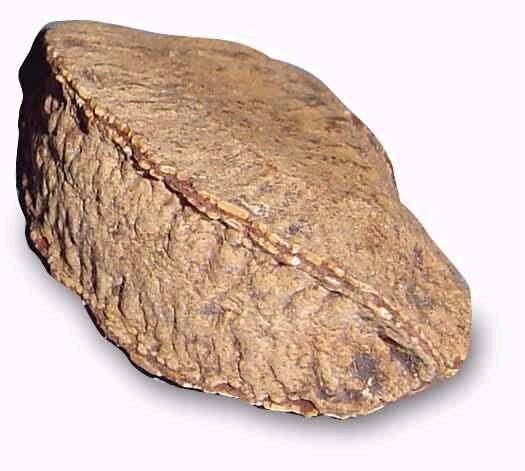
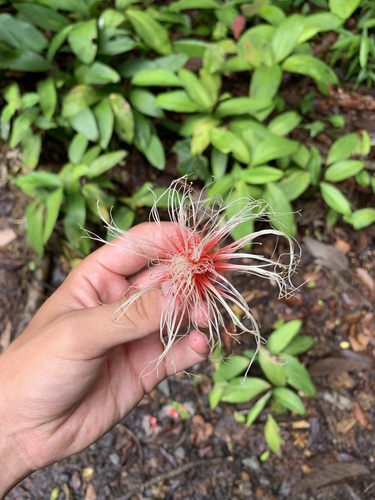
A shrub. It grows 3-6 m tall. It only has a few branches. The leaves are on the upper part of the stem. The leaves are large. They are 79 cm long by 24 cm wide. They taper to the base. They are dark green above and more pale underneath. The flowers are a deep red. The fruit are green and mature to orange and 3 angled. They are round to oblong and 5 cm long by 4.5 cm wide. The seed is 4 cm long by 2.5 cm wide. It occurs in a spongy pulp.
Edible Uses
Salt is extracted by leaching ash from the leaves and bark.
Traditional Uses
It has previously been used to extract salt by leaching the ash out of the leaves and bark.
This uses section is brief — help expand it
Medicinal Uses
Historically used in salt extraction by leaching ash from leaves and bark.
Distribution
It is a tropical plant. It occurs in Central Province in Papua New Guinea and the Sepik. It grows in forests near streams.
Where It Grows
Indonesia, Papua New Guinea, PNG, SE Asia,
Notes
Barringtonia calyptrocalyx may be separate from Barringtonia boridiensis.
Synonyms
Also Known As
Bura bura, Papao
References (2)
- Prance, G. T., 2013, A revision of Barringtonia (Lecythidaceae). Allertonia 12 : 1-164. 2013 (As Barringtonia boridiensis)
- World Checklist of Useful Plant Species 2020. Royal Botanic Gardens, Kew