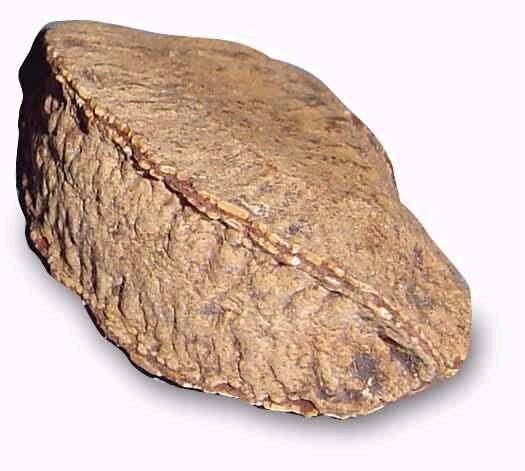
Barringtonia procera
(Miers) R Knuth
Pao nuts, Cut nut
iNaturalist· cc-by-nc
(c) laceypantalones, some rights reserved (CC BY-NC), uploaded by laceypantalones
gbif· cc0
President and Fellows of Harvard College
gbif· cc0
President and Fellows of Harvard College
Summary
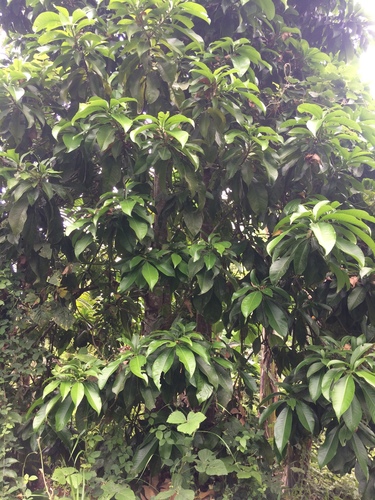
A medium-growing evergreen tree reaching 10m tall and 8m wide. Hardy to UK zone 10. Flowers pollinated by moths and bats. Adapts to light to heavy soils with well-drained preference and thrives in nutritionally poor soil. Tolerates mildly acid to basic pH and saline conditions. Grows in semi-shade or full sun, prefers moist soil, and handles maritime exposure.
Description
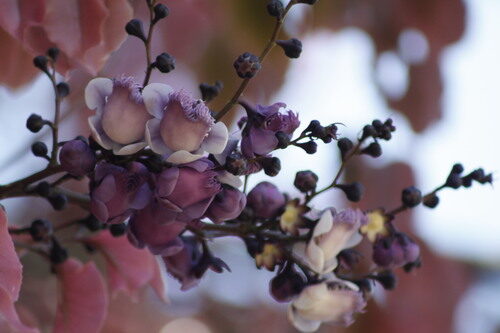
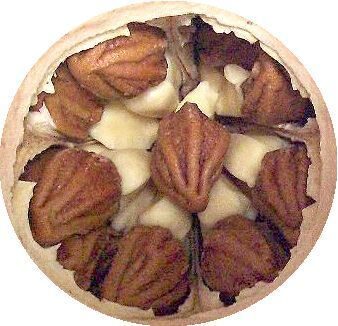
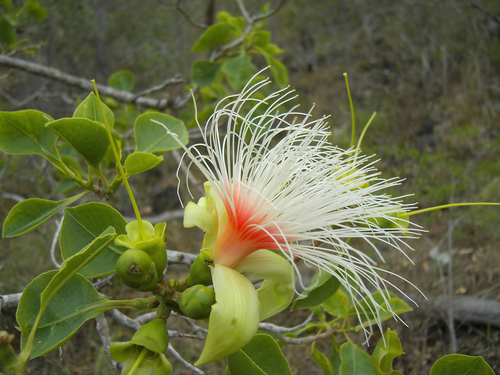
A small tree up to 15 m tall. The trunk is 8 cm across and the twigs are about 1 to 1.5 cm across. The leaves are smooth and hairless and can be 30 to 50 cm long by 8 to 20 cm wide. They are oblong and very shiny. They have a tapering tip that curves backwards and at the base are wedge shaped. The flower stalk is at the end of a branch, is 30 to 80 cm long and hangs down. There can be up to 120 flowers. The fruit are 8 sided and about 6-8 cm long by 3-5 cm across. The seed kernel inside the hard shell inside the fruit is about 3 cm by 1.5-2 cm cross. It is slightly flattened in one direction. This nut tree has short flower stalks (shorter than Barringtonia edulis) and the skin colour of the ripe fruit is purple. The leaves also are almost without stalks. This species differs from Barringtonia novae-hibernae.
Edible Uses
Edible Parts: Leaves Seed Edible Uses: Seed. The seed kernel inside the hard shell inside the fruit is about 30mm by 15 - 20mm wide. Young leaves - cooked and eaten as a vegetable.
Traditional Uses
The nuts are eaten. They are baked or roasted.
This uses section is brief — help expand it
Medicinal Uses
Antiinflammatory Antitussive Stomachic Urinary The bark is used in the treatment of stomach ailments and gonorrhoea. Sap from the bark has been used for treating ciguatera poisoning, coughs, and urinary infections. The leaves are used to treat inflammation of the ear and headaches.
Distribution
A tropical plant. It grows in secondary rainforest at low altitude. It is also planted in villages. It can grow in light or heavy soils but they must be well drained. It can grow in coastal coral soils. It can tolerate salty and infertile soils. It can grow in light shade. It grows from sea level to 600 m altitude. It grows in areas with a rainfall between 1500-4300 mm per year. It is normally in areas with a uniform rainfall. It suits areas with a temperature between 26° and 28°C.
Where It Grows
Australia, Bougainville, Fiji, Pacific*, Papua New Guinea, PNG, Solomon Islands, Vanuatu,
Cultivation
Plants are normally grown by seed. The mature fruit is planted whole. Seed should be planted fresh. Plants can be grown by air-layering or stem cuttings. Seed do not have dormancy and germinate in 2-3 months. Seedlings can be transplanted after 2-3 months and preferably during a wet season.
Propagation
Seed - best sown as soon as it is ripe.
Other Uses
Fuel Plant support Shelterbelt Wood The tree prefers light shade, which makes it a good companion to overstorey tree species such as vi (Spondias cyathera), canarium nut (Canarium spp.), and breadfruit (Artocarpus altilis). Its open canopy structure allows sufficient light penetration to the ground level for other crops such as roots, cereals and other understorey crops such as sugarcane (Saccharum officinarum) and a nutritious native leafy tree spinach called bele or edible hibiscus (Abelmoschus manihot), to be interplanted under it. It has been used as a trellis tree for the cash crop betel leaf (Piper betle),as well as for marking land boundaries and creating windbreaks. The tree has a well formed lateral root system, yet does not appear to cause major impediments during soil preparation for understory crops, e.g., making mounds for the root crops, nor does it seem to compete heavily with understory crops. It can be used in plantations to provide shade for tree crops such as cacao (Theobroma cacao), joint fir (Gnetum gnemon), and betel nut (Areca catechu). Other Uses The wood is light in weight. It is used for canoe paddles, casing, light construction. The wood is used as a quick-burning firewood. Special Uses Carbon Farming Coppice Food Forest
Production
It has a moderate growth rate. Trees flower and fruit throughout the year. The yield of nuts is about 10-50 kg per year for each tree. Trees live for 80-90 years.
Other Information
A common and popular nut in some coastal areas of Papua New Guinea. It is a cultivated food plant.
Notes
There are about 40 Barringtonia species. Pao nuts Barringtonia spp. What is the plant like? A pao nut tree is a small tree in the coastal areas of Papua New Guinea. The tree grows up to 6 or 8 metres tall. The trunk is often only 10-15 cm across and near the top the tree has a few short thick branches. The leaves are large and shiny. The leaves are crowded towards the end of branches. A leaf can be 50 or 60 cm long and 20-24 cm across. Near the tip of the leaf the edge is wavy and often slightly toothed, with the tip bent backwards. The veins of the leaf show up clearly on both sides of the leaf. The leaf stalk is only short about 1 cm long. A long hanging yellow flower is produced from the branches. It can be 80 cm long and is densely covered with flowers. There can be up to 120 flowers along a stalk. The flowers do not have a scent. Along this the fruits form, giving a long hanging stalk of quite large nuts. The fruit is oval shaped and about 6-8 cm long by 3-4 cm across. The seed or nut inside the fruit has lines running along its surface. This edible part is about 3 cm long by 1-2 cm across and white coloured, The seed is flattened particularly on one side. Pao nuts Pao nut trees tend to flower and produce nuts throughout the year. There are some different kinds. The size and shape of the nuts can vary slightly. Also some are white inside and some are red. The most obvious difference is the colour of the outside of the fruit. Some kinds are green or slightly blue whereas other kinds are a dark reddish black. The nuts have a fairly hard shell and are split open with a knife. The white part in the centre is eaten raw. It also has a fairly hard texture. Naming of Pao nut trees. Pao nut is one of the more common Tok Ples names for these nuts and is often used for them in Tok Pisin. They also have different Tok Ples names and they have been given scientific names by scientists. Two species are grown and used as food in Papua New Guinea. Then scientific names of the two plants are:- Barringtonia procera and Barringtonia novae-hibernae. In 1875, the first plant was named Butonica procera by a botanist named Miers. As more was learned about the plant it was renamed Barringtonia procera in 1939 by another scientist named Knuth. Sometimes other names like Barringtonia magnifica have been used for this plant. They have now been replaced. The other species was first named by a botanists called Lauterbach in 1911. The name Barringtonia was given after and English naturalist Daniel Barrington who was born in the year 1800. Barringtonia procera is a less branched tree and tends to grow nearer the coast. The leaves are larger. Barringtonia novae-hibernae has a more branched trunk and a smaller leaf. It grows more inland and has a sweeter nut. TOK PLES NAMES Papua New Guinea Province Language B. procera B. novae-hibernae Madang tegeli Morobe Laluan pao Manus pulei/purei New Ireland Pala paua-hutun pao New Britain Kuanua pao-vutug pao North Solomons Siwai hari Solomon Islands Shortland Is borolong sioko New Georgia tinga hala/fala/kenu San Cristobal hara hara Santa Cruz nua nuado Vanuatu va rodh vevingen In Fiji, a very similar, but different species is used for its edible nut. The scientific name of this species is Barringtonia edulis. It does not occur in Papua New Guinea but sometimes this name has been used incorrectly for the Papua New Guinea plant. Where do Pao nut trees grow? Pao nuts mostly grow in tropical lowland coastal areas. In Papua New Guinea they are common along the North coast at places such as Madang and nearby islands, then they are very common in New Ireland and occur on New Britain near Rabaul. They also grow in the Solomon Islands and in Vanuatu. A similar, but different tree grows in Fiji. The map below will show you some of the places where pao nuts are know to occur. How do you grow pao nut trees? Pao nut trees are mostly grown from seed. Several different races or types of pao nut have been selected by villagers and these trees seem to produce fruit that is similar to the seed that was planted. Trees can be grown from stem cuttings. Trees grown from cuttings have shorter trunks and branch closer to the ground. If trees are planted in suitable sites and well looked after they can produce fruit in a year or two. As pao nuts often do well and are most common on low off shore islands and coral waterfront villages, it may be particularly suited to coral and alkaline soils. This needs to be further studied.
Synonyms
Also Known As
Aikenu, Alingasa, A pana hutan, Borolong, Fala, Falanganoa, Fara, Hala, Hara, Katnat, Kenu, Kino, Kinu, Malagou, Manavasa, Navele, Nofe, Nuwa, Nyia, Oneve, Tagal, Tamalivi, Tinge, Tinghe, Tuhala fara, Vaha, Vala, Vele, Waha, Yambe
References (35)
- Pao nut references Barringtonia spp
- Arora, R. K., 2014, Diversity in Underutilized Plant Species - An Asia-Pacific Perspective. Bioversity International. p 90
- Barrau, J., 1976, Subsistence Agriculture in Melanesia. Bernice P. Bishop Museu, Bulletin 219 Honolulu Hawaii. Kraus reprint. p 53 (As Barringtonia magnifica)
- Blench, R., 2004, Fruits and Arboriculture in the Indo-Pacific Region. Indo-Pacific Prehistory Association Bulletin 24. (Taipei Papers Volume 2) p 35
- Bourke, R. M., Altitudinal limits of 230 economic crop species in Papua New Guinea. Terra australis 32.
Show all 35 references Hide references
- Clarke, W.C. & Thaman, R.R., 1993, Agroforestry in the Pacific Islands: Systems for sustainability. United Nations University Press. New York.
- Elevitch, C.R.(ed.), 2006, Traditional Trees of the Pacific Islands: Their Culture, Environment and Use. Permanent Agriculture Resources, Holualoa, Hawaii. p 153
- Evans, B. R, 1999, Edible nut Trees in Solomon Islands. A variety collection of Canarium, Terminalia and Barringtonia. ACIAR Technical Report No. 44 96pp
- French, B.R., 1986, Food Plants of Papua New Guinea, A Compendium. Asia Pacific Science Foundation p 167
- French, B.R., 2010, Food Plants of Solomon Islands. A Compendium. Food Plants International Inc. p 171
- Furusawa, T., et al, 2014, Interaction between forest biodiversity and people's used of forest resources in Roviana, Solomon Islands: implications for biocultural conservation under socioeconomic changes. Journal of Ethnobiology and Ethnomedicine, 10:10
- Guillaumin, 1931, B. excelsa (non Bl.) J.Arn. Arb. 12.258
- Gillaumin, 1948, Ann. Mus. Col. Marseille 55/56, 38
- Henderson, C.P. and Hancock, I.R., 1988, A Guide to the Useful Plants of Solomon Islands. Res. Dept. Ministry of Agriculture and Lands, Honiara, Solomon Islands, p 63
- Hooker, 1843, Barringtonia excelsa (non Bl.) Benth. London J. Bot. 2,221
- Knuth, R., 1939, Barringtoniaceae in Pflanzenreich 4, 219 (Vol. 105) :1-79
- Lauterbach, 1911, Barringtonia novae-hibernae Bot. Jahrb. 45, 362
- Lauterbach, 1922, Barringtonia novae-hibernae Bot. Jahrb. 57, 351, 352
- Leakey, R. R. B., & Asaah, E. K., 2013, Underutilised Species as the Backbone of Multifunctional Agriculture – the Next Wave of Crop Domestication. Proc. 2nd Int. Symp. on Underutilized Plants Species “Crops for the Future – Beyond Food Security”. Acta Hort. 979, ISHS p 293
- Lebot, V. & Sam, C., Green desert or ‘all you can eat’? How diverse and edible was the flora of Vanuatu before human introductions?. Terra australis 52 p 410
- Lepofsky, D., 1992, Arboriculture in the Mussau Islands, Bismarck Archipelago. Economic Botany, Vol 46, No. 2, pp. 192-211 (As Barringtonia magnifica)
- Massal, E. and Barrau, J., 1973, Food Plants of the South Sea Islands. SPC Technical Paper No 94. Nounea, New Caledonia. p 32
- Merrill and Perry, 1940, Barringtonia brosimos in J. Arn. Arb. 21, 292
- Miers, 1875, Butonica procera trans. Linn. Soc. Bot. 1:74
- Notizbl. 1895, Barringtonia schuchardtiana Notizbl. Bot. Gart. Berl. 1, 54
- Payens, J.P.D.W., 1967, A monograph of the genus Barringtonia (Lecythidaceae) in Blumea Vol. XV No 2 1967, p 223
- Peekel, P.G., 1984, (Translation E.E.Henty), Flora of the Bismarck Archipelago for Naturalists, Division of Botany, Lae, PNG. p 397, 396
- Prance, G. T., 2013, A revision of Barringtonia (Lecythidaceae). Allertonia 12 : 1-164.
- Schumann, K., and Lauterbach, 1889, Barrongtonia schuchardtiana K.Schu. Flora Kais Eilh. Land. , 92
- Walter, A & Sam, C., 1995, Indigenous Nut Trees in Vanuatu: Ethnobotany and Variability. In South Pacific Indigenous Nuts. ACIAR Proceedings No 69. Canberra. p 57
- Walter, A. & Sam C., 2002, Fruits of Oceania. ACIAR Monograph No. 85. Canberra. p 111
- Wickens, G.E., 1995, Edible Nuts. FAO Non-wood forest products. FAO, Rome. p 139
- World Checklist of Useful Plant Species 2020. Royal Botanic Gardens, Kew
- www.worldagroforestrycentre.org/treedb/
- Yen, D.E., 1974, Arboriculture in the Subsistence of Santa Cruz, Solomon Islands. Econ Bot. 28: 252 & 270.