Commiphora woodii
Engl.
iNaturalist· cc-by-nc
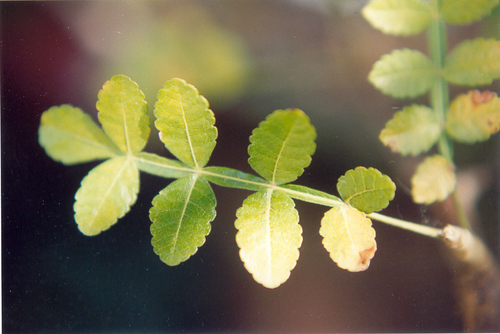
(c) Alison Young, some rights reserved (CC BY-NC), uploaded by Alison Young
iNaturalist· cc-by-nc
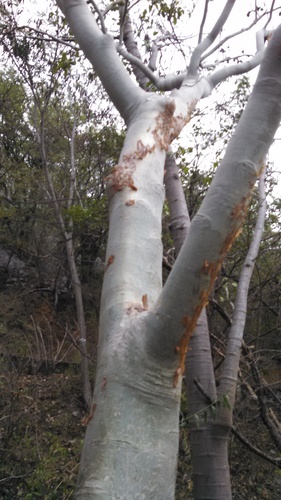
(c) graham_g, some rights reserved (CC BY-NC)
iNaturalist· cc-by-nc
(c) Alison Young, some rights reserved (CC BY-NC), uploaded by Alison Young
Description
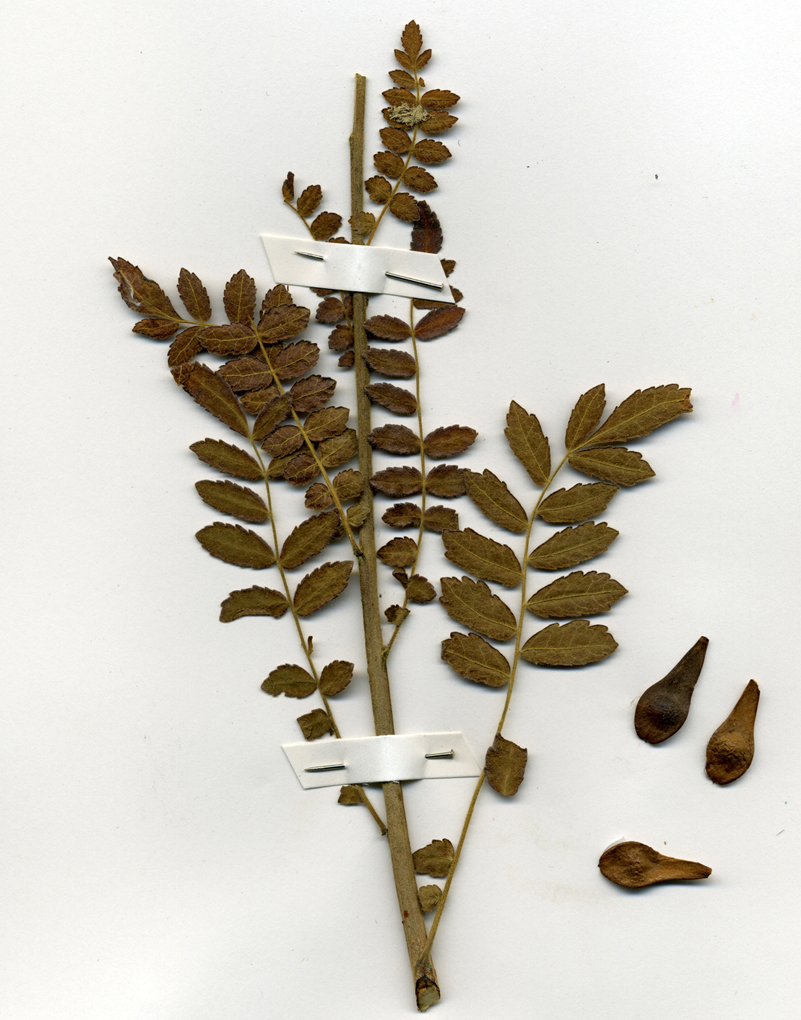
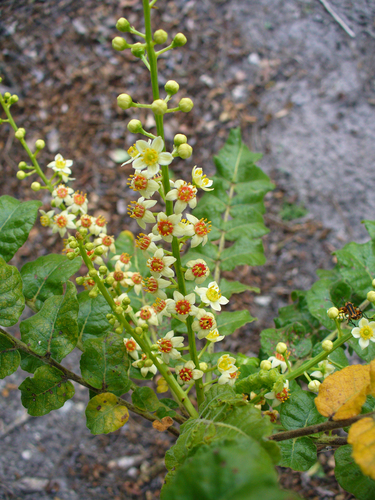
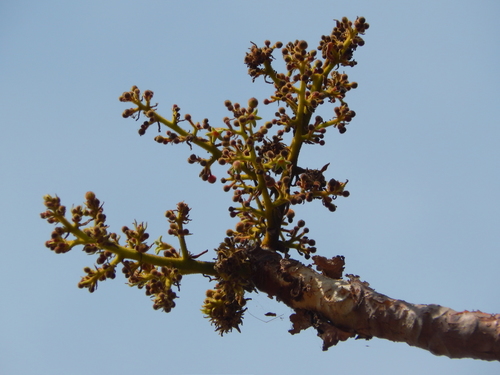
A tree. It loses its leaves. It grows 12 m tall. The young branches are shallowly fluted. The leaves have 3-5 leaflets. The leaflets are narrowly oval. They have teeth along the edge.
Edible Uses
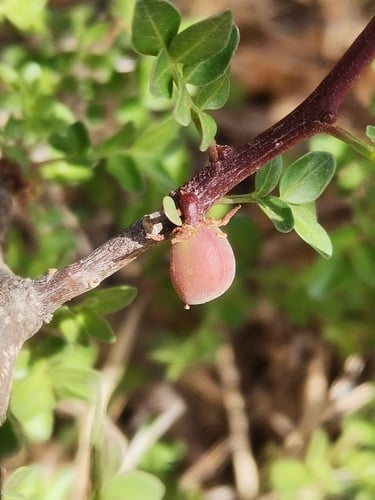
The fruit is eaten as a snack.
Traditional Uses
The fruit is eaten as a snack.
This uses section is brief — help expand it
Distribution
It is a subtropical plant.
Where It Grows
Africa, Mozambique, South Africa, Southern Africa,
Cultivation
A dioecious species, both male and female forms need to be grown if fruit and seed are required.
Other Uses
A gum is obtained from the bark. The wood is light in weight. It is used for fishing floats. Stem cuttings are often planted to develop into live fences.
Synonyms
References (2)
- Ruiters-Welcome, A. K., 2019, Food plants of southern Africa. Ph.D. thesis. Univ. of Johannesburg p 41
- Welcome, A. K. & Van Wyk, B.-E., 2019, An inventory and analysis of the food plants of southern Africa. South African Journal of Botany 122 (2019) 136–179