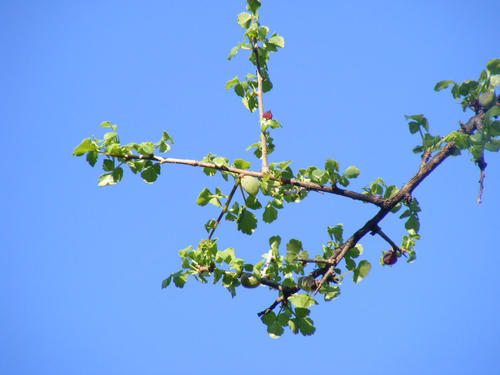
Boswellia serrata
Roxb. ex Colebr.
Indian frankincense, Indian olibanum-tree
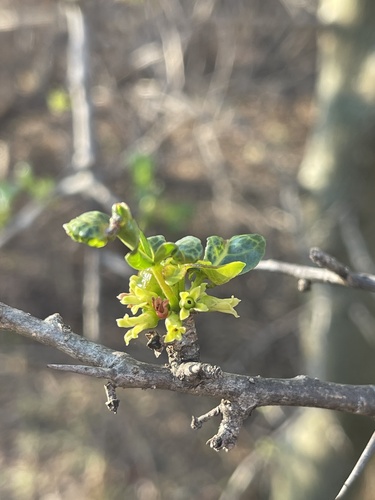
iNaturalist· cc-by-nc
(c) antaryami, some rights reserved (CC BY-NC)
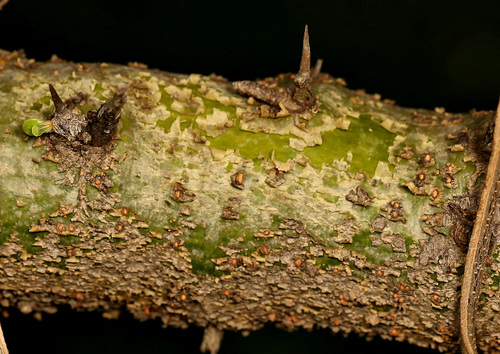
iNaturalist· cc-by-nc
(c) Mandar Nimbargi, some rights reserved (CC BY-NC), uploaded by Mandar Nimbargi
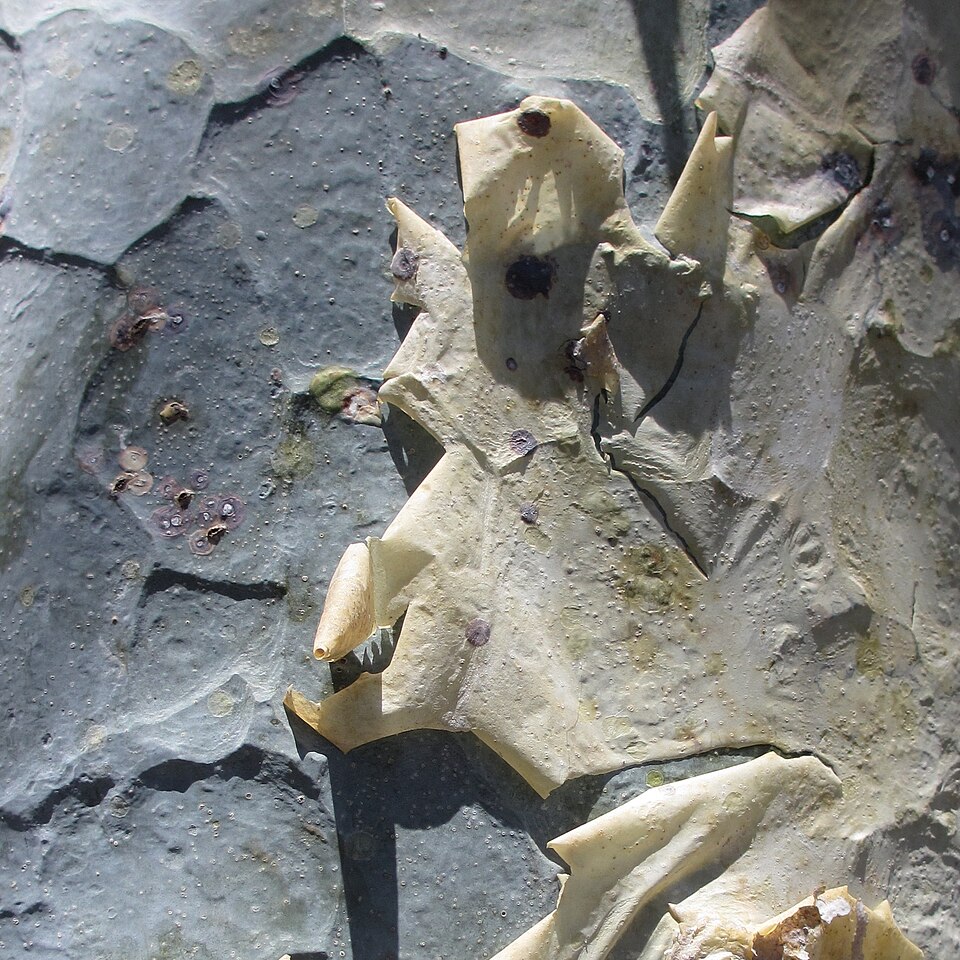
iNaturalist· cc-by
(c) Swarochi Tathagath, some rights reserved (CC BY), uploaded by Swarochi Tathagath
Summary
Source: WikipediaBoswellia serrata is a plant that produces Indian frankincense. The plant is native to much of India and the Punjab region that extends into Pakistan.
Description
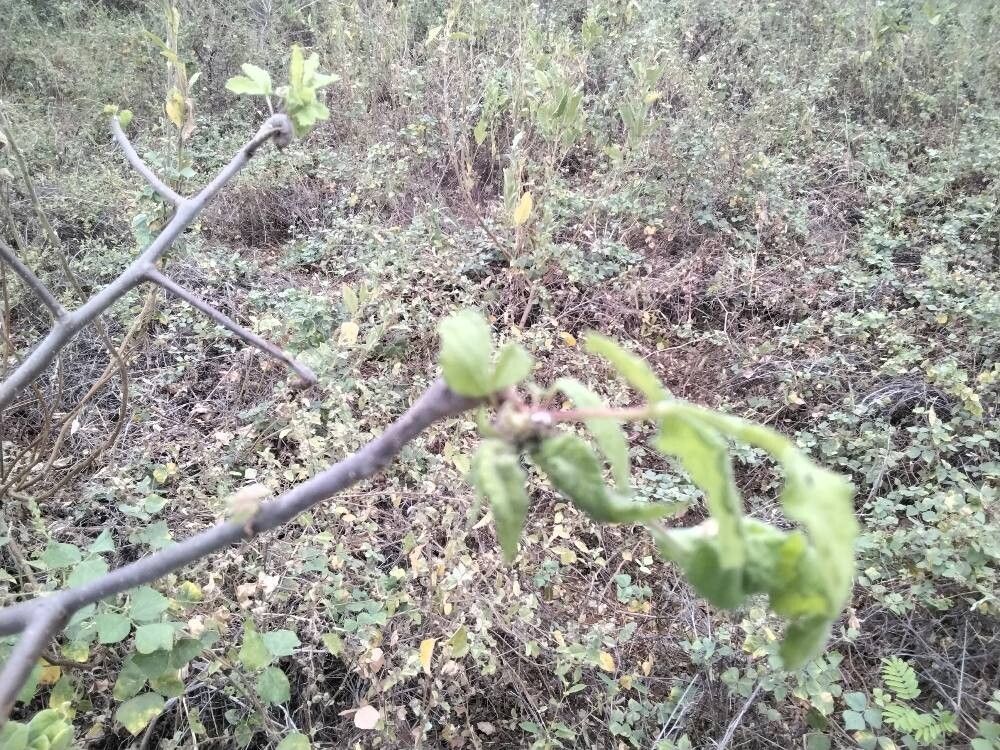
A medium sized deciduous tree. It grows 9-15 m high. The bark is thin and a greenish-grey colour. It peels off in thin flakes. It gives drops of pink resin when cut. The leaves are 20-45 cm long and are at the ends of branches. There are 17-31 leaflets and these are 3-8 cm long by 1-1.5 cm wide. They are sword shaped and have rounded teeth along the edge. The flowers are white. There are 5-7 sepals and petals. The fruit is 1.5 cm long and is 3 angled with 3 valves. There are 3 heart shaped 1 seeded nuts.
Edible Uses
The flowers, seeds, fruit, nuts, and sap are all edible. The fruit can be made into soup or pickled, and an edible gum can be extracted from the tree. The flowers and seeds are eaten directly.
Traditional Uses
The flowers and seeds are eaten. A soup is made from the fruit. They are also pickled. It can also be used to make an edible gum.
This uses section is brief — help expand it
Medicinal Uses
Used as a famine food.
Distribution
A tropical plant.
Where It Grows
Asia, India,
Cultivation
A plant of the semi-arid to moist tropics, where it is found at elevations up to 1,150 metres. It grows best in areas where annual daytime temperatures are within the range 33 - 42°c, but can tolerate 7 - 47°c. Mature plants can be killed by temperatures of -2°c or lower, but new growth can be severely damaged at -1°c. It prefers a mean annual rainfall in the range 1,000 - 1,500mm, but tolerates 500 - 2,000mm. Requires a sunny position. It grows well on neutral soils above gneiss, schist, quartzite, limestone and sandstone, and has the ability to thrive in the poorest and the shallowest of soils where most of its associates remain stunted. Prefers a pH in the range 5.5 - 6.5, tolerating 5 - 7.4. Established plants are very drought tolerant. The tree produces root suckers and responds well to both coppicing and pollarding. Plants are resistant to damage from fires. A mature tree yields about 1 - 1.5 kilos of gum a year.
Propagation
Seed - it has a short viability and is best sown as soon as it is ripe.
Other Uses
A transparent, golden-yellow gum that hardens slowly is obtained from the plant. It is used in medicine. The tree yields a yellowish-green gum-oleoresin known as ‘salai guggal’ from wounds in the bark. This gum has an agreeable scent when burnt. It is said to be a good substitute for imported Canada balsam. The tree is also tapped for a resin called 'lobal', which is used as incense. A fibre obtained from the bark is used for cordage. The wood is of low quality, it is sometimes used for items such as cheap furniture, tea boxes, bowls, dishes etc, and as a source of pulp for paper production. The wood has recently come into prominence as a raw material for pulp paper and newsprint. Experiments show that writing and printing papers of suitable strength can be prepared when 25 - 40% long-fibred bamboo pulp is mixed in the finish. The wood is used for fuel and for making charcoal. Charcoal made from it is particularly favoured for iron smelting. The tree is a suitable species for re-forestation on poorer soils in areas with a mean annual rainfall of 500 - 1.250mm. It is valuable for reclothing dry sandstone hills which have been denuded of vegetation, where soil is markedly ferruginous and where complete protection against biotic factors is not always feasible. Under such circumstances, its ability to withstand the adverse effects of forest fires, its immunity to being browsed or lopped for fodder, its power of resisting the effects of insolation and drought, and its capacity for reproduction by seed, coppice and root suckers are great assets.
Production
In the Ghats in India fruit are available February to June.
Other Information
It is a famine food.
Notes
There are 24 Boswellia species. The gum has a smell and is used in incense.
Synonyms
Also Known As
Dhupali, Guggulumaram, Kadhai, Kunduru, Madi, Maddimara, Mukul-salai, Parangi saambraani, Parangisambrani, Salai, Saleha, Sallaki
References (21)
- Ambasta, S.P. (Ed.), 2000, The Useful Plants of India. CSIR India. p 78
- Asiat. Res. 9:379, t. 5. 1807 (type species)
- Dobriyal, M. J. R. & Dobriyal, R., 2014, Non Wood Forest Produce an Option for Ethnic Food and Nutritional Security in India. Int. J. of Usuf. Mngt. 15(1):17-37
- Facciola, S., 1998, Cornucopia 2: a Source Book of Edible Plants. Kampong Publications, p 62
- Hedrick, U.P., 1919, (Ed.), Sturtevant's edible plants of the world. p 111
Show all 21 references Hide references
- Jadhav, R., et al, 2015, Forest Foods of Northern Western Ghats: Mode of Consumption, Nutrition and Availability. Asian Agri-History Vol. 19, No. 4: 293-317
- Kiran, K. C., et al, 2019, Diversity and Seasonal Availability of Potential Wild Edible Plants from Vidarbha Region of Maharashtra State, India. Int.J.Curr.Microbiol.App.Sci (2019) 8(2): 1434-1446
- Menninger, E.A., 1977, Edible Nuts of the World. Horticultural Books. Florida p 25
- Pandy, R. K. & Saini, S. K., 2007, Edible plants of tropical forests among tribal communities of Madhya Pradesh. Indian Journal of Traditional Knowledge. 6(1), pp 185-190
- Prabha, Y. P., et al, 2010, Documentation of Wild Edible Plants of Melghat Forest, Dist. Amravati, Maharashtra State, India. Ethnobotanical Leaflets 14: 751-58, 2010.
- Prachi, K., et al, 2012, Underutilized wild fruits of North Maharashtra. Journal of Research in Plant Sciences. (2012) 1:071-076
- Prashanth Kumar, G.M. and Shiddamallayya, N., 2015, Ethnobotanical Study of Less Known Wild Edible Plants of Hakki Pikki Tribes of Angadihalli, Hassan District, Karnataka. Journal or Medicinal Plants Studies 3(5):80-85
- Sahni, K.C., 2000, The Book of Indian Trees. Bombay Natural History Society. Oxford. p 55
- Singh, H.B., Arora R.K.,1978, Wild edible Plants of India. Indian Council of Agricultural Research, New Delhi. p 84
- Tanaka,
- USDA, ARS, National Genetic Resources Program. Germplasm Resources Information Network - (GRIN). [Online Database] National Germplasm Resources Laboratory, Beltsville, Maryland. Available: www.ars-grin.gov/cgi-bin/npgs/html/econ.pl (10 April 2000)
- WATT
- Wickens, G.E., 1995, Edible Nuts. FAO Non-wood forest products. FAO, Rome. p 110
- Wiersema, J. H. & Leon, B., 2013, World Economic Plants. A Standard Reference CRC Press. 2nd Ed. p 108
- World Checklist of Useful Plant Species 2020. Royal Botanic Gardens, Kew
- Yadav, R., et al, 2013, Ethnobotanical Uses of Plants by Tribal Dwellers in Narmada Forest Division, Gujarat. Life Science Leaflets. 7 (2013)