Bursera fagaroides
(Kunth) Engl.
Linaloe, Mexican frankincense
iNaturalist· cc-by-nc
(c) Erick Jesús Anaya-Gutiérrez, some rights reserved (CC BY-NC), uploaded by Erick Jesús Anaya-Gutiérrez
iNaturalist· cc-by-nc
(c) Erick Jesús Anaya-Gutiérrez, some rights reserved (CC BY-NC), uploaded by Erick Jesús Anaya-Gutiérrez
iNaturalist· cc-by-nc
(c) Erick Jesús Anaya-Gutiérrez, some rights reserved (CC BY-NC), uploaded by Erick Jesús Anaya-Gutiérrez
Summary
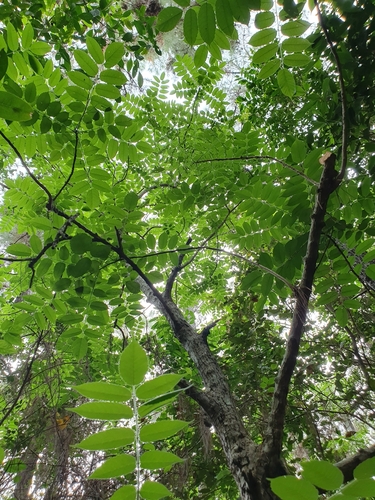
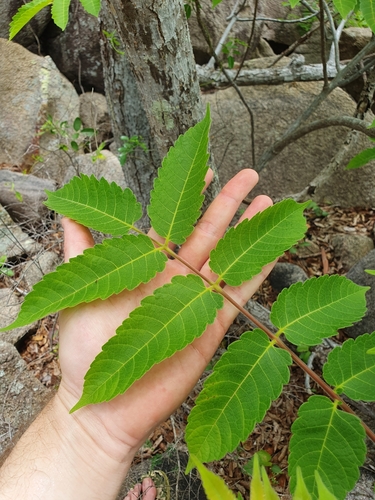
Source: WikipediaBursera fagaroides is a species of flowering plant in the genus Bursera known by the common names torchwood copal and fragrant bursera. It is widespread across much of Mexico from Sonora to Oaxaca, and its range extends just into Arizona in the United States, although some sources suggest that it may now be extirpated in Arizona. This plant is a shrub or tree growing up to 10 meters (33 feet) tall. The trunk is swollen, with peeling red-tinged bark. The leaves are pinnate, each made up of 5 to 11 leaflets. The flowers are borne singly or in clusters at the ends of branches and are white, sometimes with a yellow or greenish tint. The gray-brown triangular fruit is about 6 millimeters long and splits open when ripe to release a reddish seed. Bursera fagaroides is similar in appearance to the elephant tree (Bursera microphylla), but can be differentiated by its longer, narrower leaflets. This plant grows in the scrub of the Sonoran Desert. Farther south in Mexico it can be found in arroyos in subtropical scrub habitat. It is found in shallow soils and rocky substrates, often limestone. The seeds are consumed by birds such as the white-eyed vireo (Vireo griseus), and the grey catbird (Dumetella carolinensis). This species is grown as an ornamental plant and can be sculpted into bonsai.
Description
A shrub or tree. It grows 5-10 m tall. The trunk is swollen and has reddish bark that peels off. The leaves are compound with 5-11 leaflets along the stalk. The flowers are white and can be single or in clusters. They are at the ends of branches. The fruit are brown and triangle shaped. They are 6 mm long and split open to release a reddish seed.
Edible Uses
An oil extracted from the wood is used to flavor baked goods, frozen dairy products, candy, puddings, and drinks.
Traditional Uses
An oil from the wood is used to flavour baked goods, frozen dairy products, candy, puddings and drinks.
This uses section is brief — help expand it
Medicinal Uses
It has potential anti-cancer properties.
Distribution
It is a subtropical plant. It grows in drier areas. It needs a sunny position and can tolerate light frosts.
Where It Grows
Central America, Mexico*, North America,
Cultivation
Plants can be grown by cuttings.
Propagation
Seed - easy. Cuttings.
Other Uses
An essential oil is obtained from the wood. It has an agreeable, flowery, rose-like odour. It is used as a food flavouring. A gum obtained from the plant is used as an adhesive for mending broken dishes. The bark is a source of tannins.
Notes
There are about 100 Bursera species. There are 82 Bursera species in Mexico. It has potential anti-cancer properties.
Synonyms
References (5)
- Bot. Jahrb. Syst. 1:44. 1881 (A. L. P. P. de Candolle & A. C. de Candolle, Monogr. phan. 4:48. 1883)
- Burdock,
- Brown, D., 2002, The Royal Horticultural Society encyclopedia of Herbs and their uses. DK Books. p 148
- Facciola, S., 1998, Cornucopia 2: a Source Book of Edible Plants. Kampong Publications, p 62
- Useful Tropical Plants.