Corylus avellana
L.
Hazel nuts, Cob-nut Hazel, Filberts
iNaturalist· cc-by-nc
(c) Gertraud Seiser, some rights reserved (CC BY-NC), uploaded by Gertraud Seiser
iNaturalist· cc-by-nc
(c) David Ballesteros, some rights reserved (CC BY-NC), uploaded by David Ballesteros
iNaturalist· cc0
no rights reserved, uploaded by Paul Dubery
Summary
Source: WikipediaCorylus avellana, the common hazel, is a species of flowering plant in the birch family Betulaceae. The shrubs usually grow 3–8 metres (10–26 feet) tall. The nut is round, in contrast to the longer filbert nut. Common hazel is native to Europe and Western Asia. The species is mainly cultivated for its nuts. The name 'hazelnut' applies to the nuts of any species in the genus Corylus, but in commercial contexts usually describes C. avellana. This hazelnut or cob nut (sometimes cobnut), the kernel of the seed, is edible and used raw, roasted, or ground into a paste. Historically, the shrub was an important component of the hedgerows used as field boundaries in lowland England. The wood was grown as coppice, with the poles used for wattle-and-daub building and agricultural fencing.
Description
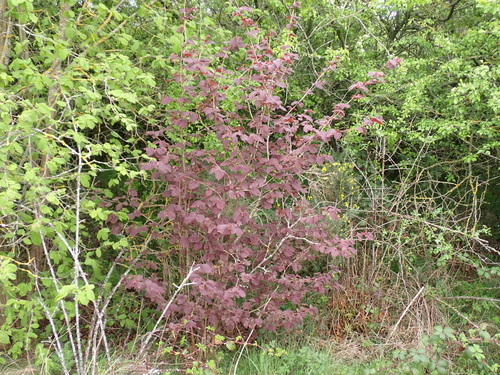
A small deciduous tree up to 7 m high. It spreads to 3-5 m across. The stem is erect, with smooth, brown bark and hairy twigs. The trees sucker a lot, which produces a clumpy bush. The leaves are rounded, tapering to a point, with a heart shaped base. They are 10 cm long, and dull, dark green. The edges of the leaves have saw-like teeth. The leaves are hairy. Male and female flowers are separate, on the one tree. Male flowers are greenish-yellow stalks, like cat's tails. They are 8 cm long and hang downwards. The female flowers are very small, and in groups of four. The fruit are brown nuts 2 cm across. A green husk covers the nut, but then shrinks to allow the nut to darken and ripen. Plants within the Hazel nut group hybridise easily, giving rise to new kinds.
Edible Uses
The seed can be eaten raw or roasted and is used in breads, cakes, biscuits, and sweets. It is an excellent nut for eating out of hand and can also be blended into a plant milk. The seed is rich in oil and ripens in mid to late autumn; it will likely need protection from squirrels. Stored unshelled in a cool place, nuts keep for at least 12 months. A clear yellow edible oil pressed from the seed is used in salad dressings and baking. Per 100g dry weight, the seed provides 650 calories and contains: water 0%, protein 16g, fat 60g, carbohydrate 20g, fibre 4g, ash 2.8g, calcium 250mg, phosphorus 400mg, iron 4mg, sodium 2.1mg, potassium 900mg, thiamine (B1) 0.3mg, riboflavin (B2) 0.5mg, niacin 5.3mg, and vitamin C 6mg.
Traditional Uses
The nuts are eaten raw. They are also roasted and used in bread, cakes, and confectionary. The seeds are eaten both raw and dried. The kernels have a fatty oil which is edible. The male flowers are eaten. The leaves are used for sarma in Turkey. They are rolled around a filling of rice or minced meat.
Medicinal Uses
The bark, leaves, catkins, and fruits are all sometimes used medicinally, with astringent, diaphoretic, febrifuge, nutritive, and odontalgic properties. The seed is stomachic and tonic. The oil has a gentle but consistent and effective action against threadworm or pinworm infection in babies and young children.
Known Hazards
None known
Distribution
A temperate climate plant. They are very frost resistant. They need a certain minimum cold requirement for good production of nuts, so are basically unsuited to the tropics. They need 800-1600 hours of chilling, about the same as apples. They grow in light, well-drained soils, in a protected, partly shaded position. They are drought tender. The flowers can withstand frosts down to -8°C and the wood down to -20°C or -30°C. It suits hardiness zones 4-8. Arboretum Tasmania. Hobart Botanical Gardens.
Where It Grows
Albania, Andorra, Armenia, Asia, Australia, Austria, Azerbaijan, Balkans, Belarus, Belgium, Bosnia, Britain, Bulgaria, Canada, Caucasus, Central Asia, China, Colombia, Czech Republic, Denmark, Estonia, Europe*, Finland, France, Georgia, Germany, Greece, Hungary, India, Iran, Iraq, Ireland, Italy, Kazakhstan, Kosovo, Latvia, Lithuania, Macedonia, Mediterranean, Mexico, Middle East, Netherlands, North Africa, North America, Norway, Pacific, Papua New Guinea, PNG, Poland, Portugal, Romania, Russia, San Marino, Scandinavia, Serbia, Sicily, Slovakia, Slovenia, South America, Spain, Sweden, Switzerland, Syria, Tajikistan, Tasmania, Turkey, Türkiye, Ukraine, USA, Yugoslavia,
Cultivation
An easily grown plant, it succeeds in most soils, but is in general more productive of seeds when grown on soils of moderate fertility. It does less well in rich heavy soils or poor ones. Does well in a loamy soil. Very suitable for an alkaline soil, but it dislikes very acid soils. Succeeds in a pH range 4.5 to 8.5, but prefers a range of 5 to 7. Plants are fairly wind tolerant. A very hardy plant, succeeding in all areas of Britain. The flowers, however, are produced in late winter and early spring and can be damaged by heavy frosts at this time. A parent, together with C. maxima, of many cultivated forms of filberts and cob nuts. There are many named varieties. Plants are self-fertile but a more certain crop is obtained if more than one cultivar is grown. The main difference between cob nuts and filberts is that the husk of a filbert is longer than the seed and often completely encloses it, whilst the husk on a cob nut is shorter than the seed. Squirrels are a major pest of this plant, often decimating the crop of nuts. Often grown as a coppiced shrub in woodlands, the stems have a variety of uses. Members of this genus bear transplanting well and can be easily moved even when relatively large. A food plant for the caterpillars of many lepidoptera species. A clumping plant, forming a colony from shoots away from the crown but with a limited spread. Most Corylus species are not self-fertile and require cross-pollination from another variety to produce nuts. Hazelnuts are typically harvested in late summer to early autumn, when the nuts have matured and fallen from the trees. Hazels flower in late winter to early spring, with male catkins producing pollen before the female flowers emerge. Corylus species are considered medium to fast-growing, reaching a height of about 3 to 6 meters (10 to 20 feet) within 5 to 10 years, depending on the specific variety and growing conditions.
Propagation
Seed is best sown as soon as it is harvested in autumn in a cold frame, germinating in late winter or spring. Stored seed should be pre-soaked in warm water for 48 hours, then given 2 weeks of warm stratification followed by 3–4 months of cold stratification; it germinates in 1–6 months at 20°C. When large enough to handle, prick seedlings out into individual pots and grow on in a cold frame or sheltered spot outdoors through their first winter, then plant out in late spring or early summer. Layering in autumn is easy and takes about 6 months. Division of suckers in early spring is very easy; divisions can be planted straight into permanent positions.
Other Uses
Hazels work well in agroforestry systems as hedging, windbreaks, or for erosion control, and can be intercropped with other plants to benefit soil health and biodiversity. The seed contains up to 65% of a non-drying oil used in paints and cosmetics. Whole seeds can be used to polish and oil wood, giving an easy application and a good finish. Finely ground seeds are used as an ingredient in cosmetic face masks. Plants grown as a tall hedge should be left untrimmed or only lightly trimmed if a seed crop is wanted. Bark and leaves are a source of tannin. The wood is soft, easy to split, and not very durable but is beautifully veined; it is used for inlay work, small furniture, hurdles, wattles, basketry, and pea sticks. Twigs are used as dowsing rods. The wood yields good quality charcoal valued by artists. Hazels produce wind-pollinated catkins that are not rich in nectar but do provide pollen that some insects utilise. The nuts are a valuable food source for birds, small mammals, and insects, and the dense foliage provides shelter and nesting habitat, with leaf litter supporting a variety of organisms. Rough bark and dense foliage also offer overwintering sites for invertebrates.
Production
Nuts are produced 3-4 years after planting. Layered plants produce nuts in 2-3 years. Yields of 4-6 kg of nuts per tree, are average. Nuts fall when mature. Nuts store well. They should be kept dry and cool.
Other Information
It is a cultivated plant. It is sold in local markets. Seeds have been introduced into Papua New Guinea for trial plantings only and are not really a suitable plant for the country.
Notes
There are about 15 Corylus species.
Nutrition
| Part | Moisture | kJ | kcal | Protein | Vit A | Vit C | Iron | Zinc |
|---|---|---|---|---|---|---|---|---|
| Seed | 5.2 | 2810 | 672 | 11.96 | — | 3 | 3.8 | 1.9 |
Synonyms
Also Known As
Alun, Aryekh, Aryeshnik, Avellana, Avellano, Basurrek, Bindak, European filbert, European hazelnut, Findak, Findik, Funduk, Hassel, Hazelnoot, Lazdas, Lazdynas, Leithi, Leska, Lesnik, Lieska, Lijeska, Ljathi, Magyarofa, Mogyorofa, Monyaro, Navadna leska, Nisore, Nocella, Nocciolo, Oriesky, Oryekh, Oulanio, Pahklipuu, Sarapuu, Tkhili, Tkhleni, Urretxa
References (88)
- Bianchini, F., Corbetta, F., and Pistoia, M., 1975, Fruits of the Earth. Cassell. p 192
- Bodkin, F., 1991, Encyclopedia Botanica. Cornstalk publishing, p 287
- Bremness, L., 1994, Herbs. Collins Eyewitness Handbooks. Harper Collins. p 100
- Brickell, C. (Ed.), 1999, The Royal Horticultural Society A-Z Encyclopedia of Garden Plants. Convent Garden Books. p 304
- Brouk, B., 1975, Plants Consumed by Man. Academic Press, London. p 216
Show all 88 references Hide references
- Bussman, R. W., et al, 2016, A comparative ethnobotany of Khevsureti, Samtskhe-Javakheti, Tusheti, Svaneti, and Racha-Lechkhumi, Republic of Georgia (Sakartvelo), Caucasus. Journal of Ethnobiology and Ethnomedicine (2016) 12:4
- Bussman, R. W. et al, 2017, Ethnobotany of Samtskhe-Javakheti, Sakartvelo (Republic of Georgia), Caucasus. Indian Journal of Traditional Knowledge Vol. 16(1) pp 7-24
- Bussman, R. W., et al, 2021, Unity in diversity—food plants and fungi of Sakartvelo (Republic of Georgia), Caucasus. Journal of Ethnobiology and Ethnomedicine (2021) 17:72 p 7
- Cerne, M., 1992, Wild Plants from Slovenia used as Vegetables. Acta Horticulturae 318.
- Cheifetz, A., (ed), 1999, 500 popular vegetables, herbs, fruits and nuts for Australian Gardeners. Random House p 185
- Cundall, P., (ed.), 2004, Gardening Australia: flora: the gardener's bible. ABC Books. p 422
- Denes, A., et al, 2012, Wild plants used for food by Hungarian ethnic groups living in the Carpathian Basin. Acta Societatis Botanicorum Poloniae 81 (4): 381-396
- Dogan, Y., et al, 2015, Of the importance of a leaf: the ethnobotany of sarma in Turkey and the Balkans. Journal of Ethnobiology and Ethnomedicine, 11:56
- Dzhangaliev, A. D., et al, 2003, The Wild Fruit and Nut Plants of Kazakhstan, Horticultural Reviews, Vol. 29. pp 305-371
- Ertug, F., 2000, An Ethnobotanical Study in Central Anatolia (Turkey). Economic Botany Vol. 54. No. 2. pp. 155-182
- Ertug, F, Yenen Bitkiler. Resimli Türkiye Florası -I- Flora of Turkey - Ethnobotany supplement
- Etherington, K., & Imwold, D., (Eds), 2001, Botanica's Trees & Shrubs. The illustrated A-Z of over 8500 trees and shrubs. Random House, Australia. p 232
- Facciola, S., 1998, Cornucopia 2: a Source Book of Edible Plants. Kampong Publications, p 82
- FAO, 1995, Edible Nuts. Non Wood Forest Products 5.
- Farrar, J.L., 1995, Trees of the Northern United States and Canada. Iowa State University press/Ames p 311
- Flowerdew, B., 2000, Complete Fruit Book. Kyle Cathie Ltd., London. p 198
- French, B.R., 1986, Food Plants of Papua New Guinea, A Compendium. Asia Pacific Science Foundation p 188
- Girard, N. J., 2020, Sustainable Foraging of Wild Edible Plants in Norway. A Biocultural Approach. M. Sc. thesis Norwegian University. p 129
- Glowinski, L., 1999, The Complete Book of Fruit Growing in Australia. Lothian. p 82
- Gouldstone, S., 1983, Growing your own Food-bearing Plants in Australia. Macmillan p 143
- Harris, E & J., 1983, Field Guide to the Trees and Shrubs of Britain. Reader's Digest. p 68
- Hedrick, U.P., 1919, (Ed.), Sturtevant's edible plants of the world. p 220
- Heywood, V. H. & Zohary, D.,1995, A Catalogue of the Wild Relatives of Cultivated Plants Native to Europe. Flora Mediterranea 5 - 1995, p 383
- http://en.hortipedia.com
- Hu, Shiu-ying, 2005, Food Plants of China. The Chinese University Press. p 338
- Irving, M., 2009, The Forager Handbook, A Guide to the Edible Plants of Britain. Ebury Press p 64
- Jardin, C., 1970, List of Foods Used In Africa, FAO Nutrition Information Document Series No 2.p 33
- Joyce, D., 1998, The Garden Plant Selector. Ryland, Peters and Small. p 133
- Kalle, R. & Soukand, R., 2012, Historical ethnobotanical review of wild edible plants of Estonia (1770s-1960s) Acta Societatis Botanicorum Poloniae 81(4):271-281
- Kargioglu, M., et al, 2008, An Ethnobotanical Survey of Inner-West Anatolia, Turkey. Human Ecology 36:763-777
- Kiple, K.F. & Ornelas, K.C., (eds), 2000, The Cambridge World History of Food. CUP p 433, 1784
- Kremer, B.P., 1995, Shrubs in the Wild and in Gardens. Barrons. p 164
- Lazarides, M. & Hince, B., 1993, Handbook of Economic Plants of Australia, CSIRO. p 65
- Lord, E.E., & Willis, J.H., 1999, Shrubs and Trees for Australian gardens. Lothian. p 218
- Luczaj, L., 2012, Ethnobotanical review of wild edible plants of Slovakia. Acta Societatis Botanicorum Poloniae 81(4):245-255
- Łukasz Łuczaj and Wojciech M Szymański, 2007, Wild vascular plants gathered for consumption in the Polish countryside: a review. J Ethnobiol Ethnomedicine. 3: 17
- Łuczaj, L., et al, 2013, Wild edible plants of Belarus: from Rostafiński’s questionnaire of 1883 to the present. Journal of Ethnobiology and Ethnomedicine 2013, 9:21
- Luczaj, L., et al, 2015, Wild food plants and fungi used by Ukrainians in the western part of the Maramureş region in Romania. Acta Soc Bot Pol 84(3):339–346
- Mabey, R., 1973, Food for Free. A Guide to the edible wild plants of Britain, Collins. p 29
- Mattalia, G., et al, 2012, Traditional uses of wild food and medicinal plants among Brigasc, Kye ́, and Provenc ̧al communities on the Western Italian Alps. Genet Resour Crop Evol. Springer
- Menendez-Baceta, G., et al, 2012, Wild edible plants traditionally gathered in Gorbeialdea (Biscay, Basque Country) Genetic Resources and Crop Evolution 59:1329-1347
- Menninger, E.A., 1977, Edible Nuts of the World. Horticultural Books. Florida p 12
- Michael, P., 2007, Edible Wild Plants and Herbs. Grub Street. London. p 117
- Miskoska-Milevska, E. et al, 2020, Traditional uses of wild edible plants in the Republic of North Macedonia. PHYTOLOGIA BALCANICA 26(1): 155–162, Sofia, 2020 p 158
- Mulherin, J., 1994, Spices and natural flavourings. Tiger Books, London. p 110
- Nanagulyan, S., et al, 2020, Wild plants and fungi sold in the markets of Yerevan (Armenia). Journal of Ethnobiology and Ethnomedicine 16:26
- Nedelcheva A., 2013, An ethnobotanical study of wild edible plants in Bulgaria. EurAsian Journal of BioSciences 7, 77-94
- Pardo-de-Santayana, M., et al, 2007, Traditional knowledge of wild edible plants used in the northwest of the Iberian Peninsula (Spain and Portugal): a comparative study. Journal of Ethnobiology and Ethnomedicine 2007, 3:27
- Pasta, S., et al, 2020, An Updated Checklist of the Sicilian Native Edible Plants: Preserving the Traditional Ecological Knowledge of Century-Old Agro-Pastoral Landscapes. Frontiers in Plant Science. Volume 11|Article 388
- Pieroni, A., 1999, Gathered wild food plants in the Upper Valley of the Serchio River (Garfagnana), Central Italy. Economic Botany 53(3) pp 327-341
- Pieroni, A., et al, 2005, Food for two seasons: Culinary uses of non-cultivated local vegetables and mushrooms in a south Italian village. International Journal of Food Sciences and Nutrition, 56(4): 245-272
- Pieroni, A., 2008, Local plant resources in the ethnobotany of Theth, a village in the Northern Albanian Alps. Genet Resour Crop Evol (2008) 55:1197–1214
- Pieroni, A., et al, 2012, "We are Italians!": The Hybrid Ethnobotany of a Venetian Diaspora in Eastern Romania. Human Ecology 40:435-451
- Pieroni, A. et al, 2013, One century later: the folk botanical knowledge of the last remaining Albanians of the upper Reka Valley, Mount Korab, Western Macedonia. Journal of Ethnobiology and Ethnomedicine. 9:22
- Pieroni, A., 2017, Traditional uses of wild food plants, medicinal plants, and domestic remedies in Albanian, Aromanian and Macedonian villages in South-Eastern Albania. Journal of Herbal Medicine Volume 9, September 2017, Pages 81-90
- Pieroni, A. & Soukand, R., 2018, Forest as Stronghold of Local Ecological Practice: Currently Used Wild Food Plants in Polesia, Northern Ukraine. Economic Botany, XX(X) pp. 1-21
- Plants for a Future, The Field, Penpol, Lostwithiel, Cornwall, PL22 0NG, UK. http://www.scs.leeds.ac.uk/pfaf/
- Postman, J. D., et al, 2012, Recent NPGS Coordinated Expeditions in the Trans-Caucasus Region to Collect Wild Relatives of Temperate Fruit and Nut Crops. In Acta Horticulturae Number 948 p 191-198
- Prakofjewa, J., et al, 2023, Boundaries Are Blurred: Wild Food Plant Knowledge Circulation across the Polish-Lithuanian-Belarusian Borderland. Biology 2023, 12, 571.
- Pruse, B., et al, 2021, Active Wild Food Practices among Culturally Diverse Groups in the 21st Century across Latgale, Latvia. Biology 2021, 10, 551.
- Redzic, S. J., 2006, Wild Edible Plants and their Traditional Use in the Human Nutrition in Bosnia-Herzegovina. Ecology of Food and Nutrition, 45:189-232
- Rexhepi, B., et al, 2018, Ethnobotanical Study of Wild Edible Plants in Pelagonia Region (Southwestern Macedonia) International Journal of Advances in Science Engineering and Technology, Vol. 6 (1) p 57
- Sansanelli, S., et al, 2014, Wild food plants traditionall consumed in the area of Bologna (Emilia Romagna region, Italy). Journal of Ethnobiology and Ethnomedicine 10:69
- Segura, S. et al, 2018, The edible fruit species in Mexico. Genet Resour Crop Evol (2018) 65:1767–1793
- Sfikas, G., 1984, Trees and shrubs of Greece. Efstathiadis Group. Athens. p 134
- Simkova, K. et al, 2014, Ethnobotanical review of wild edible plants used in the Czech Republic. Journal of Applied Botany and Food Quality 88, 49-67
- Small, E., 2009, Top 100 Food Plants. The world's most important culinary crops. NRC Research Press. p 264
- Smith, P.M., 1979, Hazel, in Simmonds, N.W., (ed), Crop Plant Evolution. Longmans. London. p 305
- Soukand, R., et al, 2017, Multi-functionality of the few: current and past uses of wild plants for food and healing in Liubań region, Belarus. Journal of Ethnobiology and Ethnomedicine (2017) 13:10
- Sp. pl. 2:998. 1753
- Sulamain, N., et al, 2023, The Importance of Becoming Tamed: Wild Food Plants as Possible Novel Crops in Selected Food-Insecure Regions. Horticulturae 2023, 9, 171.
- Tardio, J., et al, 2006, Ethnobotanical review of wild edible plants in Spain. Botanical J. Linnean Soc. 152, 27-71
- USDA, ARS, National Genetic Resources Program. Germplasm Resources Information Network - (GRIN). [Online Database] National Germplasm Resources Laboratory, Beltsville, Maryland. Available: www.ars-grin.gov/cgi-bin/npgs/html/econ.pl (10 April 2000)
- van Wyk, B., 2005, Food Plants of the World. An illustrated guide. Timber press. p 153
- Vanhanen, S. & Pesonen, P., 2015, Wild plant gathering in Stone Age Finland. Quaternary International xxx (2015) 1-13
- Vari, A., et al, 2020, Berries, greens, and medicinal herbs—mapping and assessing wild plants as an ecosystem service in Transylvania (Romania). Journal of Ethnobiology and Ethnomedicine (2020) 16:13
- Vorstenbosch, T., et al, 2017, Famine food of vegetal origin consumed in the Netherlands during World War II. Journal of Ethnobiology and Ethnomedicine (2017) 13:63
- Wickens, G.E., 1995, Edible Nuts. FAO Non-wood forest products. FAO, Rome. p 18, 118
- Wiersema, J. H. & Leon, B., 2013, World Economic Plants. A Standard Reference CRC Press. 2nd Ed. p 203
- Wild Edible Plants of the Whitmire Wildflower Garden. Missouri Botanical Gardens.
- World Checklist of Useful Plant Species 2020. Royal Botanic Gardens, Kew
- Young, J., (Ed.), 2001, Botanica's Pocket Trees and Shrubs. Random House. p 279
- Zeven, A. C. & de West, J. M. J., 1982, Dictionary of cultivated plants and their regions of diversity. Wageningen. p 89
More from Betulaceae
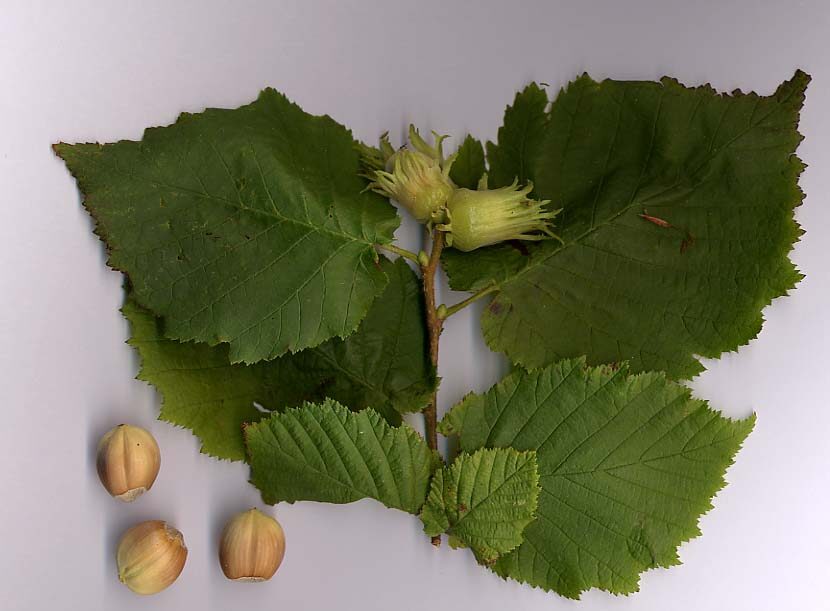
Corylus sieboldiana
Japanese hazel, Siebold's hazel
Corylus sieboldiana mandschurica - (Maxim.&Rupr.)Sc
Hairy hazel, Japanese hazelnut
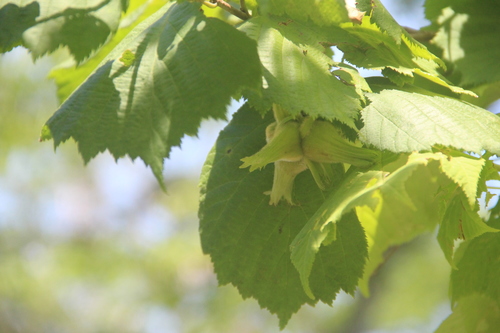
Corylus sieboldiana subsp. mandschurica
Hairy hazel, Japanese hazelnut
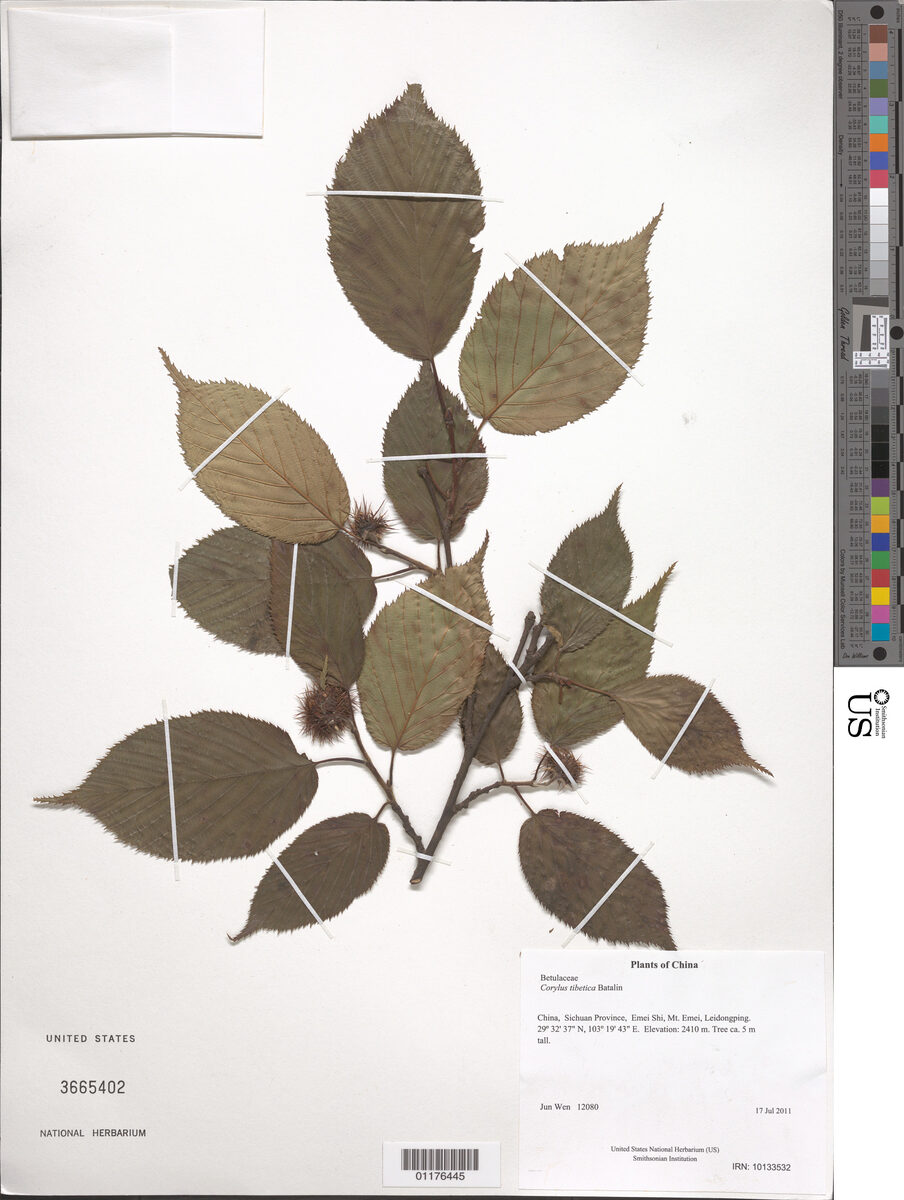
Corylus tibetica
Tibetan Hazelnut
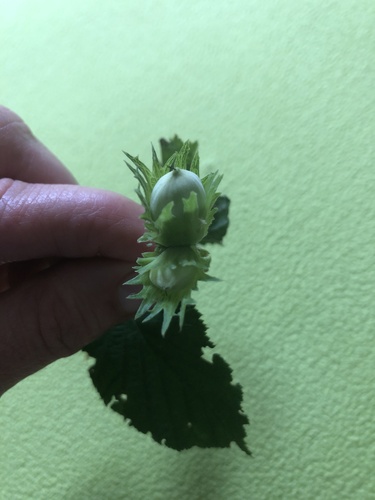
Corylus x colurnoides
Trazel, Turkish trazel
Corylus x sp 1
Hazelbert, Mildred filbert