Corallocarpus welwitschii
(Naud.) Hook. f. ex Welw.
iNaturalist· cc0
no rights reserved
iNaturalist· cc-by-nc
(c) Emilia Nakale, some rights reserved (CC BY-NC)
Description
A pumpkin family herb. It lie along the ground or can be a climber. It is 1 m long. It keeps growing from year to year. It has a taproot and puts out annual stems. The fruit are oblong and 2 cm long.
Edible Uses
The stems are cooked in water or milk; the leaves are eaten raw or cooked in water or milk; the ripe fruit are sweet and eaten raw; the bitter roots are baked in ashes.
Traditional Uses
The stems are cooked in water or milk. The leaves are eaten raw and also cooked in water or milk. The ripe fruit are sweet and eaten raw. The roots are bitter and are baked in the ashes.
Distribution
A tropical plant. It grows in hot arid areas with a marked dry season. It grows in sands. It can grow in arid places.
Where It Grows
Africa, Angola, Botswana, Central Africa, Congo, Namibia, South Africa, Southern Africa,
Nutrition
| Part | Moisture | kJ | kcal | Protein | Vit A | Vit C | Iron | Zinc |
|---|---|---|---|---|---|---|---|---|
| Roots | 77.6 | 90 | 22 | 2.7 | — | 2.1 | 1.3 | 0.6 |
Also Known As
Ohona, Okombanyengo
References (8)
- Bosch, C.H., 2004. Corallocarpus bainesii (Hook.f.) A.Meeuse. [Internet] Record from Protabase. Grubben, G.J.H. & Denton, O.A. (Editors). PROTA (Plant Resources of Tropical Africa), Wageningen, Netherlands. < http://database.prota.org/search.htm>. Accessed 15 October 2009.
- Fox, F. W. & Young, M. E. N., 1982, Food from the Veld. Delta Books. p 178
- Jardin, C., 1970, List of Foods Used In Africa, FAO Nutrition Information Document Series No 2.p 130
- Royal Botanic Gardens, Kew (1999). Survey of Economic Plants for Arid and Semi-Arid Lands (SEPASAL) database. Published on the Internet; http://www.rbgkew.org.uk/ceb/sepasal/internet [Accessed 15th April 2011]
- Ruiters-Welcome, A. K., 2019, Food plants of southern Africa. Ph.D. thesis. Univ. of Johannesburg p 48
Show all 8 references Hide references
- Wehmeyer, A. S, 1986, Edible Wild Plants of Southern Africa. Data on the Nutrient Contents of over 300 species
- Welcome, A. K. & Van Wyk, B.-E., 2019, An inventory and analysis of the food plants of southern Africa. South African Journal of Botany 122 (2019) 136–179
- World Checklist of Useful Plant Species 2020. Royal Botanic Gardens, Kew
More from Cucurbitaceae
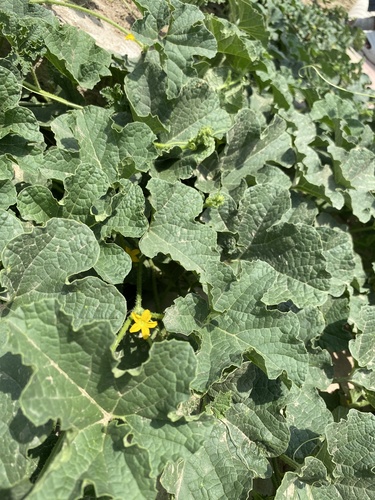
Cucumis melo subsp. agrestis
Early melon, Native gooseberry, People's melon
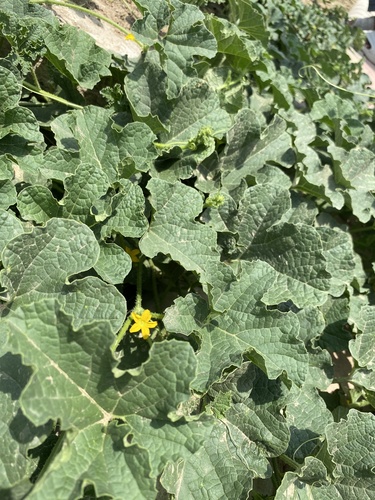
Cucumis melo var. agrestis
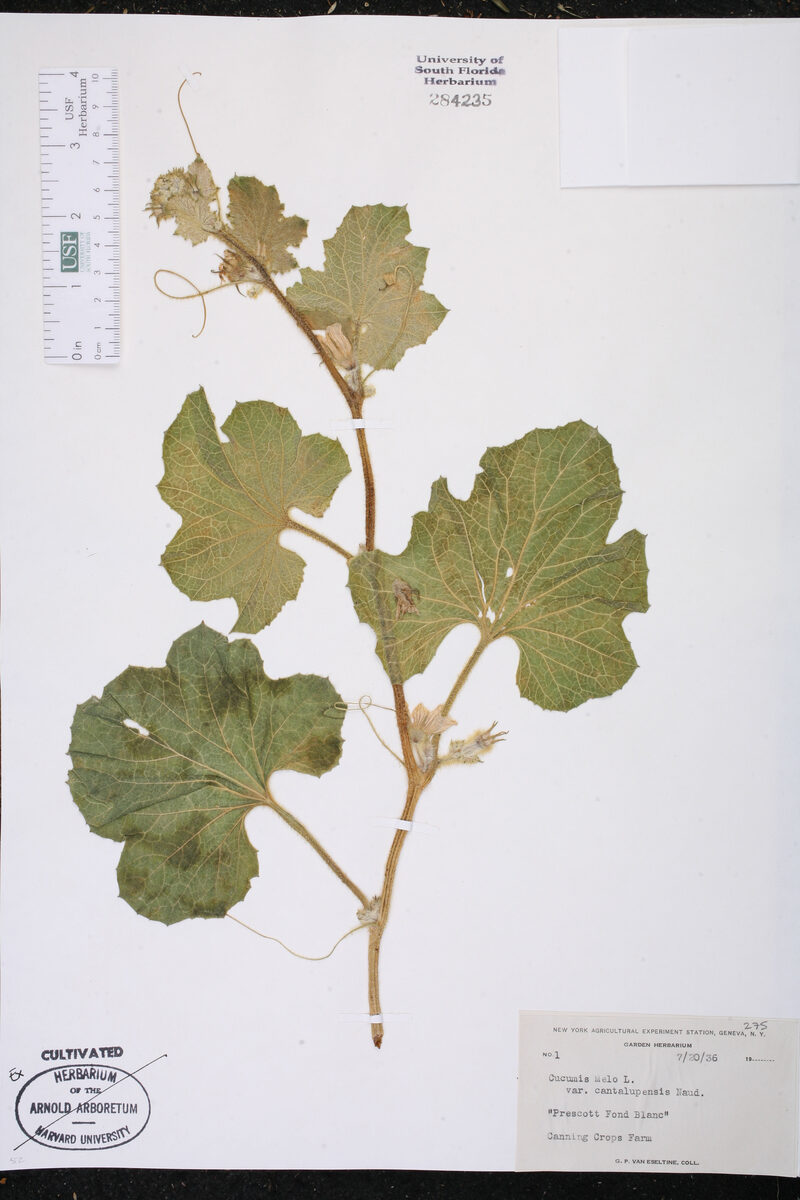
Cucumis melo var. cantalupensis
Musk melon, Cantaloupe, Rock melon
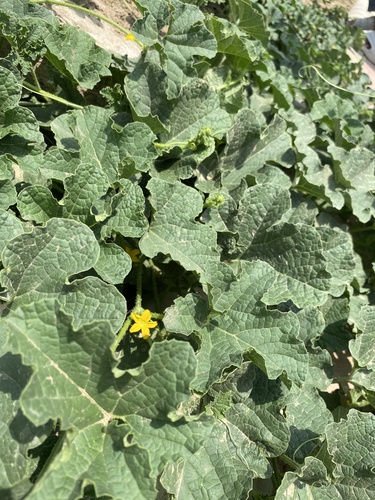
Cucumis melo var. chito
Dudaim melon, Garden-lemon, Mango melon, Melon-apple, Orange melon
Cucumis melo var. conomon
Oriental pickling melon, Tea melon
Cucumis melo var. dudaim
Watermelon, Dudaim melon, Pomegranate melon