Cucumis melo var. cantalupensis
L., Naudin
Musk melon, Cantaloupe, Rock melon
gbif· cc-by-nc-sa
University of South Florida Herbarium (USF)
gbif· cc0
Botanical Research Institute of Texas
Summary
Source: WikipediaCucumis melo, also known as melon, is a species of Cucumis that has been developed into many cultivated varieties. The fruit is a pepo. The flesh is either sweet or bland, with or without an aroma, and the rind can be smooth (such as honeydew), ribbed (such as European cantaloupe), wrinkled (such as Casaba melon), or netted (such as American cantaloupe). The species is sometimes referred to as muskmelon. However, there is no consensus about the usage of this term, as it can also be used as a specific name for the musky netted-rind American cantaloupe, or as a generic name for any sweet-flesh variety such the inodorous smooth-rind honeydew melon. The origin of melons is not known. Research has revealed that seeds and rootstocks were among the goods traded along the caravan routes of the Ancient World. Some botanists consider melons native to the Levant and Egypt, while others place their origin in Iran, India or Central Asia. Still others support an African origin; in modern times, wild melons can still be found in some African countries.
Description
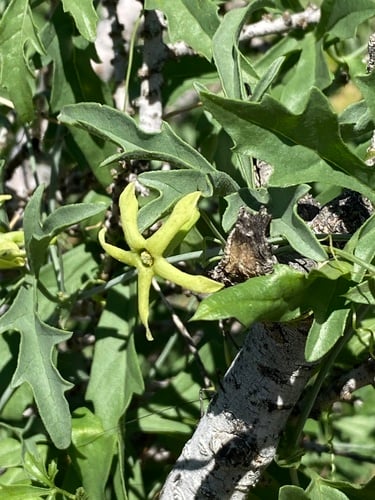
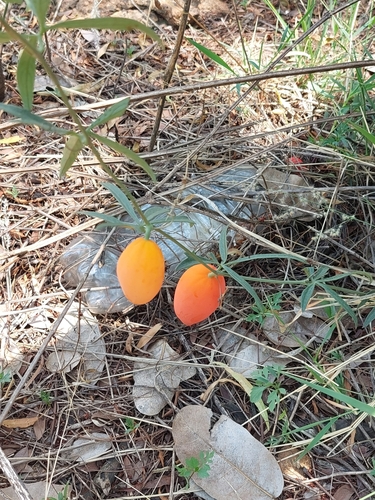
A pumpkin family plant. It is an annual herb. It has a creeping habit and stems lie along the ground. The leaves are thin and have long soft hairs. The leaves have lobes and the leaves are 10-18 cm long. The flowers occur singly and with both sexes separate but on the same plant. The fruit are round or oval. The fruit have pale coloured raised ridges forming a network.
Edible Uses
The fruit is eaten fresh. Seeds can also be eaten, and it is used as a vegetable.
Traditional Uses
Fruit are eaten fresh.
This uses section is brief — help expand it
Distribution
A warm temperate to tropical plant. It suits hardiness zones 8-11
Where It Grows
Africa, Asia, Australia, Brazil, Central Asia, China, Europe, Fiji, France, Italy, Kiribati, Mediterranean, Nauru, Pacific, Tajikistan, Tasmania, Tonga, Tuvalu,
Cultivation
Plants are grown from seed.
Other Information
It is a commercially cultivated vegetable. Fruit are popular.
Notes
There are about 25 Cucumis species.
Nutrition
| Part | Moisture | kJ | kcal | Protein | Vit A | Vit C | Iron | Zinc |
|---|---|---|---|---|---|---|---|---|
| Fruit | 93.6 | 102 | 24 | 1 | 2000 | 25 | 0.8 | 0.1 |
Synonyms
Also Known As
Kakuri, Kharbuj, Te meren
References (13)
- Cheifetz, A., (ed), 1999, 500 popular vegetables, herbs, fruits and nuts for Australian Gardeners. Random House p 186
- Hedrick, U.P., 1919, (Ed.), Sturtevant's edible plants of the world. p 230
- Kays, S. J., and Dias, J. C. S., 1995, Common Names of Commercially Cultivated Vegetables of the World in 15 languages. Economic Botany, Vol. 49, No. 2, pp. 115-152
- Kiple, K.F. & Ornelas, K.C., (eds), 2000, The Cambridge World History of Food. CUP p 1744
- Lazarides, M. & Hince, B., 1993, Handbook of Economic Plants of Australia, CSIRO. p 70
Show all 13 references Hide references
- Lorenzi, H., Bacher, L., Lacerda, M. & Sartori, S., 2006, Brazilian Fruits & Cultivated Exotics. Sao Paulo, Instituto Plantarum de Estuados da Flora Ltda. p 387
- Lyle, S., 2006, Discovering fruit and nuts. Land Links. p 167
- Plants for a Future database, The Field, Penpol, Lostwithiel, Cornwall, PL22 0NG, UK. http://www.scs.leeds.ac.uk/pfaf/
- Thaman, R.R., 1976, The Tongan Agricultural System, University of the South Pacific, Suva, Fiji. p 393
- Thaman, R. R., 1987, Plants of Kiribati: A listing and analysis of vernacular names. Atoll Research Bulletin No. 296
- Thaman, R. R, 2016, The flora of Tuvalu. Atoll Research Bulletin No. 611. Smithsonian Institute p 80
- USDA, ARS, National Genetic Resources Program. Germplasm Resources Information Network - (GRIN). [Online Database] National Germplasm Resources Laboratory, Beltsville, Maryland. Available: www.ars-grin.gov/cgi-bin/npgs/html/econ.pl (10 April 2000)
- van Wyk, B., 2005, Food Plants of the World. An illustrated guide. Timber press. p 157