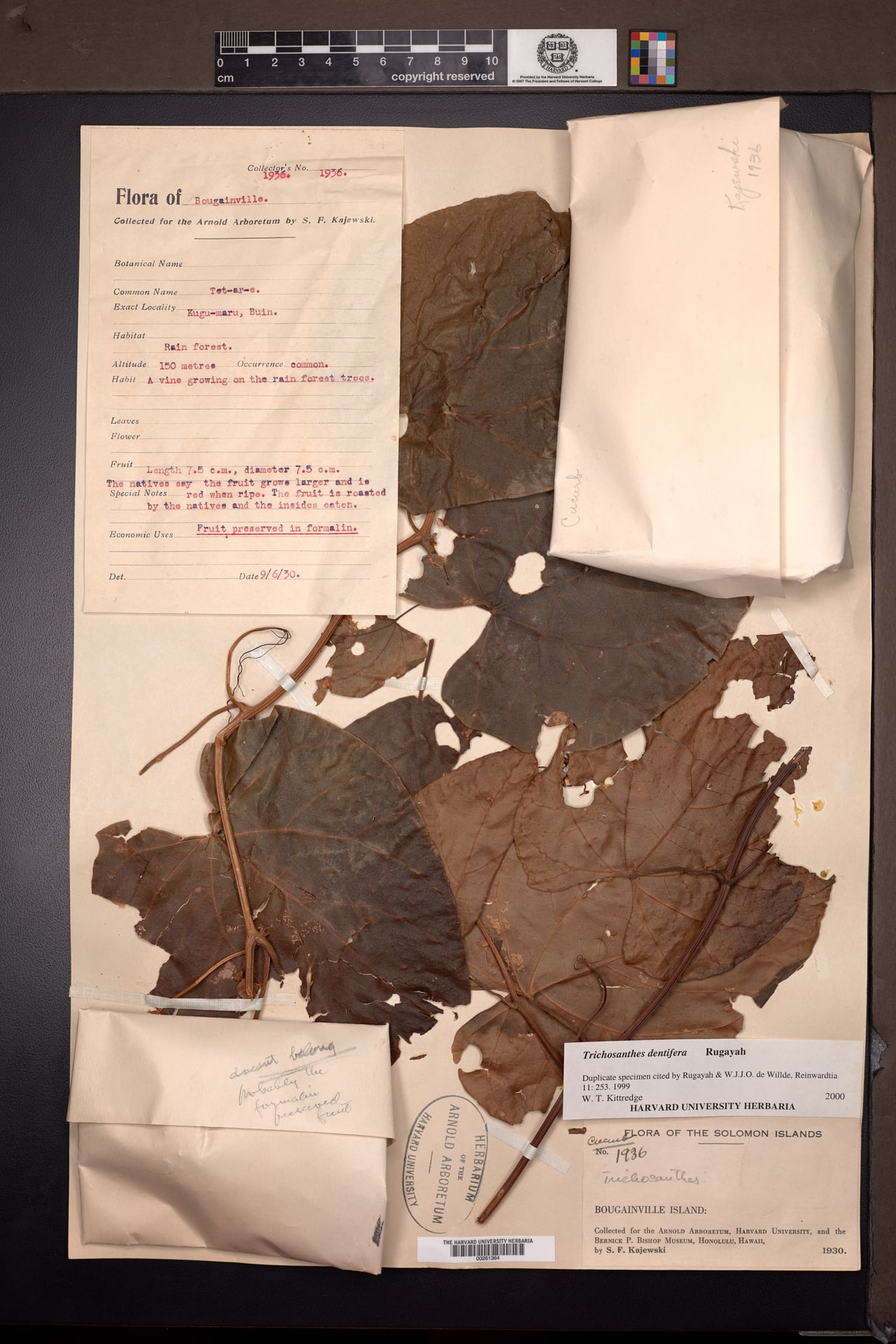
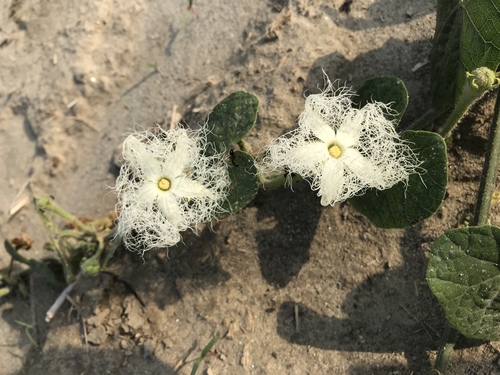
Cucumis melo var. conomon
(Thunb.) Makino
Oriental pickling melon, Tea melon
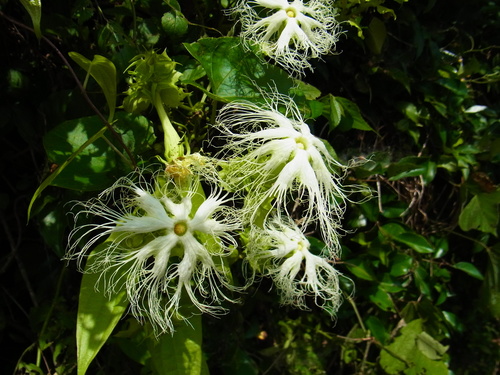
iNaturalist· cc-by-nc
(c) Thinley Dema, some rights reserved (CC BY-NC), uploaded by Thinley Dema
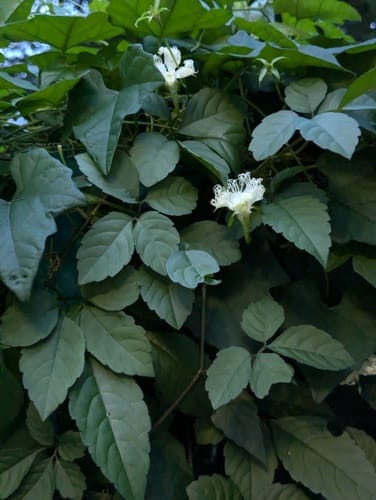
iNaturalist· cc-by-nc
(c) Kelly Kines Crawford, some rights reserved (CC BY-NC), uploaded by Kelly Kines Crawford
iNaturalist· cc-by-nc
(c) Jon McIntyre, some rights reserved (CC BY-NC), uploaded by Jon McIntyre
Summary
Source: WikipediaCucumis melo, also known as melon, is a species of Cucumis that has been developed into many cultivated varieties. The fruit is a pepo. The flesh is either sweet or bland, with or without an aroma, and the rind can be smooth (such as honeydew), ribbed (such as European cantaloupe), wrinkled (such as Casaba melon), or netted (such as American cantaloupe). The species is sometimes referred to as muskmelon. However, there is no consensus about the usage of this term, as it can also be used as a specific name for the musky netted-rind American cantaloupe, or as a generic name for any sweet-flesh variety such the inodorous smooth-rind honeydew melon. The origin of melons is not known. Research has revealed that seeds and rootstocks were among the goods traded along the caravan routes of the Ancient World. Some botanists consider melons native to the Levant and Egypt, while others place their origin in Iran, India or Central Asia. Still others support an African origin; in modern times, wild melons can still be found in some African countries.
Description
A pumpkin family herb. It grows each year from seed. It has tendrils and is a climber. The stem are angular. It has prickly hairs on the ridges. The leaves are simple and alternate. They are 8-11 cm long. They are broadly heart shaped with round lobes at the base. There are 3-5 lobes with sharp ends. There are be a few teeth along the edge. The flowers are yellow and male and female flowers are separate. Male flowers are in groups and female flowers occur singly. The fruit are 20-25 cm long. They are cucumber like with smooth skin. The flesh is greenish-white. There are several named cultivated varieties.
Edible Uses
Fruit are eaten raw or cooked, used in soups, stuffed with minced meat, and made into pickles at both immature and mature stages. The seeds can be roasted and eaten.
Traditional Uses
The fruit are eaten raw or cooked. They are also preserved or stuffed with minced meats, then cooked. They are often used in soups. The immature and mature fruits are made into pickles. The seeds can be roasted and eaten.
Distribution
It is a subtropical and tropical plant. It grows at low altitudes.
Where It Grows
Asia, China, Fiji, Hawaii, Indochina, Japan, Korea, Nauru, North America, Pacific, SE Asia, Sri Lanka, Thailand, Tuvalu, USA,
Cultivation
Plants are grown by seeds. They are planted 1-2 cm deep. They can be transplanted when 10-15 cm tall.
Production
Fruit are ready to harvest after 3-4 months.
Other Information
It is a commercially cultivated vegetable.
Notes
There are about 25 Cucumis species.
Nutrition
| Part | Moisture | kJ | kcal | Protein | Vit A | Vit C | Iron | Zinc |
|---|---|---|---|---|---|---|---|---|
| Fruit | 95.6 | 54 | 13 | 1 | — | — | 0.4 | — |
Synonyms
Also Known As
Chinese white cucumber, Hen-kekiri, Shiro-uri, Tsa gwa, Ts'it kwa, Uri, Vellarikkai, Yue gua
References (19)
- Bot. Mag. (Tokyo) 16:16. 1902
- Facciola, S., 1998, Cornucopia 2: a Source Book of Edible Plants. Kampong Publications, p 85
- Food Composition Tables for use in East Asia FAO http://www.fao.org/infoods/directory No. 601 (As Cucumis conomon)
- Hu, Shiu-ying, 2005, Food Plants of China. The Chinese University Press. p 697
- Kays, S. J., and Dias, J. C. S., 1995, Common Names of Commercially Cultivated Vegetables of the World in 15 languages. Economic Botany, Vol. 49, No. 2, pp. 115-152
Show all 19 references Hide references
- Larkcom, J., 1991, Oriental Vegetables, John Murray, London, p 87
- Plants for a Future database, The Field, Penpol, Lostwithiel, Cornwall, PL22 0NG, UK. http://www.scs.leeds.ac.uk/pfaf/
- Rajapaksha, U., 1998, Traditional Food Plants in Sri Lanka. HARTI, Sri Lanka. p 143
- Small, E., 2009, Top 100 Food Plants. The world's most important culinary crops. NRC Research Press. p 239
- Staples, G.W. and Herbst, D.R., 2005, A tropical Garden Flora. Bishop Museum Press, Honolulu, Hawaii. p 265
- Tanaka,
- Thaman, R. R, 2016, The flora of Tuvalu. Atoll Research Bulletin No. 611. Smithsonian Institute p 80
- Tindall, H.D., 1983, Vegetables in the tropics. Macmillan p. 159
- Uphof,
- USDA, ARS, National Genetic Resources Program. Germplasm Resources Information Network - (GRIN). [Online Database] National Germplasm Resources Laboratory, Beltsville, Maryland. Available: www.ars-grin.gov/cgi-bin/npgs/html/econ.pl (10 April 2000)
- Walters, T. W., 1989, Historical Overview on Domesticated Plants in China with Special Emphasis on the Cucurbitaceae. Economic Botany 43(3): 297-313 (As Cucumus melo L. subsp. agrestis var. conomon)
- Wiersema, J. H. & Leon, B., 2013, World Economic Plants. A Standard Reference CRC Press. 2nd Ed. p 215
- Yang, Si-Lin and Walters, T. W., 1992, Ethnobotany and the Economic role of the Cucurbitaceae of China. Economic Botany, Vol. 46, No. 4, pp. 349-367
- Zeven, A. C. & de West, J. M. J., 1982, Dictionary of cultivated plants and their regions of diversity. Wageningen. p 35