Codiaeum variegatum
(L.) Rumph. ex A. Juss.
Croton, Variegated Laurel
iNaturalist· cc-by-nc
(c) Abubakar Mu'azu, some rights reserved (CC BY-NC), uploaded by Abubakar Mu'azu
iNaturalist· cc-by
(c) Jayesh Patil, some rights reserved (CC BY)
iNaturalist· cc-by-nc
(c) Liz, some rights reserved (CC BY-NC), uploaded by Liz
Summary
Source: WikipediaCodiaeum variegatum, commonly known as croton or variegated croton amongst many other names, is a species of plant in the Euphorbiaceae family. Initially described by Carl Linnaeus in 1753, its native range is from Java east to Fiji, and from the Philippines south to Queensland, Australia. It is widely cultivated and has been introduced to many other countries.
Description
A shrub or small tree. It grows 3-8 m high. The leaves vary in shape. They are oval and taper to the base. They are thick and leathery. Leaves can have a range of colours. They are 10-20 cm long by 4-8 cm wide. Flowers are separately male and female. The male flowers are in groups of 2-6 while the female flowers are single. The fruit is a capsule 0.6-0.8 cm across.
Edible Uses
The very young leaves of some varieties are eaten as a flavouring and are blanched for salads.
Traditional Uses
The very young leaves of some kinds are eaten as a flavouring. They are blanched for salads. Caution: It can be toxic or produce allergies.
This uses section is brief — help expand it
Medicinal Uses
The leaves are abortifacient, antiamoebic, antibacterial, anticancer, antifungal, antioxidant, emmenagogue, purgative and sedative. A decoction of the crushed leaves is used in the treatment of diarrhoea. Chewing three leaves and then swallowing the juice is used to stimulate menstrual flow, to induce an abortion or to facilitate parturition. The leafsap is drunk and also applied topically to treat a snake bite. The sap of the leaves, combined with coconut milk, is used in the treatment of syphylitic lesions. The young leaves, combined with Pandanus macroieacceretia, coconut milk and the root sap of Areca catechu, is used in the treatment of gonorrhoea. The green liquid from boiled leaves is used as a wash to ease fevers. The sap from the leaves or the bark is used to treat sores and fungal infections. A decoction of the root is used in the treatment of gastric ulcers. The root, combined with betel nut (Areca catechu) is chewed as a treatment for stomachache and to give temporary relief from toothache. Studies have shown the leaves and shoots to be rich in alkaloids (most abundant), cardiac glycosides, saponins, tannins, cardenolides, flavenoids, steroids and phyllates. Phytochemical screening of six clone cultivars showed bioactive constituents that included alkaloids, anthraquinones, flavanoids, terpenes, steroid, phenol, saponins, tannins, phlobatannin and cardenolide, which suggests their use as antibacterial, antiamoebic and antifungal. In a study of 55 traditional medicinal plants in Cameroon, only the leaves extract of this species exhibited a clear antiamoebic activity that was more pronounced than the conventional treatment metronidazole. A study showed the latex to have a high molluscicidal activity against freshwater snails.
Known Hazards
As with the majority of the spurges, when broken or cut, every part of C. variegatum will "bleed" and drip a milky, caustic sap, eventually drying into a latex-like consistency. Care must be taken to avoid touching this latex, such as only handling the plant while wearing sufficiently protective gloves, as well as eye goggles or sunglasses. Generally, small, inadvertent drops of the sap on one's hands or skin will cause no ill effect in the majority of the population, provided it is promptly washed off using soapy, warm water—this may even be followed with the use of a hand sanitizer or even a mildly diluted isopropyl alcohol. However, direct contact between the sap of Euphorbiaceae and the eyes, ears, nose, mouth, genitals, or any open wound, is strongly discouraged and may result in unknown side effects. Complications stemming from sap contact may range from mild to extreme burning pain, itchiness, rash or temporary dulling of the senses; depending on the region of the body affected, this sensory reaction may include temporary or long-term complications with sight, hearing, taste, feeling or smell, among other issues. In certain sensitive-skinned individuals, contact with small amounts of the sap can cause contact dermatitis. The entire plant, including its bark, roots, inflorescences and foliage, is poisonous. The primary alkaloid present is the chemical compound 5-desoxyingenol. The plant contains an oil which is violently purgative and a suspected carcinogen. Consumption of the seeds can be fatal to children and even adults.
Distribution
A tropical plant. They do best in moist, humus-rich soil. It grows from sea level to 900 m above sea level. It suits hardiness zones 11-12. In XTBG Yunnan.
Where It Grows
Asia, Australia, Caroline Islands, Central America, China, Costa Rica, Dominican Republic, East Timor, Fiji, Haiti, Hawaii, India, Indochina, Indonesia, Kiribati, Malaysia*, Mariana Islands, Marquesas, Micronesia, Myanmar, Niue, Pacific, Pakistan, Palau, Pan tropical, Philippines, Sao Tome and Principe, SE Asia, Sri Lanka, St. Kitts and Nevis, Thailand, Timor-Leste, Tuvalu, USA, Vanuatu, West Indies,
Cultivation
Plants can be grown from seed or cuttings. Tip cuttings or air layering can be used. It can be used for hedges or living fences.
Propagation
Seed - Cuttings
Other Information
It is a commercially cultivated vegetable.
Notes
There are about 6-17 Codiaeum species. In Botanical Gardens in Slovenia presumably in a hot house.
Synonyms
Also Known As
Bombay laurel, Hahali, Katomas, Koson, Leston puyitos, Paw-bye-la, Pisani kroton, Puding mas, Puding perak, Puring, Sasli, Tomas, Ywehla-kyet-hmi, Ywethla
References (29)
- Ambasta, S.P. (Ed.), 2000, The Useful Plants of India. CSIR India. p 134
- Bodkin, F., 1991, Encyclopedia Botanica. Cornstalk publishing, p 270
- Brickell, C. (Ed.), 1999, The Royal Horticultural Society A-Z Encyclopedia of Garden Plants. Convent Garden Books. p 284
- Burkill, I.H., 1966, A Dictionary of the Economic Products of the Malay Peninsula. Ministry of Agriculture and Cooperatives, Kuala Lumpur, Malaysia. Vol 1 (A-H) p 625
- Cabalion, P. and Morat, P., 1983, Introduction le vegetation, la flore et aux noms vernaculaires de l'ile de Pentcoste (Vanuatu), In: Journal d'agriculture traditionnelle et de botanique appliquee JATBA Vol. 30, 3-4
Show all 29 references Hide references
- Cooper, W. and Cooper, W., 2004, Fruits of the Australian Tropical Rainforest. Nokomis Editions, Victoria, Australia. p 178
- Cundall, P., (ed.), 2004, Gardening Australia: flora: the gardener's bible. ABC Books. p 398
- Etherington, K., & Imwold, D., (Eds), 2001, Botanica's Trees & Shrubs. The illustrated A-Z of over 8500 trees and shrubs. Random House, Australia. p 220
- Euphorb. gen. 80, 111, t. 9, fig. 30. 1824 (As (L.) A. Juss.)
- Flora of Pakistan. www.eFloras.org
- Franklin, J., Keppel, G., & Whistler, W., 2008, The vegetation and flora of Lakeba, Nayau and Aiwa Islands, Central Lau Group, Fiji. Micronesica 40(1/2): 169–225, 2008
- Hedrick, U.P., 1919, (Ed.), Sturtevant's edible plants of the world. p 209
- Kays, S. J., and Dias, J. C. S., 1995, Common Names of Commercially Cultivated Vegetables of the World in 15 languages. Economic Botany, Vol. 49, No. 2, pp. 115-152
- Llamas, K.A., 2003, Tropical Flowering Plants. Timber Press. p 189
- Lord, E.E., & Willis, J.H., 1999, Shrubs and Trees for Australian gardens. Lothian. p 217
- Lugod, G.C. and de Padua L.S., 1979, Wild Food Plants in the Philippines. Vol. 1. Univ. of Philippines Los Banos. p 34
- Martin, F.W. & Ruberte, R.M., 1979, Edible Leaves of the Tropics. Antillian College Press, Mayaguez, Puerto Rico. p 49, 191
- Nakahara, K. et al, 2002, Antimutagenicity of Some Edible Thai Plants, and a Biocative Carbazole Alkaloid, Mahanine, Isolated from Micromelum minutum. Journal of Agricultural and Food Chemistry. 50: 4796-4892
- Ochse, J.J. et al, 1931, Vegetables of the Dutch East Indies. Asher reprint. p 268
- Plants of Haiti Smithsonian Institute http://botany.si.edu/antilles/West Indies
- Seidemann J., 2005, World Spice Plants. Economic Usage, Botany, Taxonomy. Springer. p 113
- Staples, G.W. and Herbst, D.R., 2005, A tropical Garden Flora. Bishop Museum Press, Honolulu, Hawaii. p 283
- Sukarya, D. G., (Ed.) 2013, 3,500 Plant Species of the Botanic Gardens of Indonesia. LIPI p 614
- Thaman, R. and W. Clarke, Paper on Agroforestry on Aneityum and Tanna, Vanuatu from Internet
- Thaman, R. R., 1987, Plants of Kiribati: A listing and analysis of vernacular names. Atoll Research Bulletin No. 296
- Thaman, R. R, 2016, The flora of Tuvalu. Atoll Research Bulletin No. 611. Smithsonian Institute p 84
- Townsend, K., 1994, Across the Top. Gardening with Australian Plants in the tropics. Society for Growing Australian Plants, Townsville Branch Inc. p 137
- World Checklist of Useful Plant Species 2020. Royal Botanic Gardens, Kew
- Young, J., (Ed.), 2001, Botanica's Pocket Trees and Shrubs. Random House. p 259
More from Euphorbiaceae
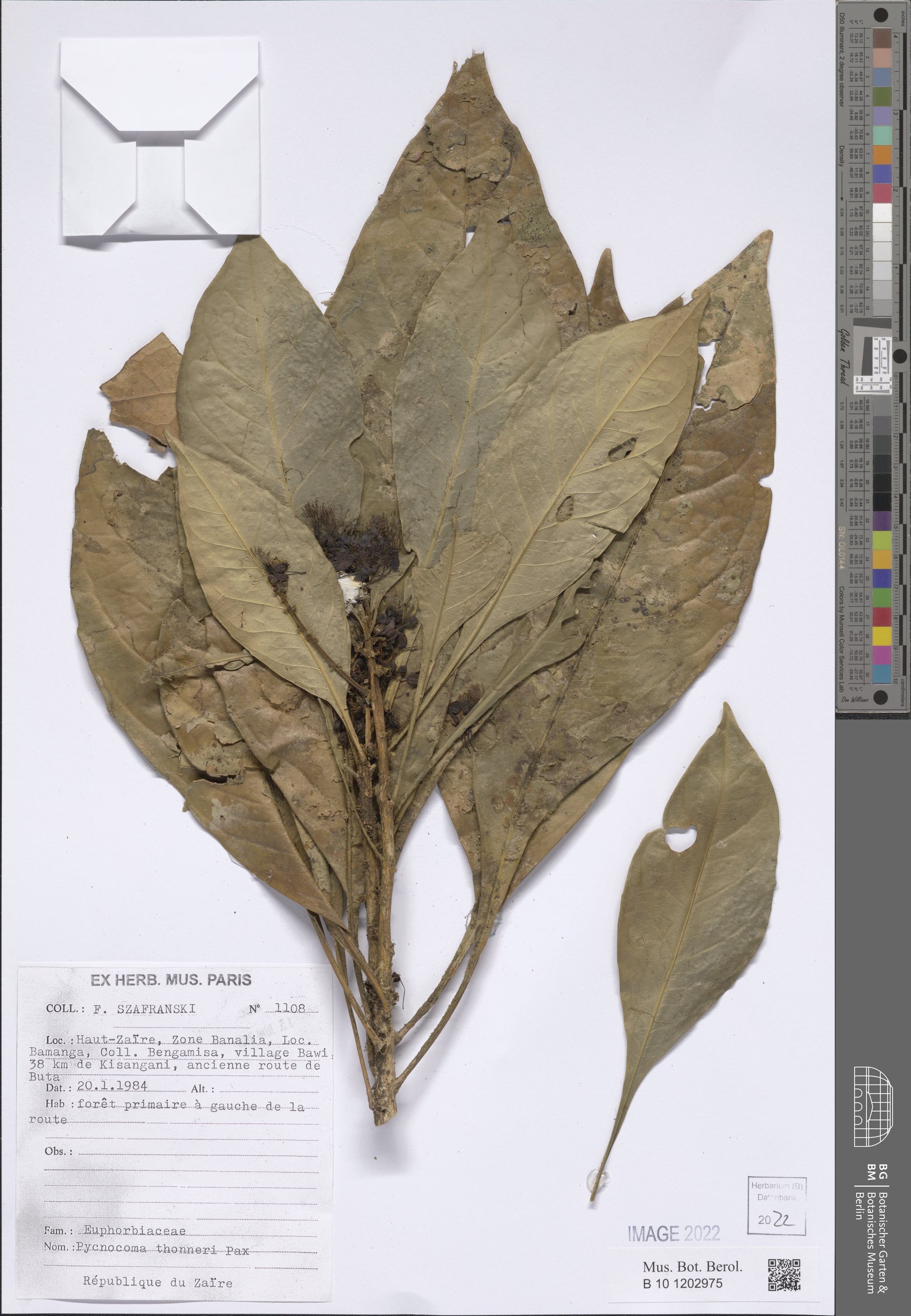
Pycnocoma thonneri
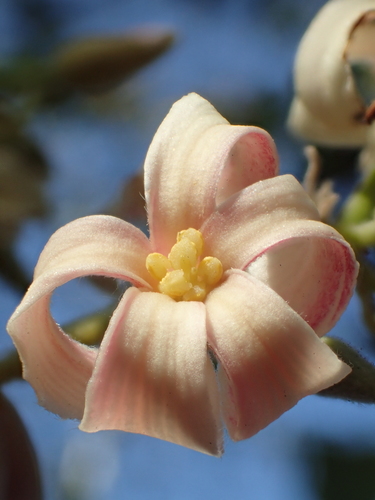
Reutealis trisperma
Soft Lumbang, Banucalag nut, Philippine tung tree
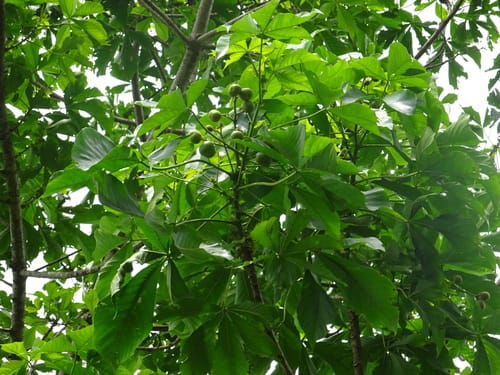
Ricinodendron heudelotii
Manketti nut, Zambezi almond
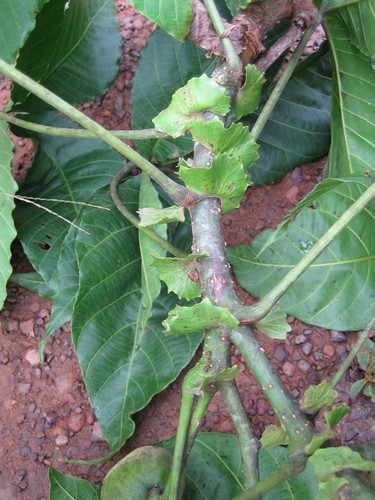
Ricinodendron heudelotii subsp. africanum
Zambezi Almond, Mugongo Nut
Ricinus communis
Castor bean, Castor Oil Plant
Sapium glandulosum
Brazil sapium, Bolivia rubber