Tragia brevipes
Pax
iNaturalist· cc-by-nc
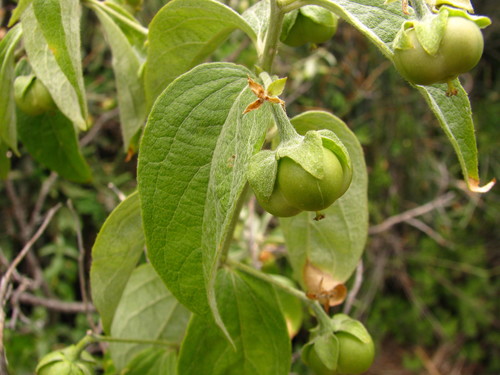
(c) Mike Plagens, some rights reserved (CC BY-NC), uploaded by Mike Plagens
iNaturalist· cc-by-nc
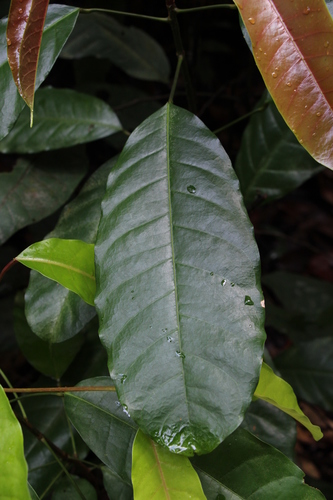
(c) Mike Plagens, some rights reserved (CC BY-NC)
Description
A climbing herb. It has a woody rootstock and stems 3 m long. The stems can be hairy. The leaves are oval and without lobes at the base. They are narrowly and deeply heart shaped. The leaves are 2-11 cm long by 1-6 cm wide.
Edible Uses
The leaves are eaten.
Medicinal Uses
A root decoction is taken as a purgative, especially for babies and small children. The roots are given to women with labour pain. A decoction of roots and leaves is drunk to promote conception. Leaves, roots and twigs are used to treat poliomyelitis. Pain caused by rheumatism is treated by rubbing the leaves on the painful joints. A leaf extract is drunk to cure gonorrhoea, to kill internal parasites including tapeworm and to treat stomach-ache, diarrhoea and gastroenteritis. The ash of burnt leaves is inhaled to cure elephantiasis A methanol extract of the fruits has antibacterial activity against Staphylococcus aureus. Extracts of leaves, stems and roots did not show activity against a panel of bacteria and fungi. An ethanolic leaf extract showed significant activity against Entamoeba histolytica.
Known Hazards
The plant has stinging hairs.
Distribution
It is a tropical plant. It grows in the understorey in forests along rivers. It also grows near lakes on Kalahari and. In southern Africa is grows from 90-1,800 m altitude.
Where It Grows
Africa, Cameroon, Central Africa, East Africa, Malawi, Somalia, Southern Africa, Tanzania, Zambia, Zimbabwe,
Synonyms
Also Known As
Cinyanya
References (4)
- Flora Zambesiaca. http://apps.kew.org/efloras
- Fowler, D. G., 2007, Zambian Plants: Their Vernacular Names and Uses. Kew. p 27
- Kakeya, 1976,
- Peters, C. R., O'Brien, E. M., and Drummond, R.B., 1992, Edible Wild plants of Sub-saharan Africa. Kew. p 112