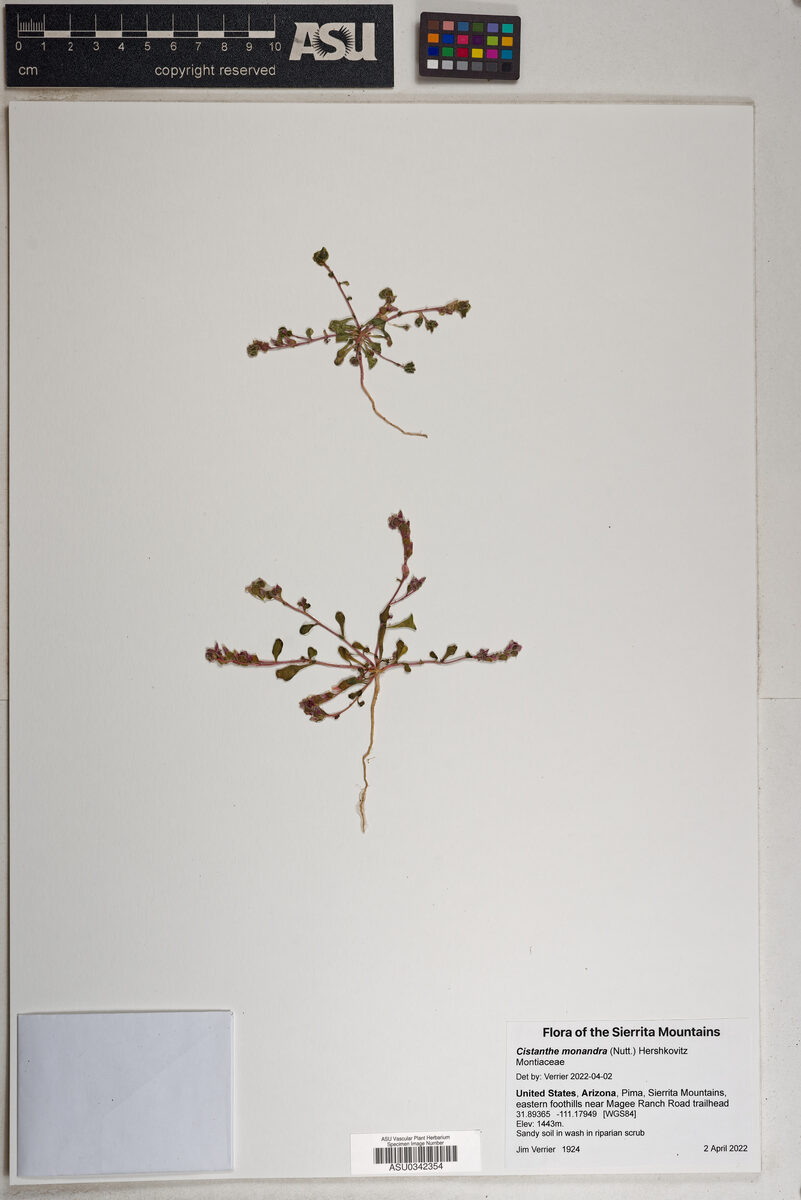
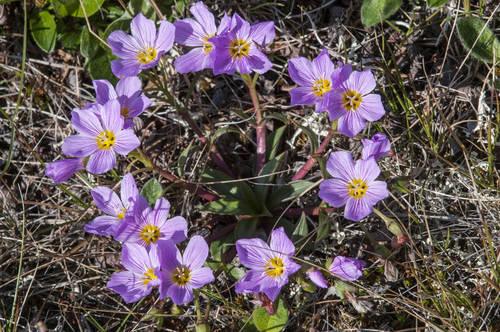
Claytonia virginica
Linn.
Spring beauty, Virginia Springbeauty, Fairy spuds
iNaturalist· cc-by-nc
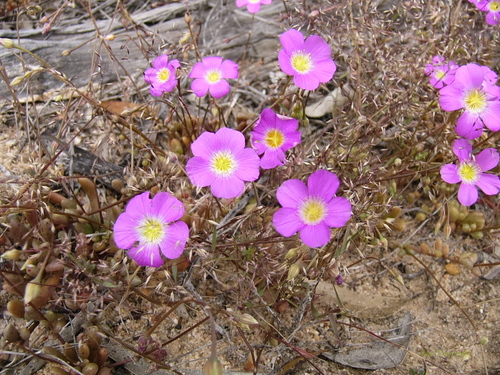
(c) Rob Clark and Cassi Paslick, some rights reserved (CC BY-NC), uploaded by Rob Clark and Cassi Paslick
iNaturalist· cc-by-nc
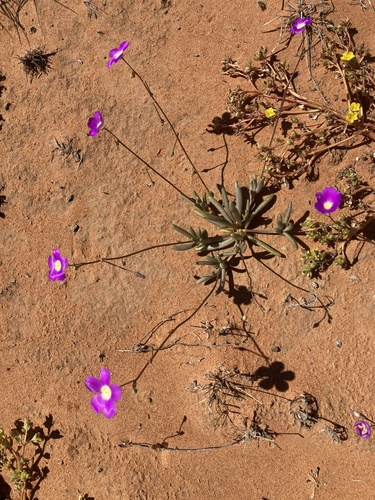
(c) Matthew Brown, some rights reserved (CC BY-NC), uploaded by Matthew Brown
iNaturalist· cc-by-nc
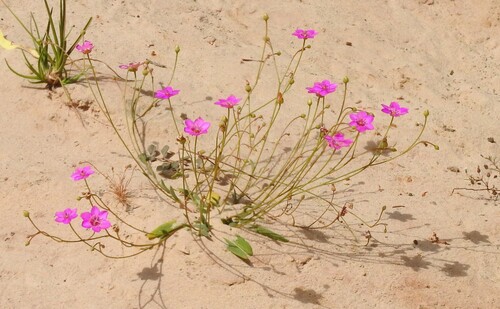
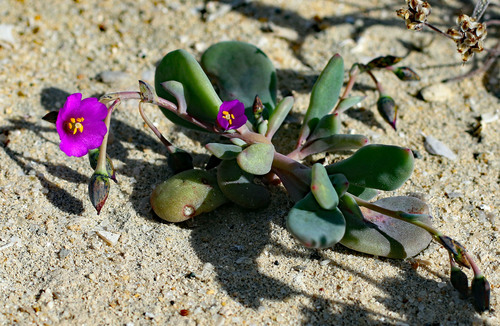
(c) Matthew Brown, some rights reserved (CC BY-NC), uploaded by Matthew Brown
Summary
Source: WikipediaClaytonia virginica, the Virginia springbeauty, eastern spring beauty, grass-flower narrowleaf springbeauty or fairy spud, is an herbaceous perennial plant in the family Montiaceae. Its native range is eastern North America. Its scientific name honors Colonial Virginian botanist John Clayton (1694–1773).
Description
A small erect, slender plant. It grows 20-30 cm high and spreads 30 cm wide. It has large thick round tubers. These can be 3-5 cm across. The leaves are simple and narrow and widest about the middle. They are 5-15 cm long by 1-3 cm wide. The flowers are pink in loose clusters. They have 5 petals and are 1-3 cm across. They have dark pink veins. The fruit are egg shaped capsules. They are 8-13 mm long.
Edible Uses
The globose tuber, up to 20cm in diameter, is rich in starch and vitamins A and C. Raw, it has a pleasant radish-like, nutty flavour; cooked, it tastes like a cross between a potato and a chestnut. Leaves and flowering stems can be eaten raw or cooked, added to salads or used as greens, and are often available through winter.
Traditional Uses
The small corms can be boiled for 10-15 minutes, peeled and served with butter. The corms can be baked, fried or mashed. They are used in salads, soups and stews. The young leaves and stems are eaten raw in salads and also steamed and served in greens.
Medicinal Uses
A cold infusion or decoction of powdered roots has been given to children suffering from convulsions. It has been said that eating the raw plants can permanently prevent conception.
Distribution
It is a temperate plant. It grows in moist woods and rich soil. It suits hardiness zones 4-8.
Where It Grows
Australia, Britain, Canada, Europe, North America, USA,
Cultivation
Prefers a damp peaty soil and a position in full sun. Another report says that it requires some shade. Requires a lime-free soil. Ephemeral emerging in spring and dying back by summer every year.
Propagation
Surface sow seed on a peat-based compost in spring in a cold frame. Germination usually takes place within 2–4 weeks at 10°C. When large enough to handle, prick seedlings out into individual pots and grow on in the cold frame for at least their first winter. Plant out in late spring or early summer after the last expected frosts. Offsets can also be divided in spring or autumn.
Other Uses
None known
Notes
They have also been put in the family Portulacaceae.
Synonyms
References (15)
- Beckstrom-Sternberg, Stephen M., and James A. Duke. "The Foodplant Database." http://probe.nalusda.gov:8300/cgi-bin/browse/foodplantdb.(ACEDB version 4.0 - data version July 1994)
- Cundall, P., (ed.), 2004, Gardening Australia: flora: the gardener's bible. ABC Books. p 385
- Elias, T.S. & Dykeman P.A., 1990, Edible Wild Plants. A North American Field guide. Sterling, New York p 91
- Esperanca, M. J., 1988. Surviving in the wild. A glance at the wild plants and their uses. Vol. 2. p 248
- Facciola, S., 1998, Cornucopia 2: a Source Book of Edible Plants. Kampong Publications, p 187
Show all 15 references Hide references
- Hedrick, U.P., 1919, (Ed.), Sturtevant's edible plants of the world. p 203
- Illustrated Flora of Central Texas p 908
- Jackes, D. A., Edible Forest Gardens
- Kermath, B. M., et al, 2014, Food Plants in the Americas: A survey of the domesticated, cultivated and wild plants used for Human food in North, Central and South America and the Caribbean. On line draft. p 241
- Lim, T. K., 2015, Edible Medicinal and Non Medicinal Plants. Volume 9, Modified Stems, Roots, Bulbs. Springer p 24
- Plants for a Future database, The Field, Penpol, Lostwithiel, Cornwall, PL22 0NG, UK. http://www.scs.leeds.ac.uk/pfaf/
- Slocum, P.D. & Robinson, P., 1999, Water Gardening. Water Lilies and Lotuses. Timber Press. p 113
- Sp. pl. 1:204. 1753
- Tozer, F., 2007, The Uses of Wild Plants. Green Man Publishing. p 70
- Wild Edible Plants of the Whitmire Wildflower Garden. Missouri Botanical Gardens.