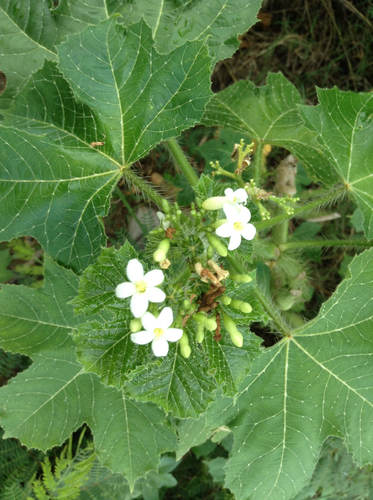
Cnidoscolus texanus
(Mull.Arg.) Small
Bull nettle
iNaturalist· cc-by-nc-sa
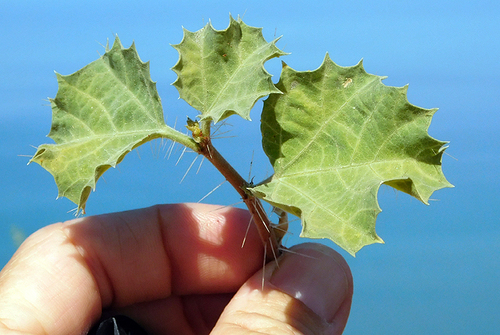
(c) 106584015630019574849, some rights reserved (CC BY-NC-SA), uploaded by 106584015630019574849
iNaturalist· cc-by
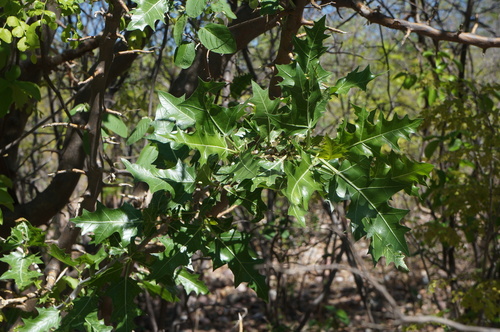
(c) Sam Kieschnick, some rights reserved (CC BY), uploaded by Sam Kieschnick
iNaturalist· cc-by-nc
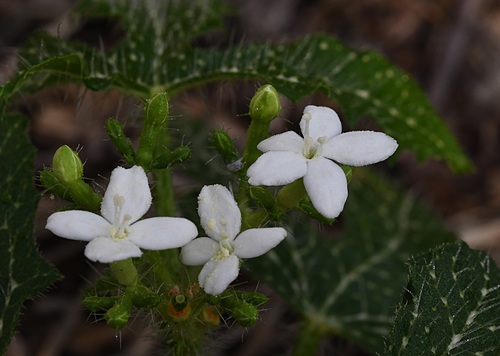
(c) Melanie, some rights reserved (CC BY-NC), uploaded by Melanie
Summary
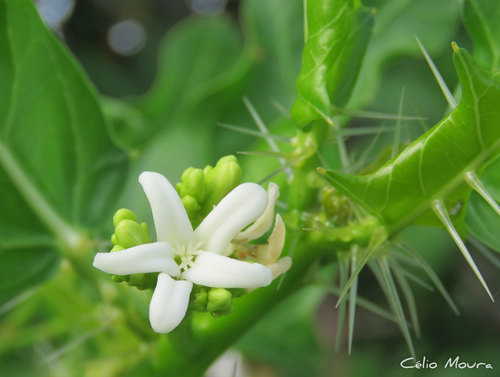
Source: WikipediaCnidoscolus texanus, commonly known as Texas bullnettle (also Texas bull nettle and Texas bull-nettle), tread-softly, mala mujer, and finger rot, is a perennial herb covered with stinging hairs. The main stem, branches, leaves, and seed pods are all covered with hispid or glass-like bristly hairs that release an allergenic toxin upon contact. Contact with the plant results in intense pain: stinging, burning, and itching lasting for hours. It is native to the U.S. states of Texas, Arkansas, Kansas, Louisiana, and Oklahoma and also native to the northeastern state of Tamaulipas, Mexico. It is a herbaceous flowering plant that grows between 30–80 cm (11.8–31.5 in) tall and as much as 1 m (3.3 ft) across. Texas bullnettle (Cnidoscolus texanus) has showy, fragrant white flowers that can bloom throughout the year in southern regions of its distribution, predominantly March to November in northern regions. It is a drought-tolerant plant, therefore making it a superb choice for xeriscaping. This plant is attractive to birds, bees, butterflies, and other insects. The seeds are known to be consumed by Rio Grande wild turkeys (Meleagris gallopavo intermedia) and mourning doves (Zenaida macroura). The seeds, which are edible when ripe, are also consumed by humans. Indigenous Peoples harvested bullnettle seeds in the past, and some people still eat them today. Each seed pod contains three seeds, which are smooth, somewhat cylindrical, brownish white, and a half to three quarters of an inch long. When ripe, they are dispersed when the pod burst open, catapulting the seeds away from the plant. Great care and caution is advised in collecting the seeds. Tull suggested wearing long pants, long sleeves, boots, and gloves to pick the seed pods with a pair of tongs, then dropping them into a paper sack and waiting for the pods to ripen and burst in the sack to collect the seeds. They are said to be appetizing and tasty with a nutty flavor.
Description
A subtropical shrub in the Euphorbiaceae family covered with stinging hairs.
This description is brief — help expand it
Edible Uses
The seeds, once washed and winnowed, can be eaten raw, roasted, or ground into flour.
Traditional Uses
The seeds once washed and winnowed can be eaten raw, or roasted or ground into flour.
This uses section is brief — help expand it
Distribution
It is a subtropical plant.
Where It Grows
Mexico, North America, USA,
Also Known As
Mala mujer
References (2)
- Kermath, B. M., et al, 2014, Food Plants in the Americas: A survey of the domesticated, cultivated and wild plants used for Human food in North, Central and South America and the Caribbean. On line draft. p 247
- Tozer, F., 2007, The Uses of Wild Plants. Green Man Publishing. p 70