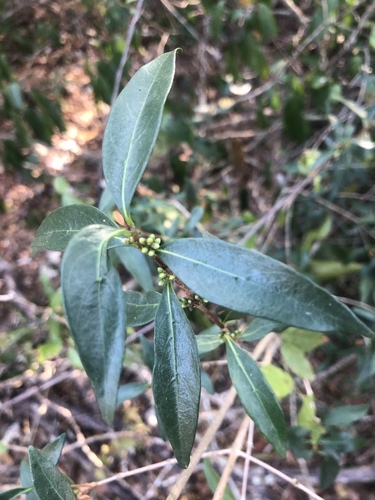
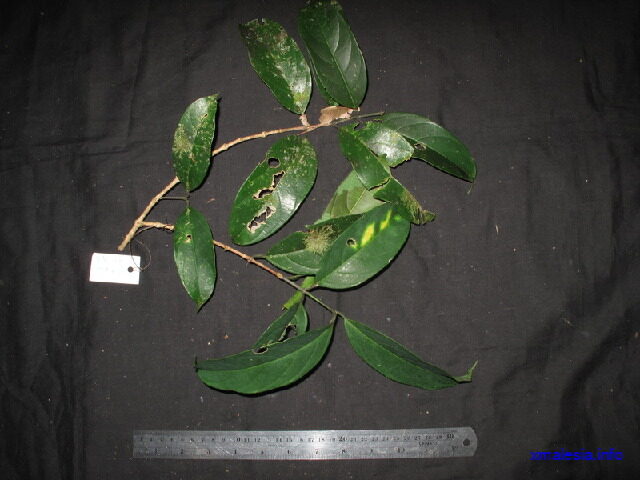
Cinchona calisaya
Wedd.
Peruvian bark, Chinabark, Ledgerbark, Quinine
iNaturalist· cc-by-nc
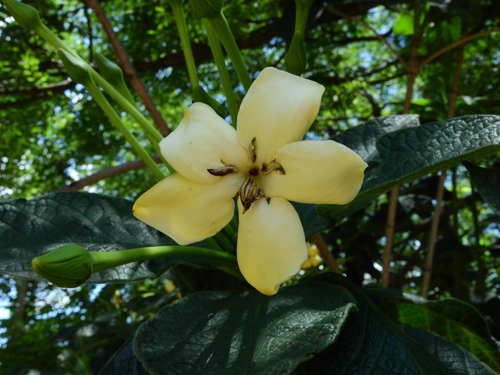
(c) Chen Shu, some rights reserved (CC BY-NC), uploaded by Chen Shu
iNaturalist· cc-by-nc
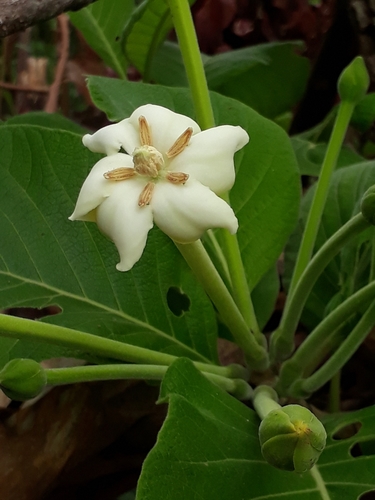
(c) Chen Shu, some rights reserved (CC BY-NC), uploaded by Chen Shu
iNaturalist· cc-by
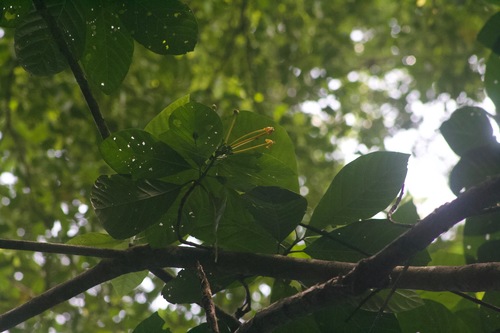
(c) Jacy Chen, some rights reserved (CC BY), uploaded by Jacy Chen
Summary
Source: WikipediaCinchona calisaya is a species of shrub or tree in the family Rubiaceae. It is native to the forests of the eastern slopes of the Andes, where they grow from 200–3,300 metres (660–10,830 ft) in elevation in Peru and Bolivia. The species is known for a high quinine content, a key antimalarial alkaloid. From the 1860s, it was grown in plantations (under the synonym C. ledgeriana Wedd.) in the Dutch East Indies to supply the global quinine trade.
Description
A shrub or small tree. It can be 8 m tall. The flowers are white to pink. They are in groups. They have a scent.
This description is brief — help expand it
Edible Uses
Quinine, extracted from the inner bark of the tree, is used as a bitter flavouring in tonic water and carbonated drinks.
Traditional Uses
The bark is used as a bitter flavouring in drinks. It should only be used in small amounts.
This uses section is brief — help expand it
Medicinal Uses
Peruvian bark has a long history of native use, especially as a treatment for fevers and malaria. Modern research has confirmed it to be highly effective for both purposes. The bark contains various alkaloids, particularly quinine and quinidine, with quinine accounting for up to 70–80% of total alkaloids. The bark is bitter, astringent, and tonic — it lowers fevers, relaxes spasms, acts against malaria via the alkaloid quinine, and slows the heart via the alkaloid quinidine. It is prepared as tablets, liquid extracts, tinctures, and powders. Internal uses include treatment of malaria, neuralgia, muscle cramps, and cardiac fibrillation. It is also an ingredient in proprietary cold and influenza remedies, and the liquid extract is used as a cure for drunkenness. The bark is used as a gargle for sore throats. Large or too-frequent doses must be avoided, as they can produce headache, giddiness, and deafness.
Known Hazards
Cinchona bark and its quinine alkaloids can cause cardiac sodium and potassium channel blockade, CNS and renal toxicity. Cinchonism trio: GI upset, headaches, and tinnitus. Ventricular arrhythmias, hypoglycemia, renal failure, respiratory failure, jaundice and death.
Distribution
It is a tropical plant. It grows in the cool, humid rainforests in the Andes. It is best in well drained soils. It can grow in light shade. It can tolerate temperatures down to 7°C. It grows between 400-3,000 m above sea level. It won't grow in soils exposed to fire. It suits hardiness zone 10-12.
Where It Grows
Andes, Bolivia, Colombia, Peru, South America,
Cultivation
A plant of the moist tropics, where it is found at elevations from 400 - 3,000 metres. It grows best in areas where annual daytime temperatures are within the range 17 - 24°c, but can tolerate 7 - 28°c. It can be killed by temperatures of 5°c or lower. It prefers a mean annual rainfall in the range 2,500 - 3,000mm, but tolerates 1,400 - 3,800mm. Requires a well-drained, moist soil and a position in full sun or partial shade. It grows very poorly or not at all on soils that have been exposed to fire. Prefers a pH in the range 5 - 6, tolerating 4.5 - 6.5. Plants start flowering after 3 - 4 years, and are uprooted and harvested after 8 - 12 years. In commercial plantations, the trees are coppiced when about 6 years old.
Propagation
Seed. Nodal softwood cuttings. Cuttings of half-ripe wood in a sandy soil.
Other Uses
The powdered bark is used in tooth-powders for its astringent properties. Other uses rating: Low (2/5).
Production
Plants start flowering after 3-4 years.
Other Information
It is cultivated as a medicinal crop.
Notes
It has medicinal uses. It can be used to treat malaria.
Synonyms
Also Known As
Peruvian Bark, Quinine or Cinchona calisaya
References (4)
- Ferns, Plants for a Future.
- Kermath, B. M., et al, 2014, Food Plants in the Americas: A survey of the domesticated, cultivated and wild plants used for Human food in North, Central and South America and the Caribbean. On line draft. p 230
- Wiersema, J. H. & Leon, B., 2013, World Economic Plants. A Standard Reference CRC Press. 2nd Ed. p 175
- World Checklist of Useful Plant Species 2020. Royal Botanic Gardens, Kew