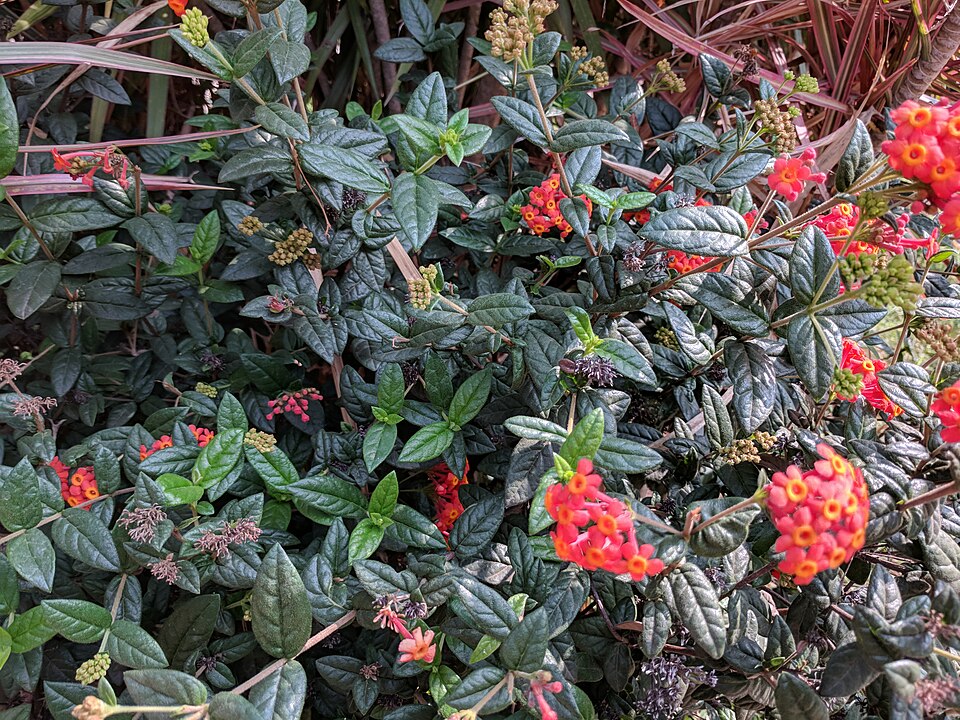
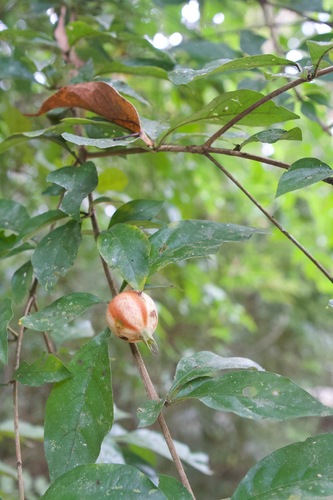
Craterispermum schweinfurthii
Hiern
Porridge-stick
iNaturalist· cc-by-nc
(c) Bart Wursten, some rights reserved (CC BY-NC), uploaded by Bart Wursten
iNaturalist· cc-by-nc
(c) Bart Wursten, some rights reserved (CC BY-NC)
Description
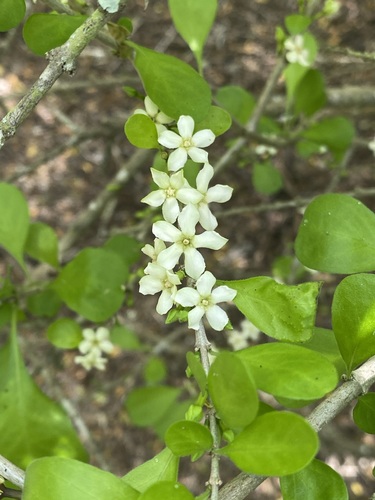
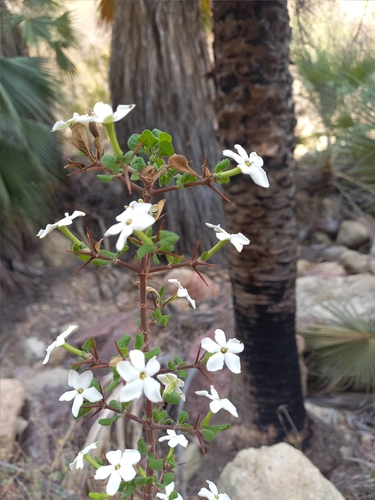
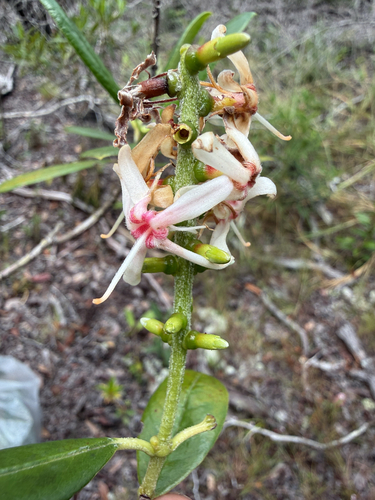
A shrub or medium sized tree. It grows 15 m tall. It is similar to Craterispermum laurinum. The leaves are 7-18 cm long. They are oval and yellow-green. The base is wedge shaped. The flowers are in compact groups near the axils of leaves. The flower stalk is stout and flattened. The fruit are 5-6 mm long and do not have a stalk.
Edible Uses
The sweet bark is chewed.
Traditional Uses
The bark is chewed.
This uses section is brief — help expand it
Medicinal Uses
The plant is often used to treat a range of conditions in traditional medicine. The bark is chewed to cure coughs and whooping cough. A decoction of the bark is drunk in cases of stomach affections, fever and diarrhoea. A decoction of the bark is used in vapour baths as a remedy for rheumatism, oedema and the pain of stings. The powdered bark is applied as a dressing on sores and wounds. The roots, bark and fruits are chewed, and the juice drunk, as a treatment against venereal diseases and as an aphrodisiac.
Distribution
A tropical plant. It grows in dry evergreen forests. It can be on termite mounds. In Zimbabwe it grows between 200-1,770 m above sea level.
Where It Grows
Africa, Angola, Burundi, Cameroon, Central Africa, Central African Republic, CAR, Congo DR, Congo R, East Africa, Ethiopia, Kenya, Malawi, Mozambique, Nigeria, Southern Africa, Sudan, Uganda, Tanzania, West Africa, Zambia, Zimbabwe,
Cultivation
It can be grown by cuttings.
Propagation
Seed - Cuttings root easily.
Other Uses
The bark and leaves are a source of yellow and brown dyes used for dyeing cotton cloth. No research on the dye or tannin content of this species appears to have been published, but the closely related Craterispermum laurinum has been shown to be a strong aluminium accumulator. Such plants are used as mordants instead of alums in traditional dyeing techniques in different parts of the world and they often also contain colorants. The dead wood, when kept in moist conditions, becomes red and is then used in the preparation of a red ointment (known as 'nkula', and also prepared from other sources), which is used to colour the face in traditional ceremonies. The twigs are used as toothpicks, toothbrushes and chewing sticks to clean the teeth and maintain oral hygiene. The hard and tough wood is used for building poles, tool handles, sticks etc. The wood is used for fuel and to make charcoal. The tree is valued as a live fence because of its resistance to fire and ease of cultivation. The fragrant flowers are a good bee forage.
Synonyms
Also Known As
Mucenke, Mudotasadza, Mukambila, Mundota, Muntoma ntoma, Muntomina, Museswa, Nandara, Ntata nkedinga, Umbatana, Vulanota
References (9)
- East African Herbarium records, 1981,
- Fowler, D. G., 2007, Zambian Plants: Their Vernacular Names and Uses. Kew. p 56
- Jardin, C., 1970, List of Foods Used In Africa, FAO Nutrition Information Document Series No 2.p 71 (As Craterispermum laurinum)
- Jansen, P.C.M., 2005. Craterispermum schweinfurthii Hiern. [Internet] Record from Protabase. Jansen, P.C.M. & Cardon, D. (Editors). PROTA (Plant Resources of Tropical Africa), Wageningen, Netherlands. < http://database.prota.org/search.htm>. Accessed 15 October 2009.
- Latham, P., 2004, Useful Plants of Bas-Congo province. Salvation Army & DFID p 96
Show all 9 references Hide references
- Peters, C. R., O'Brien, E. M., and Drummond, R.B., 1992, Edible Wild plants of Sub-saharan Africa. Kew. p 169
- Termote, C., et al, 2011, Eating from the wild: Turumbu, Mbole and Bali traditional knowledge of non-cultivated edible plants, District Tshopo, DRCongo, Gen Resourc Crop Evol. 58:585-618
- World Checklist of Useful Plant Species 2020. Royal Botanic Gardens, Kew
- www.zimbabweflora.co.zw 2011