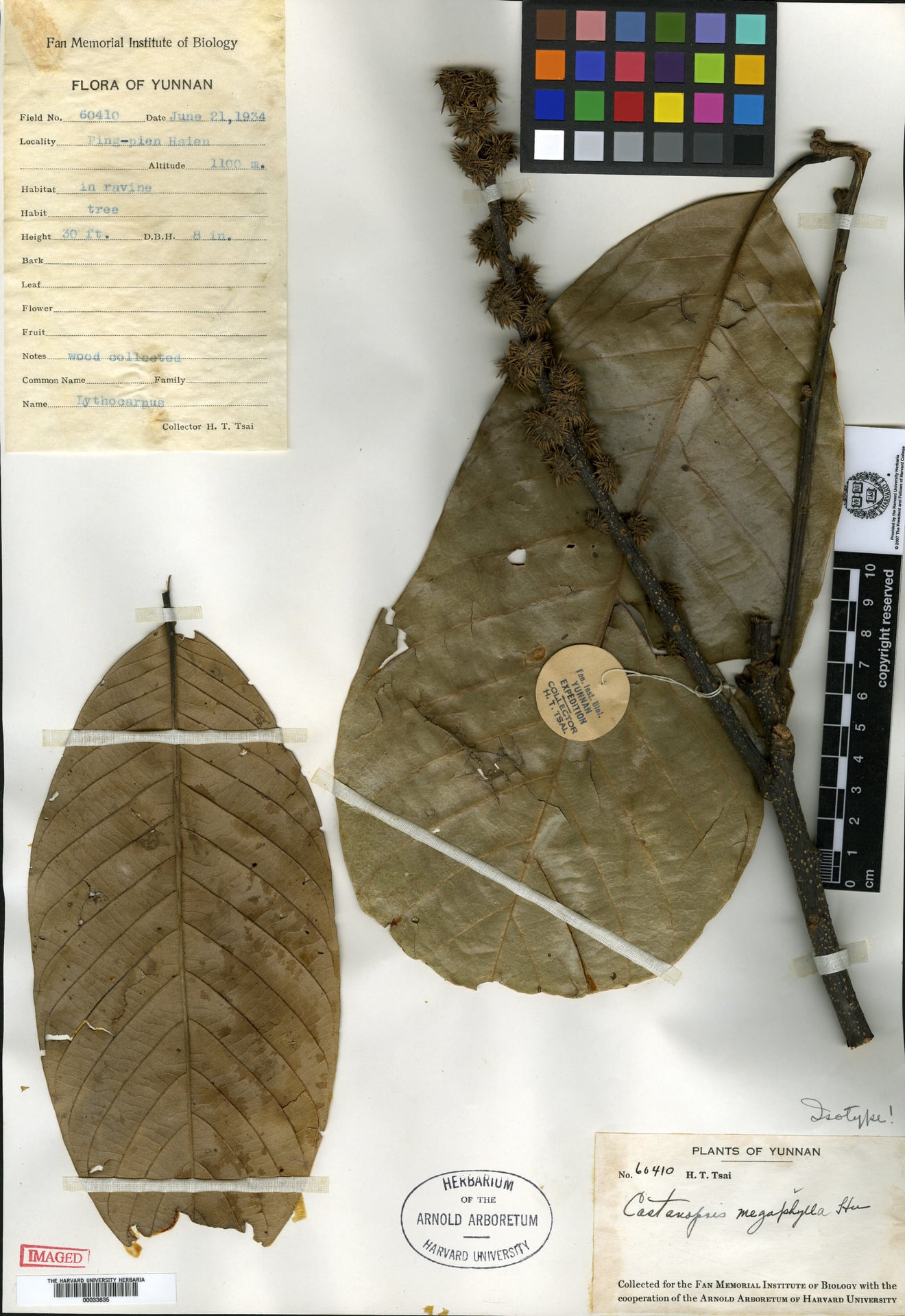
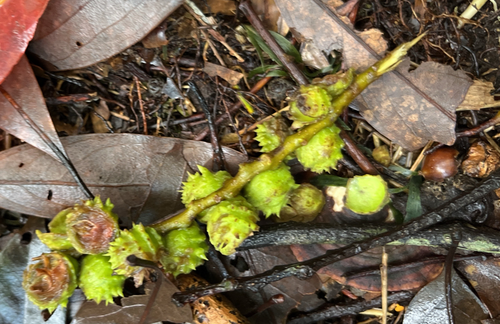
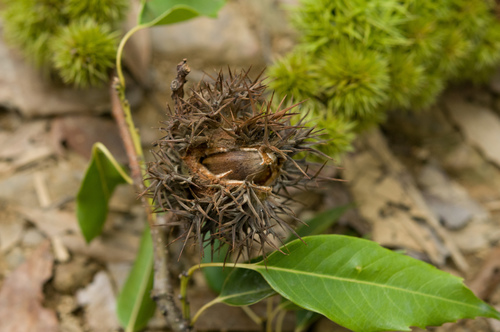
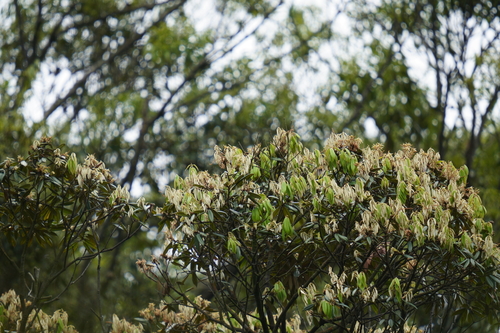
Chrysolepis sempervirens
(Kellogg) Hjelmq.
Dwarf golden chinquapin, Bush or Dudley sierra chinquapin, Sierra chinquapin
iNaturalist· cc-by-nc
(c) J. Maughn, some rights reserved (CC BY-NC)
iNaturalist· cc0
no rights reserved, uploaded by msieges
iNaturalist· cc-by-nc
(c) Sylvia Haultain, some rights reserved (CC BY-NC), uploaded by Sylvia Haultain
Summary
Source: WikipediaChrysolepis sempervirens is a species of mountain shrub in the oak family known by the common names bush chinkapin, bush golden chinquapin, or Sierra evergreen chinquapin. It is native to the western United States, where it grows on rocky slopes and chaparral throughout the San Gabriel, San Jacinto, Sierra Nevada, Cascade, and Klamath Ranges of California and Southern Oregon.
Description
An evergreen shrub. It grows 1-3 m tall. The bark is thin and smooth. The leaves are oblong and 3.5-7.5 cm long. They are usually rounded at the tip. They are rusty coloured underneath.
Edible Uses
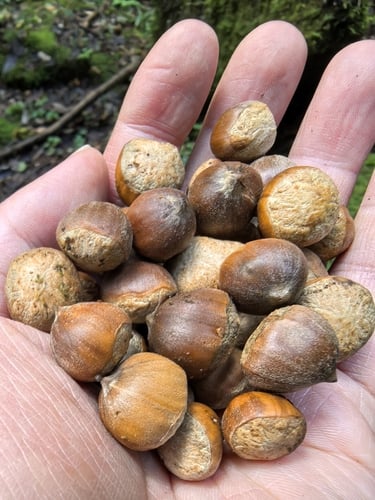
The seed can be eaten raw or cooked and is considered very sweet and much appreciated, with a flavour somewhat resembling hazelnut. Each small seed measures up to 13mm wide.
Traditional Uses
The nuts can be eaten raw or roasted.
This uses section is brief — help expand it
Medicinal Uses
None known
Distribution
It is a temperate plant.
Where It Grows
North America, USA,
Propagation
Sow seed in a cold frame as soon as it is ripe, protecting it from mice and similar pests. The seed has short viability and must not be allowed to dry out. If kept over winter, store it cool and moist. Prick seedlings out into individual pots as soon as they are large enough to handle and grow them on in a greenhouse through at least their first winter. Plant out into permanent positions in late spring or early summer, after the last expected frosts, and consider providing some cold protection during their first winter outdoors.
Other Uses
None known
Notes
There are 2 (or 1) Chrysolepis species.
References (7)
- Bot. Not. 113:377. 1960
- Facciola, S., 1998, Cornucopia 2: a Source Book of Edible Plants. Kampong Publications, p 115
- Kermath, B. M., et al, 2014, Food Plants in the Americas: A survey of the domesticated, cultivated and wild plants used for Human food in North, Central and South America and the Caribbean. On line draft. p 222
- Krochmal, A. & Krochmal, C., 1982, Uncultivated Nuts of The United States. United States Department of Agriculture Forest Service. p 18 (As Castanopsis sempervirens)
- Lyle, S., 2006, Discovering fruit and nuts. Land Links. p 122
Show all 7 references Hide references
- Plants for a Future database, The Field, Penpol, Lostwithiel, Cornwall, PL22 0NG, UK. http://www.scs.leeds.ac.uk/pfaf/
- Wickens, G.E., 1995, Edible Nuts. FAO Non-wood forest products. FAO, Rome. p 125 (As Castanopsis sempervirens)