Castanopsis fissa
(Champion ex Bentham) Rehder et Wilson
Big-leaved oak, Big-leaved conic chestnut
iNaturalist· cc-by-nc
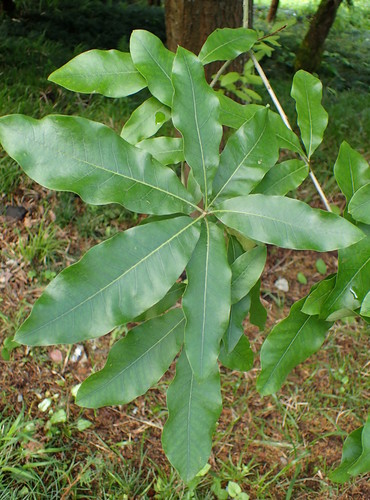
(c) Stargazer, some rights reserved (CC BY-NC), uploaded by Stargazer
iNaturalist· cc-by-nc-nd
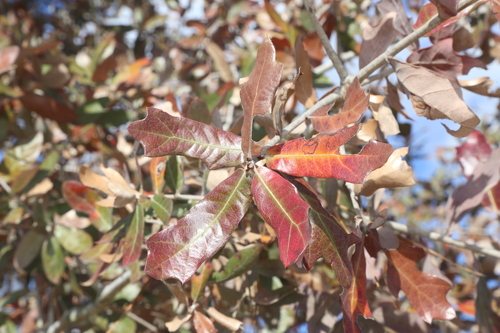
(c) Sunnetchan, some rights reserved (CC BY-NC-ND), uploaded by Sunnetchan
iNaturalist· cc-by-nc-nd
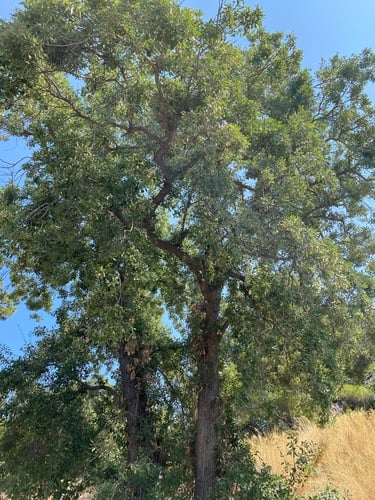
(c) Sunnetchan, some rights reserved (CC BY-NC-ND), uploaded by Sunnetchan
Summary
Source: WikipediaCastanopsis fissa is a species of tree native to Southeast China, Hong Kong, Laos, Thailand and Vietnam. The specific Latin epithet fissa means fissure, referring to its fruits splitting into segment when they mature.
Description
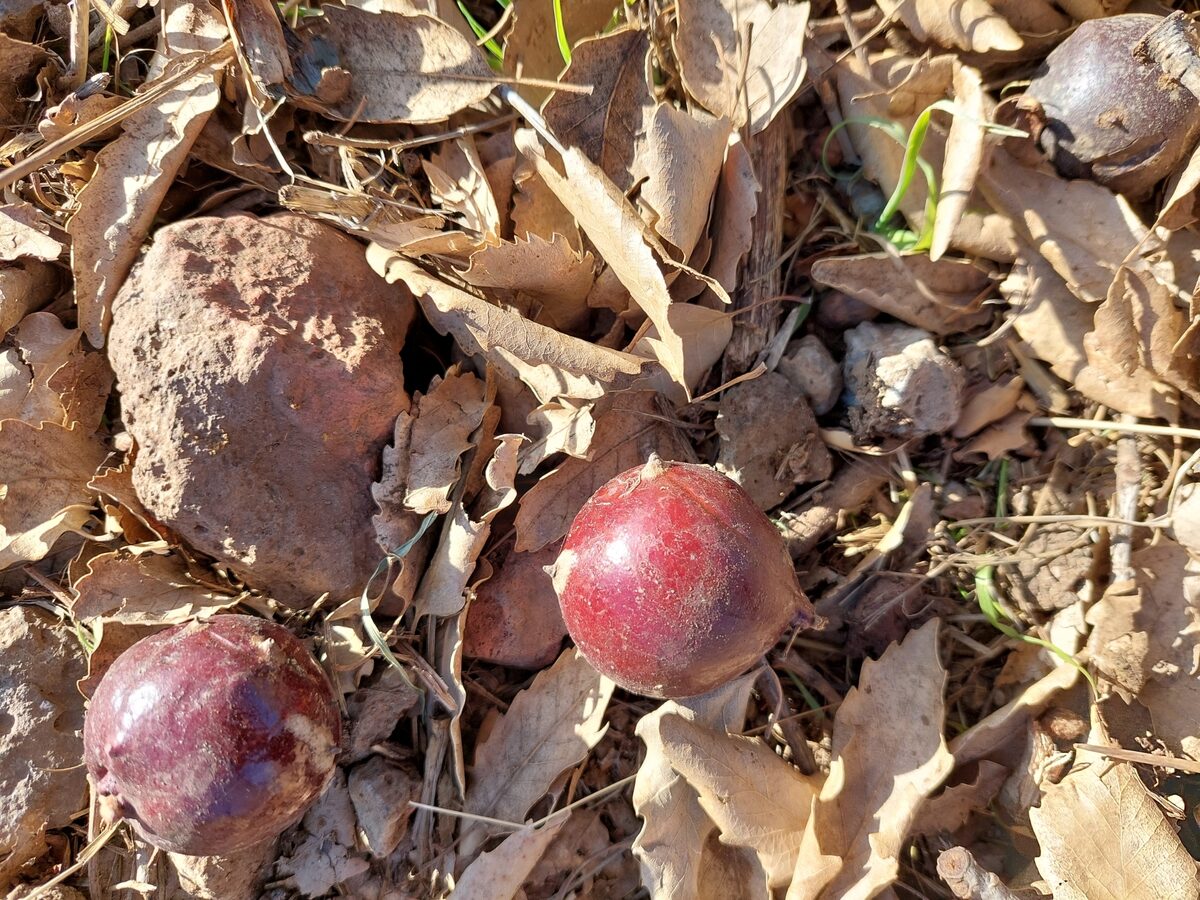
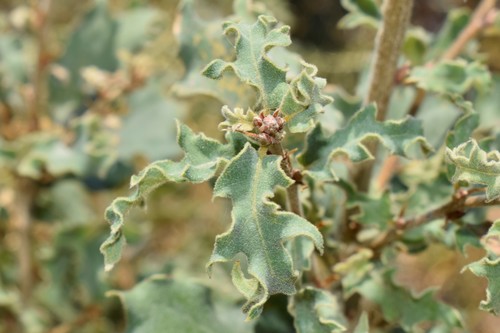
A medium sized tree. It grows up to 20 m in height. The trunk is 30-50 cm across. The young shoots and leaves are covered with brownish yellow hairs and rusty coloured scales. The young branches are red-purple. They are often angular. The leaves are arranged in spirals. They are yellowish brown. The leaf stalk is 1-2.5 cm long and the leaf blade is oval to oblong. Leaves vary in size. They are often 15-25 cm long by 5-9 cm wide. They are thickly papery. The base is wedge shaped and towards the tip the edge is irregular and wavy. The cup is 1-1.5 cm across. It has 2-4 valves which are curled and covered with dark brown scale like structures. The nut is round to oval. It is 1.3-1.8 cm long by 1.1-1.6 cm wide. The tip is brown-red and hairy.
Edible Uses
The species is a fast-growing evergreen that is highly tolerant of poor soils. As one of the few native species to thrive during the early reforestation efforts in Hong Kong, it has proven highly resilient and adaptable. Thus, it is often selected as a pioneer species to prevent soil erosion. The starchy fruits was cooked into congee, a food that Hong Kong villagers relied on during the Japanese occupation.
Traditional Uses
The seeds can be eaten. Starch is extracted from the nuts.
This uses section is brief — help expand it
Distribution
A tropical plant. It grows in tropical evergreen forests. It occurs on slopes between 1000 m altitude. It needs shade when young. In China it grows below 1600 m altitude.
Where It Grows
Asia, China, Indochina, Laos, SE Asia, Thailand, Vietnam,
Notes
There are about 120 Castanopsis species. Many have edible nuts.
Synonyms
Also Known As
Li shuo zhui, Soi phang
References (3)
- Huang Chengjiu, Zhang Yongtian, Bartholomew, B., Fagaceae, Flora of China.
- Hu, Shiu-ying, 2005, Food Plants of China. The Chinese University Press. p 343
- Forest Inventory and Planning Institute, 1996, Vietnam Forest Trees. Agriculture Publishing House p 258