Castanopsis endertii
Hatus. ex Soepadmo
gbif· cc0
President and Fellows of Harvard College
gbif· cc0
President and Fellows of Harvard College
Summary
Source: WikipediaCastanopsis endertii is a tree in the family Fagaceae. It is named for the Dutch botanist and plant collector Frederik Endert.
Description
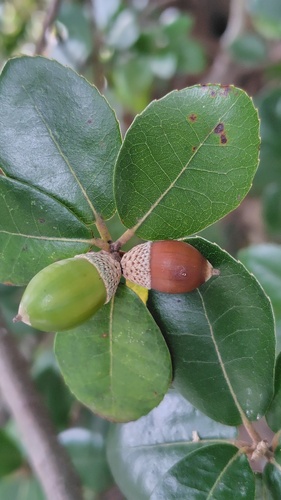
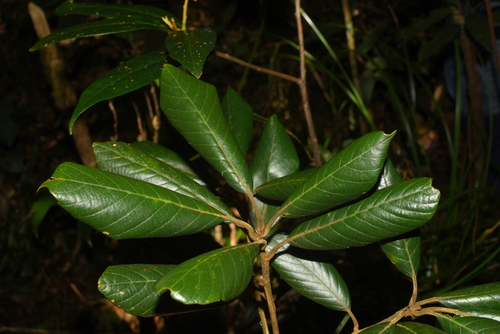
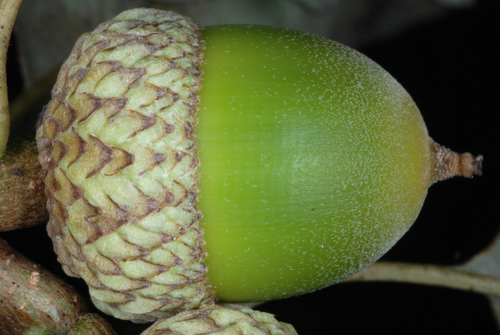
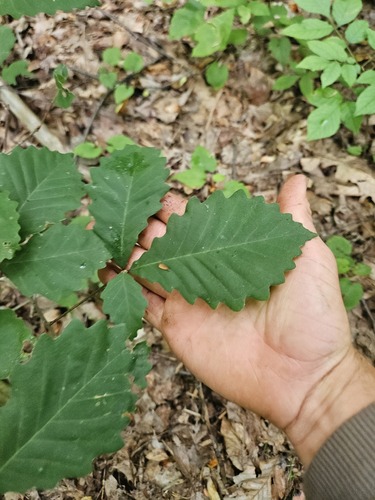
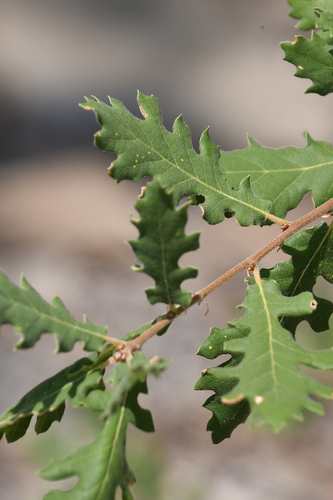
A tree. It grows 35 m tall. The trunk is 60 cm across. The bark is smooth with slight cracks. The leaves are thinly leathery. They are narrowly oval and 13-18 cm long by 6-8 cm wide. They are rounded at the base and taper to a short point. The male and female flowers are separate. The male flowering stalks are 10-12 cm long with male flowers in clusters of 3. The female flowering stalks are 8-12 cm long and flowers occur singly. The fruit cup is rounded and almost without a stalk. There is one nut in each cup.
Edible Uses
Seed - raw or cooked. The globose seed is 20 - 35mm in diameter with a thin shell; there is one seed in each cupule.
Traditional Uses
The nut is probably cooked before eating.
This uses section is brief — help expand it
Distribution
It is a tropical plant. It grows in forests and up to 2,500 m above sea level.
Where It Grows
Asia, Indonesia, Malaysia, SE Asia,
Cultivation
Castanopsis species are generally tolerant of a range of soils, preferably well-drained. They succeed in full sun, though young plants generally grow best in dappled woodland shade. Trees do not respond well to coppicing.
Propagation
Seed - easy to germinate if sown fresh. Self-sown seedlings can be transplanted.
Other Uses
The bark is a source of tannins and can be used as a dye, to weatherproof fibres etc. The branches and stems of many Castanopsis species are used as bed logs in mushroom cultivation. The sapwood is yellowish. The heartwood is dark brown or dark red-brown; it is clearly demarcated from the light brown sapwood which often has a green tinge. The texture is coarse and uneven; the grain fairly straight but sometimes interlocked, maybe lustrous when first cut; there is no distinctive odour or taste when dry. The wood is strong, moderately hard, moderately heavy to heavy, moderately durable and very difficult to treat. It seasons fairly slowly, without any defects except for some staining; shrinkage is very high. It is easy to work, easy to split, moderately easy to resaw and easy to cross-cut; planning is easy and the planed surface is smooth, it takes a good finish. A light hardwood, it is suitable for medium to heavy construction under cover, furniture making, packing cases and pallets. Some species split well and are used for shingles. The wood is a good fuel and can be used to make charcoal.
Also Known As
Kogopon
References (1)
- Soepadmo, E. and Saw, L. G., 2000, Tree Flora of Sabah and Sarawak. Forestry Malaysia. Volume Three. p 14