Castanopsis malaccensis
Gamble
Berangan gajah
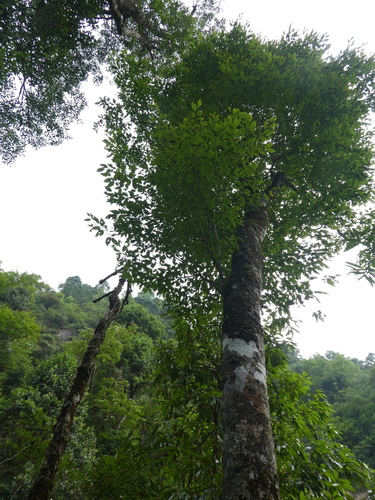
iNaturalist· cc-by
(c) Adam Kamal, some rights reserved (CC BY), uploaded by Adam Kamal
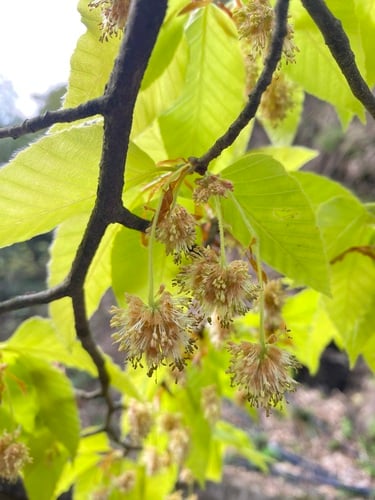
iNaturalist· cc-by
(c) Adam Kamal, some rights reserved (CC BY)
Description
An evergreen tree. It grows 30 m tall. The leaves are oval and 5-13 cm long by 2-5 cm wide. The leaf stalk is softly hairy. The seeds are oval and 38 mm long. They are in a capsule 33 mm across.
Edible Uses
The nuts are eaten raw, cooked, roasted or used in chocolates and pastries. The ovoid-conical seed is 15 - 25mm long with a thin seedwall; a single seed is produced per cupule.
Traditional Uses
The nuts are eaten raw or roasted. They can be used in pastries.
This uses section is brief — help expand it
Distribution
A tropical plant.
Where It Grows
Asia, Indochina, Indonesia, Malaysia, SE Asia, Singapore, Thailand,
Cultivation
Castanopsis species are generally tolerant of a range of soils, preferably well-drained. They succeed in full sun, though young plants generally grow best in dappled woodland shade.
Propagation
Seed - easy to germinate if sown fresh. Self-sown seedlings can be transplanted.
Other Uses
The bark is a source of tannins and can be used as a dye, to weatherproof fibres etc. The branches and stems of many Castanopsis species are used as bed logs in mushroom cultivation. The heartwood is dark brown or dark red-brown; it is clearly demarcated from the light brown sapwood which often has a green tinge. The texture is coarse and uneven; the grain fairly straight but sometimes interlocked, maybe lustrous when first cut; there is no distinctive odour or taste when dry. The wood is strong, moderately hard, moderately heavy to heavy, moderately durable and very difficult to treat. It seasons fairly slowly, without any defects except for some staining; shrinkage is very high. It is easy to work, easy to split, moderately easy to resaw and easy to cross-cut; planning is easy and the planed surface is smooth, it takes a good finish. A light hardwood, it is suitable for medium to heavy construction under cover, furniture making, packing cases and pallets. Some species split well and are used for shingles. The wood is a good fuel and can be used to make charcoal.
Notes
There are about 120 Castanopsis species. Many have edible nuts.
Synonyms
References (6)
- Burkill, I.H., 1966, A Dictionary of the Economic Products of the Malay Peninsula. Ministry of Agriculture and Cooperatives, Kuala Lumpur, Malaysia. Vol 1 (A-H) p 494
- Menninger, E.A., 1977, Edible Nuts of the World. Horticultural Books. Florida p 16
- Milow, P., et al, 2013, Malaysian species of plants with edible fruits or seeds and their evaluation. International Journal of Fruit Science. 14:1, 1-27
- PROSEA (Plant Resources of South East Asia) handbook, Volume 2, 1991, Edible fruits and nuts.
- Wickens, G.E., 1995, Edible Nuts. FAO Non-wood forest products. FAO, Rome. p 125
Show all 6 references Hide references
- World Checklist of Useful Plant Species 2020. Royal Botanic Gardens, Kew
More from Fagaceae
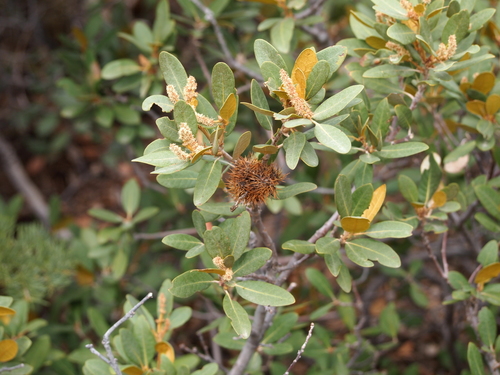
Chrysolepis sempervirens
Dwarf golden chinquapin, Bush or Dudley sierra chinquapin, Sierra chinquapin
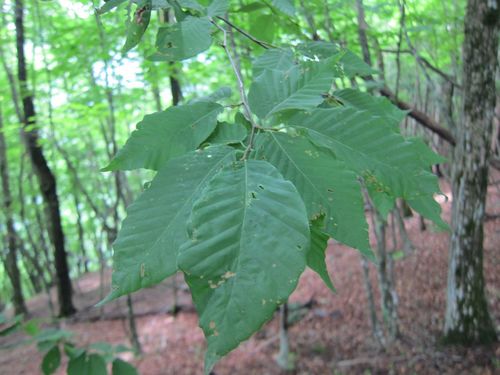
Fagus crenata
Japanese beech
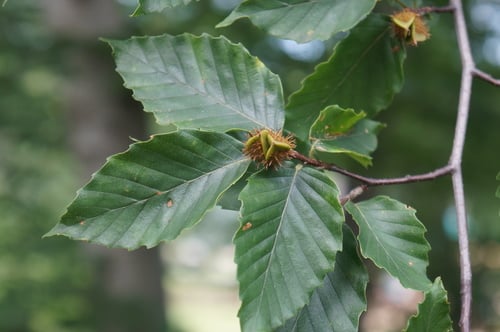
Fagus grandifolia
American beech, Beech mast
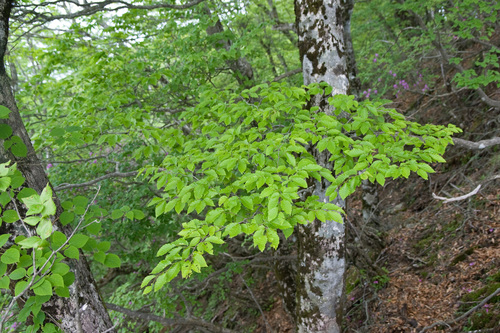
Fagus japonica
Japanese beech, Japanese blue beech
Fagus longipetiolata
Cu cuong dai, Shui qing gang
Fagus lucida
Guang ye shui qing gang