Castanopsis foxworthyi
Schottky
gbif· cc0
President and Fellows of Harvard College
gbif· cc0
President and Fellows of Harvard College
gbif· cc0
President and Fellows of Harvard College
Summary
Source: WikipediaCastanopsis foxworthyi is a tree in the family Fagaceae. It is named for the botanist Frederick William Foxworthy.
Description
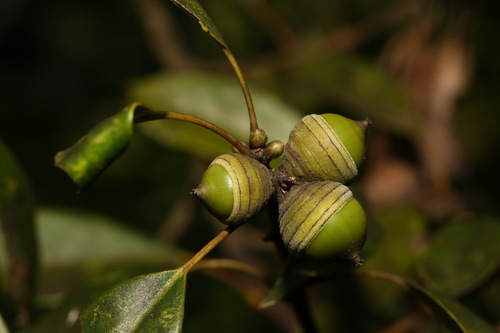
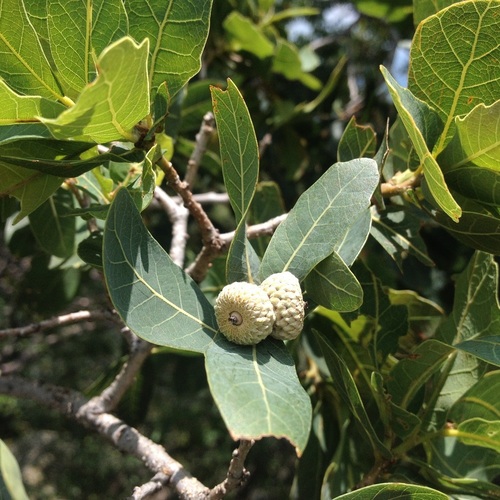
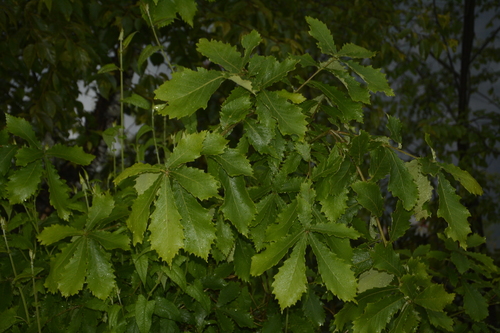
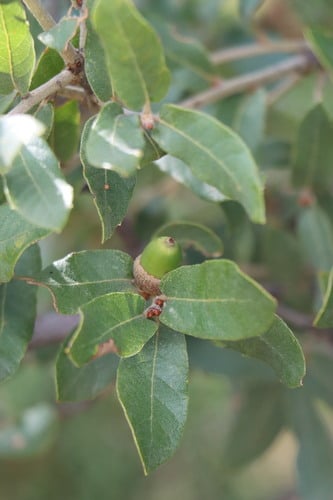
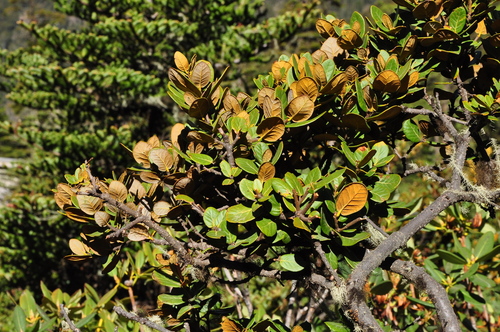
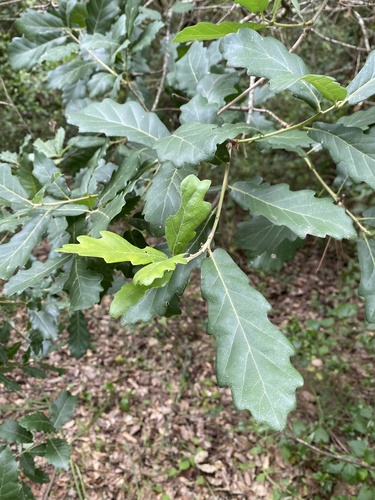
A tree. It grows 30 m tall. The trunk can be 60 cm across. The bark is smooth and blackish-brown. The leaves are narrowly oval to sword shaped and 7-12 cm long by 4-8 cm wide. Flowers are separately male and female. Male flowering shoots are 7-15 cm long. The female flowering stalks are 8-10 cm long. Female flowers are in clusters or 3. The cups are a flattened round shape and 3-5 cm wide by 2-3 cm high. They are densely hairy. There are 3 nuts in each cup. These are 1-2 cm across.
Edible Uses
The ovoid seed is 10 - 20mm wide with a thin shell; there are three seeds in each cupule. Although we have no specific information for this species, the seeds of all the species of Castanopsis are more or less edible and most if not all of them will have been used for food in times of shortage, when better foods were not available. The seed is usually cooked before eating, though it can also be eaten raw. It can be eaten whole, though it is more commonly dried, then ground into a powder and used as a thickening in stews etc or mixed with cereals for making bread. The main disadvantage of the seed is that it is often rich in tannins, making it bitter and astringent. These tannins can be largely removed by soaking the seeds in water then throwing the water away. The process should be repeated until the seed no longer tastes bitter.
Traditional Uses
The seeds or nuts are eaten fresh or roasted.
This uses section is brief — help expand it
Distribution
It is a tropical plant. It grows up to 2,100 m above sea level.
Where It Grows
Asia, Indonesia, Malaysia, SE Asia,
Cultivation
Plants are grown from seeds.
Propagation
Seed - easy to germinate if sown fresh. Self-sown seedlings can be transplanted.
Other Uses
The bark is a source of tannins and can be used as a dye, to weatherproof fibres etc. The branches and stems of many Castanopsis species are used as bed logs in mushroom cultivation. The sapwood is yellowish white. The heartwood is dark brown or dark red-brown; it is clearly demarcated from the light brown sapwood which often has a green tinge. The texture is coarse and uneven; the grain fairly straight but sometimes interlocked, maybe lustrous when first cut; there is no distinctive odour or taste when dry. The wood is strong, moderately hard, moderately heavy to heavy, moderately durable and very difficult to treat. It seasons fairly slowly, without any defects except for some staining; shrinkage is very high. It is easy to work, easy to split, moderately easy to resaw and easy to cross-cut; planning is easy and the planed surface is smooth, it takes a good finish. A light hardwood, it is suitable for medium to heavy construction under cover, furniture making, packing cases and pallets. Some species split well and are used for shingles. The wood is a good fuel and can be used to make charcoal.
Nutrition
| Part | Moisture | kJ | kcal | Protein | Vit A | Vit C | Iron | Zinc |
|---|---|---|---|---|---|---|---|---|
| Nuts | 35.6 | — | 261 | 2.7 | — | — | 9 | 2.6 |
Synonyms
Also Known As
Berangan lingkau, Berangan paya
References (3)
- Hoe, V. B. & Siong, K. H., 1999, The nutritional value of indigenous fruit and vegetables in Sarawak. Asia Pacific J. Clin. Nutr. 8(1):24-31
- Milow, P., et al, 2013, Malaysian species of plants with edible fruits or seeds and their evaluation. International Journal of Fruit Science. 14:1, 1-27
- Siong, K. H., 2003, Indigenous Fruits of Sarawak. ITTO & Sarawak Forest Department. p 69