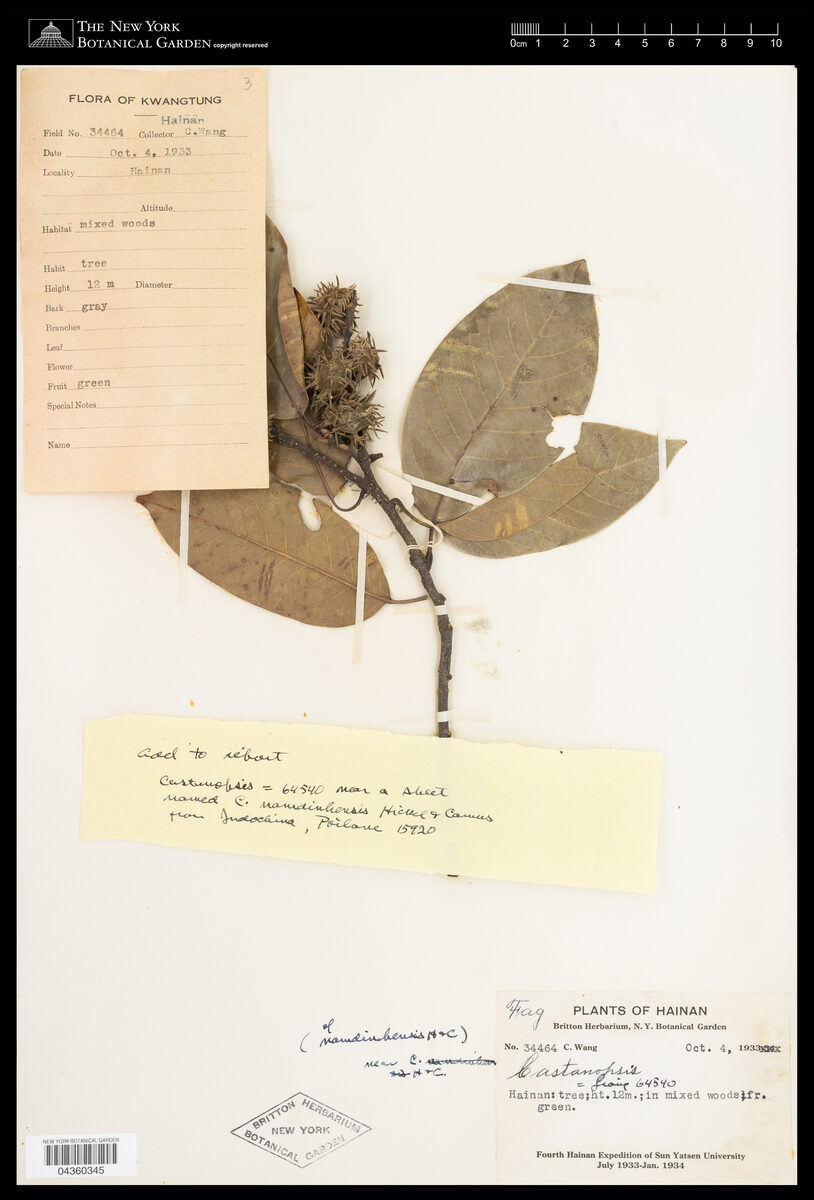
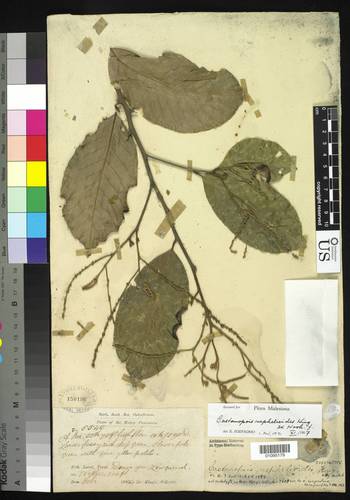
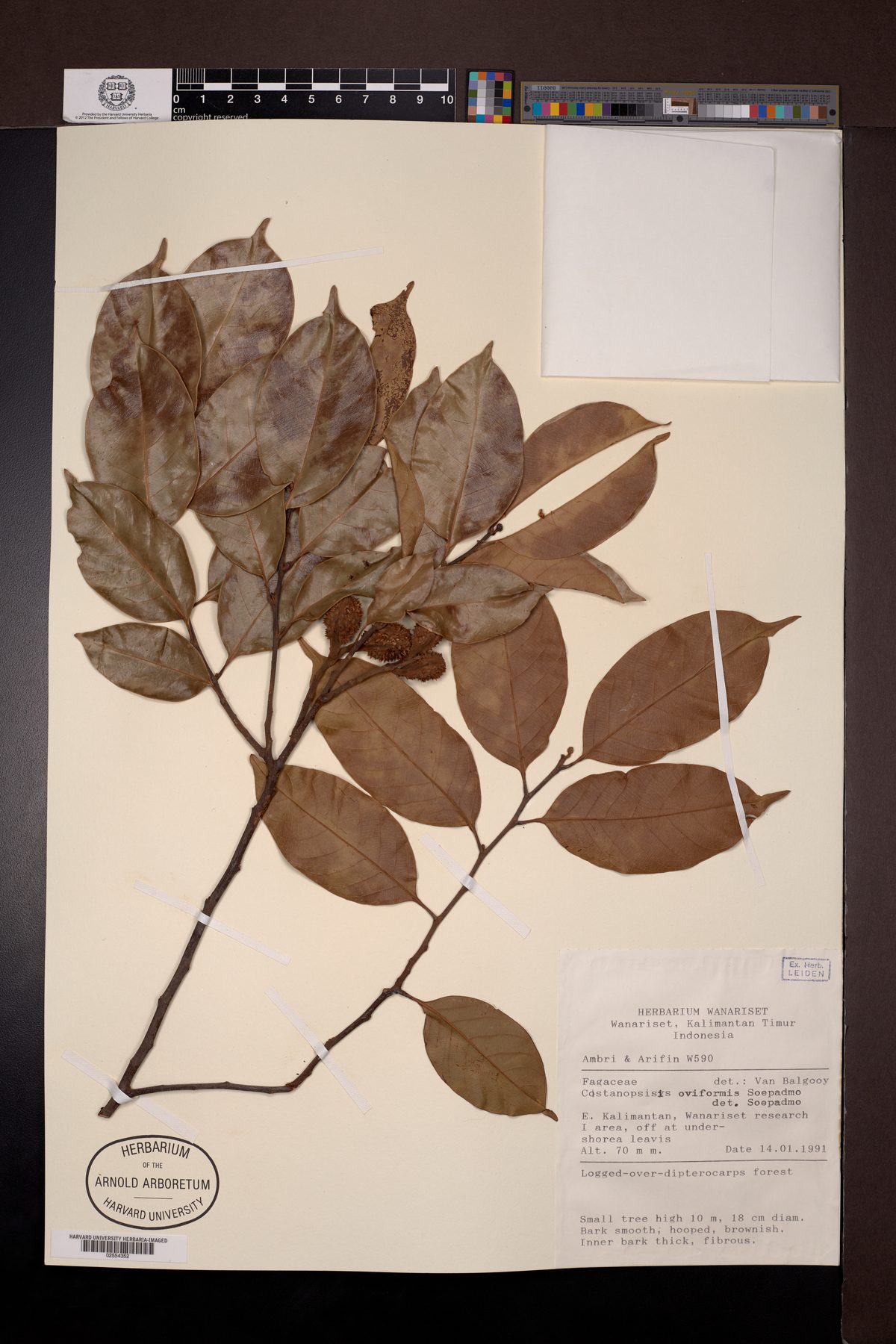
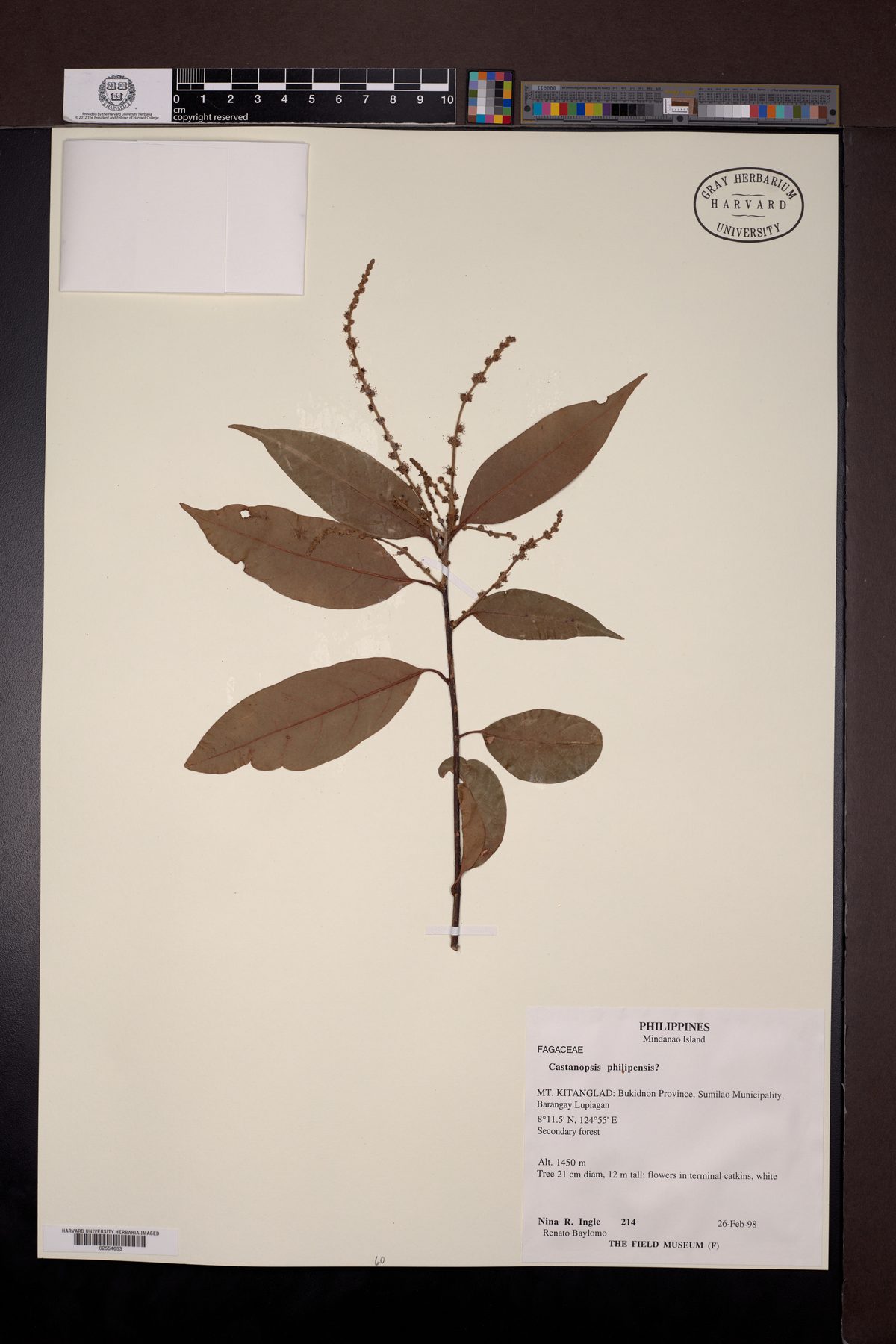
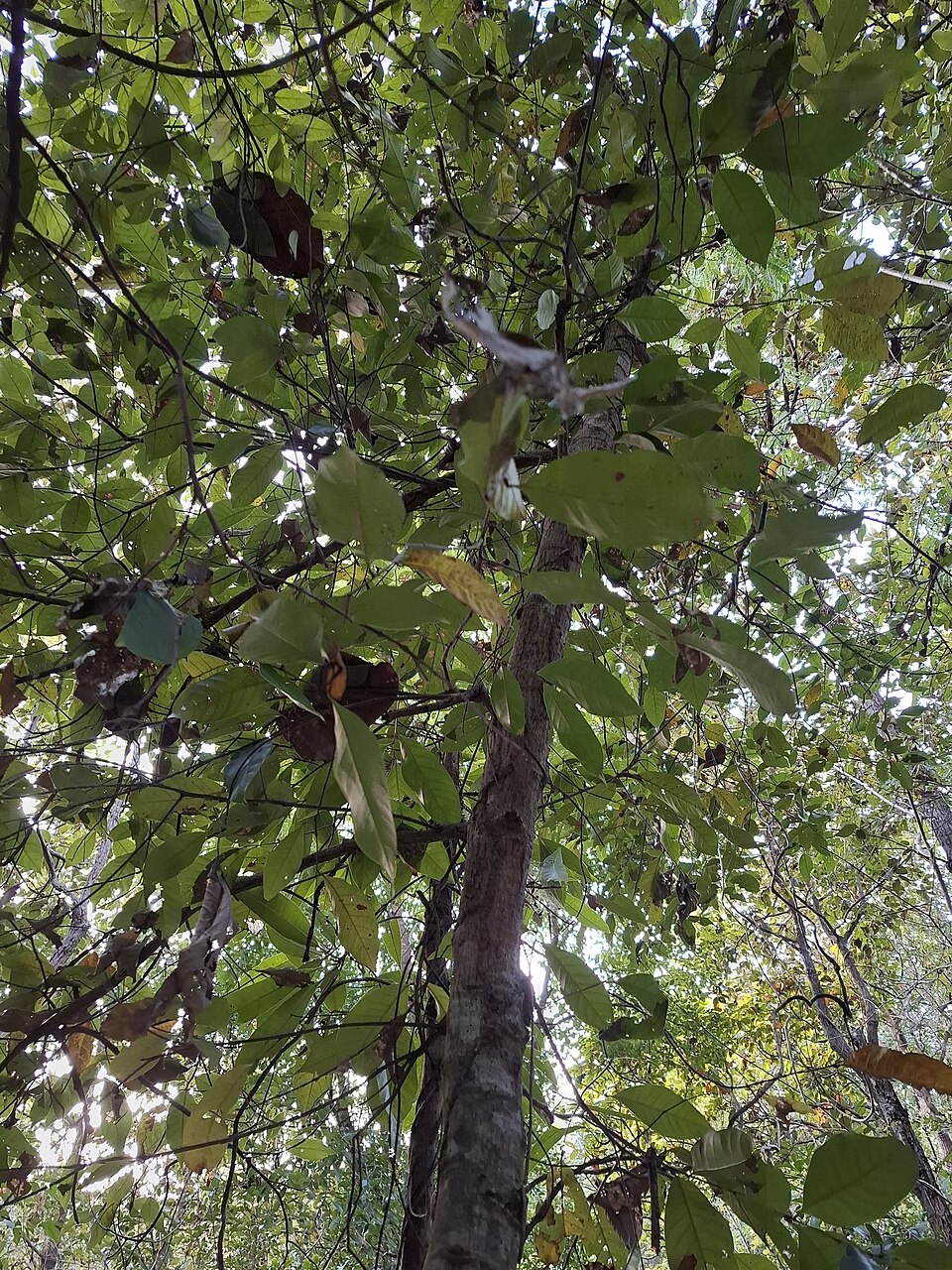
Castanopsis hypophoenicea
(van Seemen) Soepadmo
gbif· cc0
President and Fellows of Harvard College
gbif· cc0
President and Fellows of Harvard College
gbif· cc0
President and Fellows of Harvard College
Summary
Source: WikipediaCastanopsis hypophoenicea is a tree in the family Fagaceae. The specific epithet hypophoenicea means 'crimson beneath', referring to the indumentum on the leaf underside.
Description
A tree. It grows 38 m tall. The leaves are alternate and simple. They are hairy underneath. The flowers are about 1 mm across. The fruit are 8 cm long. They are green to brown. The nut is completely enclosed in the cup with long spines.
Edible Uses
Seed - raw or cooked. It can be roasted in the same way as chestnuts (Castanea spp.). The ovoid to ellipsoid seed can be 40 - 60mm long and 30 50mm wide 5cm with a thick, woody shell - one seed is produced in each cupule.
Distribution
It is a tropical plant. It grows in forests up to 1,300 m above sea level. It is usually on sandy soils. It is often on hillsides but can be along rivers. It grows in Borneo.
Where It Grows
Asia, Brunei, Indonesia, Malaysia, SE Asia,
Cultivation
Castanopsis species are generally tolerant of a range of soils, preferably well-drained. They succeed in full sun, though young plants generally grow best in dappled woodland shade. The tree does not respond well to coppicing.
Propagation
Seed - easy to germinate if sown fresh. Self-sown seedlings can be transplanted.
Other Uses
The bark is a source of tannins and can be used as a dye, to weatherproof fibres etc. The branches and stems of many Castanopsis species are used as bed logs in mushroom cultivation. The sapwood is yellowish-white. The heartwood is dark brown or dark red-brown; it is clearly demarcated from the light brown sapwood which often has a green tinge. The texture is coarse and uneven; the grain fairly straight but sometimes interlocked, maybe lustrous when first cut; there is no distinctive odour or taste when dry. The wood is strong, moderately hard, moderately heavy to heavy, moderately durable and very difficult to treat. It seasons fairly slowly, without any defects except for some staining; shrinkage is very high. It is easy to work, easy to split, moderately easy to resaw and easy to cross-cut; planning is easy and the planed surface is smooth, it takes a good finish. A light hardwood, it is suitable for medium to heavy construction under cover, furniture making, packing cases and pallets. Some species split well and are used for shingles. The wood is a good fuel and can be used to make charcoal.
Synonyms
Also Known As
Bangan Berangan, Berangan bo, Bibi, Wau
References (1)
- Slik, F., www.asianplant.net