Eryngium pandanifolium
Cham. & Schltdl.
iNaturalist· cc-by-nc
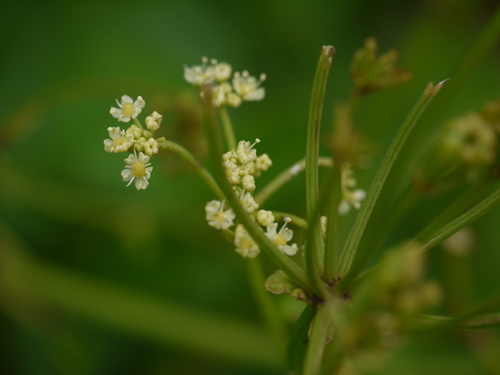
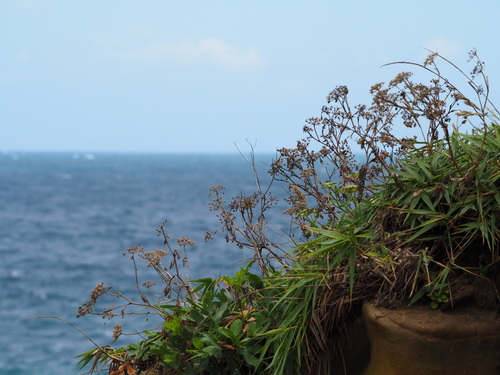
(c) João Gava Just, some rights reserved (CC BY-NC), uploaded by João Gava Just
iNaturalist· cc-by-sa
(c) Leonora (Ellie) Enking, some rights reserved (CC BY-SA)
iNaturalist· cc-by-nc
(c) Horacio Sirolli, some rights reserved (CC BY-NC), uploaded by Horacio Sirolli
Summary
Source: WikipediaEryngium pandanifolium, or pandan-like-leaved eryngo or caraguata, is a species of flowering plant in the genus Eryngium of the family Apiaceae, native to southern Brazil, Paraguay, Uruguay, and Argentina, and introduced in Australia, New Zealand, and Portugal. It has gained the Royal Horticultural Society's Award of Garden Merit. Its leaves, which closely resemble those of the unrelated Pampas grass (Cortaderia) are up to 2.7 m (8 ft 10 in) long while only 2.5 to 5 cm (0.98 to 1.97 in) wide.
Description
Tall perennial reaching 2.5 m. Flowers July to August with hermaphrodite blooms pollinated by bees, flies, and beetles; self-fertile. Grows in light sandy or medium loamy soils with good drainage, tolerating poor and very alkaline soils. Requires full sun and adapts to dry or moist conditions. Hardy to UK zone 8.
Edible Uses
None known.
Medicinal Uses
None known.
Distribution
It is a tropical plant. In Argentina it grows from sea level to 2,000 m above sea level.
Where It Grows
Argentina, Brazil, Paraguay, South America*, Uruguay,
Cultivation
Requires a well-drained soil and a sunny position. Prefers a light sandy soil but tolerates most soil types including lime and poor gravels. Plants can be grown in quite coarse grass, which can be cut annually in the autumn. Plants should be put in their final position whilst small since they resent root disturbance. A very ornamental plant, it is not very hardy outdoors in Britain but has survived temperatures down to -10°c when grown in a very well-drained soil and a sheltered position.
Propagation
Seed is best sown as soon as it is ripe in early autumn, placed on the surface of a well-drained compost in a cold frame. Sowing in spring is also possible. Germination typically occurs in 5–90 days at 20°C. Once large enough to handle, prick seedlings out into individual pots and grow them on in the greenhouse through their first winter, then plant out into permanent positions in late spring or early summer after the last expected frosts. Division can be done in early spring or autumn, though care should be taken as the plant resents root disturbance. Root cuttings can be taken in autumn or winter.
Other Uses
A fibre extracted from the leaves is used for making cordage.
Synonyms
Also Known As
Aspargo-gaucho, Gravata-do-banhado
References (4)
- Bortolotto, I. M., et al, 2018, Lista preliminar das plantas alimenticias nativas de Mato Grosso do Sul, Brasil. Iheringia, Serie Botanica, Porto Alegre, 73 (supl.):101-116
- INFOODSUpdatedFGU-list.xls
- Kinupp, V. F., 2007, Plantas alimenticias nao-convencionais da regiao metropolitana de Porto Alegre, RS, Brazil p 61
- Kinupp, V. F. & Bergman, I., 2008, Protein and minerals of native species, potential vegetables and fruits. Cienc.Tecnol. Aliment. Vol. 28 No. 4 Campinas Oct/Dec.