Angelica archangelica
L.
Angelica, European angelica, Garden angelica
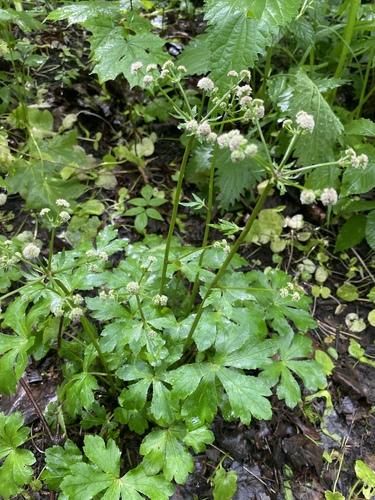
iNaturalist· cc-by-nc
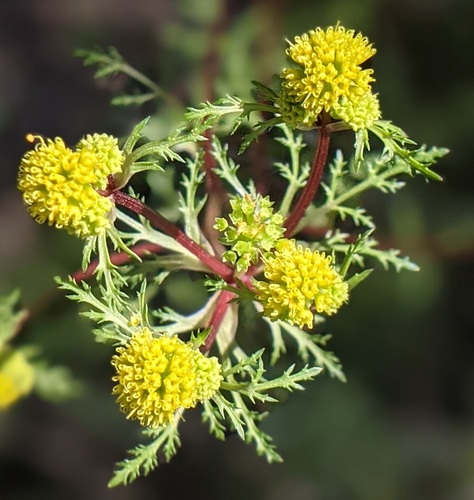
(c) springlake1, some rights reserved (CC BY-NC), uploaded by springlake1
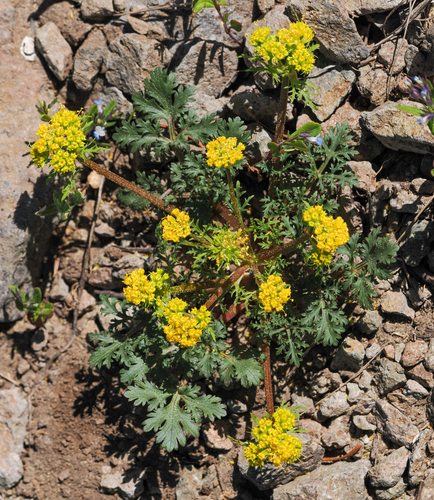
iNaturalist· cc-by-nc
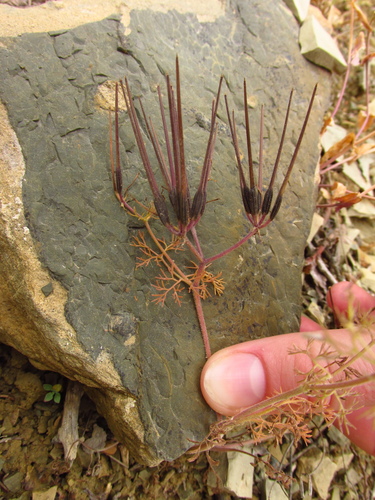
(c) Serge M. Appolonov, some rights reserved (CC BY-NC), uploaded by Serge M. Appolonov
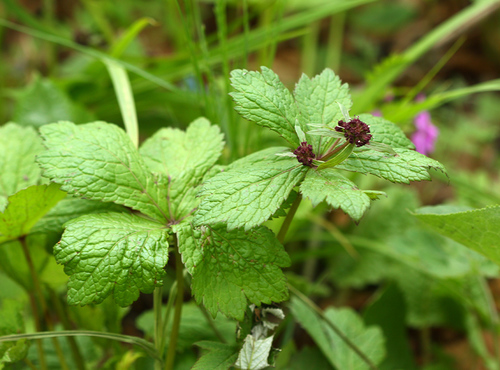
iNaturalist· cc-by-nc
(c) Serge M. Appolonov, some rights reserved (CC BY-NC), uploaded by Serge M. Appolonov
Summary
Source: WikipediaAngelica archangelica, commonly known as angelica, garden angelica, wild celery, and Norwegian angelica, is a biennial plant from the family Apiaceae, a subspecies of which is cultivated for its sweetly scented edible stems and roots. Like several other species in Apiaceae, its appearance is similar to several poisonous species (Conium, Heracleum, and others), and should not be consumed unless it has been identified with absolute certainty. Synonyms include Archangelica officinalis Hoffm. and Angelica officinalis Moench.
Description
A plant which keeps growing from year to year. It grows to 2 m tall and spreads 1.5 m across. It has stout stems. They are long, thick and hollow and like celery. The leaves are large and have teeth around the edge. The leaves are made of several leaflets. The flowers are small and greenish-yellow. They are produced in clusters. They occur during the second year of growth.
Edible Uses
Leaves can be eaten raw or cooked and have a liquorice-like flavour that works well in mixed salads or as a way to sweeten tart fruits. The stalks and young shoots can be eaten raw or cooked — peel them first and use as you would celery, or combine with tart fruits to balance their acidity. The stems can be made into jam or crystallised in sugar for use as sweets and cake decorations; they are best harvested in spring. The root can be cooked and used as a vegetable. Seeds are used as a flavouring in liqueurs such as Chartreuse. An essential oil obtained from the root and seeds is also used for food flavouring. Tea can be made from the leaves, seeds or roots.
Traditional Uses
The stems and leaves are crystallised and used as sweets and to decorate cakes. Leaves can be used to make a herbal tea. The stems, roots and leaves are boiled and eaten as a vegetable. Oil from the roots and seeds is used to flavour liqueurs. The flowers can be eaten with fish.
Medicinal Uses
Angelica has a long folk history as a medicinal herb, especially for digestive disorders and circulatory problems. The root is the most medicinally active part and should be harvested in the autumn of its first year, sliced longitudinally if needed, and dried quickly. Properly stored, it retains its virtues for many years. Leaves and seeds can also be used; leaves are harvested and dried in late spring before flowering. The plant is antispasmodic, carminative, diaphoretic, diuretic, expectorant, stimulant, stomachic and tonic. An infusion eases flatulence, indigestion, chronic bronchitis and typhus. By stimulating blood flow to the peripheral parts of the body it is considered a specific treatment for Buerger's disease, which narrows the arteries of the hands and feet. Angelica is contraindicated for people with a tendency towards diabetes as it can raise sugar levels in the urine. It should not be prescribed for pregnant women, and the juice should not come into contact with the eyes. An essential oil from the seeds is sometimes used as a rub to relieve rheumatic conditions. The German Commission E Monographs approve the fruit for fevers and colds, urinary tract infections, dyspeptic complaints and loss of appetite, and the root for dyspeptic complaints and loss of appetite. No health hazards or side effects are associated with proper therapeutic dosages. Sunbathing and intensive UV radiation should be avoided during treatment.
Known Hazards
All members of this genus contain furocoumarins, which increase skin sensitivity to sunlight and may cause dermatitis.
Distribution
A cool temperate plant. It needs well drained soils. The soil needs to be fertile. Melbourne Botanical Gardens. It suits hardiness zones 4-9. In temperate countries it grows between 1,000-4,000 m above sea level.
Where It Grows
Arctic, Asia, Australia, Balkans, Belarus, Belgium, Bosnia, Canada, Caucasus, China, Czech Republic, Denmark, Estonia, Europe, Faroe Islands, Finland, Georgia, Germany, Himalayas ,Hungary, Iceland, India, Latvia, Lithuania, Macedonia, Mediterranean, Middle East, Nepal, Netherlands, New Zealand, North America, Northeastern India, Norway, Russia, Scandinavia, Serbia, Siberia, Sikkim, Slovakia, Slovenia, Spain, Syria, Sweden, Tasmania, Ukraine,
Cultivation
Requires a deep moist fertile soil in dappled shade or full sun. Tolerates a pH in the range 4.5 to 7.3. A very hardy plant, tolerating severe frosts without damage. Although by nature biennial, the plants are reliably perennial if they are prevented from setting seed. Angelica is occasionally cultivated in the herb garden, mainly for its culinary uses. The plants have a pervading aromatic odour. The growing plant is almost untroubled by pests and diseases. It attracts bees and hoverflies to the garden, helping to create a natural balance of insect pests and predators. When well-sited, the plant will often self-sow - sometimes to the point of nuisance.
Propagation
Seed is best sown in a cold frame as soon as it is ripe, as viability is short. Spring sowing is possible but germination rates will be lower. Light is required for germination. Once seedlings are large enough to handle, prick them out into individual pots and grow on in a cold frame through their first winter before planting out into permanent positions in spring. Seed can also be sown in situ as soon as it is ripe.
Other Uses
An essential oil obtained from the root and seeds is used in perfumery, medicinally and as a food flavouring. The oil from the seeds has a musk-like aroma and is widely used to flavour liqueurs. Dried root contains approximately 0.35% essential oil and seed around 1.3%. Yield and aroma quality of the essential oil vary with altitude — plants growing at greater heights produce higher yields with a better aroma.
Other Information
It is a commercially cultivated vegetable. It is also regarded as a famine food.
Notes
There are 50 Angelica species. They are temperate plants. It has anticancer properties.
Dangerous Lookalikes
This plant can be confused with the following toxic species. Always verify identification carefully before consuming any wild plant.
Giant Hogweed
Heracleum mantegazzianum
anastasiiamerkulova
Angelica
Angelica archangelica
(c) springlake1, some rights reserved (CC BY-NC), uploaded by springlake1
Giant Hogweed: Very large (4-5m), stems 6cm+ diameter with purple spots, sap causes severe burns in sunlight.
Angelica: Smaller (1-2m), green-purple smooth stems, aromatic sweet scent.
Synonyms
Also Known As
Andelika lekarska, Budhi ankhati, Ganano, Kvann, Tuntok-neyeak, Zdravilni gozdni koren
References (35)
- Aryal, K. P., et al, 2018, Diversity and use of wild and non-cultivated edible plants in the Western Himalaya. Journal of Ethnobiology and Ethnomedicine (2018) 14:10
- Bircher, A. G. & Bircher, W. H., 2000, Encyclopedia of Fruit Trees and Edible Flowering Plants in Egypt and the Subtropics. AUC Press. p 28
- Bodkin, F., 1991, Encyclopedia Botanica. Cornstalk publishing, p 83
- Bremness, L., 1994, Herbs. Collins Eyewitness Handbooks. Harper Collins. p 230
- Brickell, C. (Ed.), 1999, The Royal Horticultural Society A-Z Encyclopedia of Garden Plants. Convent Garden Books. p 118
Show all 35 references Hide references
- Brown, D., 2002, The Royal Horticultural Society encyclopedia of Herbs and their uses. DK Books. p 122
- Burnie, G & Fenton-Smith, J., 1999, A Grower's Guide to Herbs. Murdoch Books. p 9
- Cheifetz, A., (ed), 1999, 500 popular vegetables, herbs, fruits and nuts for Australian Gardeners. Random House p 115
- Cundall, P., (ed.), 2004, Gardening Australia: flora: the gardener's bible. ABC Books. p 155
- Esperanca, M. J., 1988. Surviving in the wild. A glance at the wild plants and their uses. Vol. 1. p 57
- Facciola, S., 1998, Cornucopia 2: a Source Book of Edible Plants. Kampong Publications, p 15
- Gautim, R. S., et al, 2020, Wild Edible Fruits of Nepal. Int. J. Appl. Sci. Biotechnol. Vol 8(3): 289-304
- Gautam, R. S., et al, 2022, Ethnobotanical Review of Wild Edible Plants of Nepal. Journal of Natural History Museum Volume 32, 2021-22 p 103
- Girard, N. J., 2020, Sustainable Foraging of Wild Edible Plants in Norway. A Bioculutral Approach. M. Sc. thesis Norwegian University. p 37
- Hedrick, U.P., 1919, (Ed.), Sturtevant's edible plants of the world. p 67 (As Angelica officinalis)
- Hemphill, I, 2002, Spice Notes Macmillan. p 40
- Hibbert, M., 2002, The Aussie Plant Finder 2002, Florilegium. p 28
- http://nordicfood lab/org/blog/2102/9/wild-edible-plants-an-overview
- Kays, S. J., and Dias, J. C. S., 1995, Common Names of Commercially Cultivated Vegetables of the World in 15 languages. Economic Botany, Vol. 49, No. 2, pp. 115-152
- Kew Plants of the World on Line
- Kintzios, S. E., 2006, Terrestrial Plant-Derived Anticancer Agents and Plant Species Used in Anticancer research Critical Reviews in Plant Sciences. 25: pp 79-113
- Kiple, K.F. & Ornelas, K.C., (eds), 2000, The Cambridge World History of Food. CUP p 432, 1719
- Kybal, J., 1980, Herbs and Spices, A Hamlyn Colour Guide, Hamlyn Sydney p 40 (As Archangelica officinalis)
- Luczaj, L., 2012, Ethnobotanical review of wild edible plants of Slovakia. Acta Societatis Botanicorum Poloniae 81(4):245-255
- Peter, K. V. (Ed.), 2004, Handbook of Herbs and Spices Vol. 2 Woodhead Publishing and CRC Press. p
- Plants for a Future, The Field, Penpol, Lostwithiel, Cornwall, PL22 0NG, UK. http://www.scs.leeds.ac.uk/pfaf/
- Porsild, A.E., 1953, Edible Plants of the Arctic, Arctic 6:15-34, page 28
- Redzic, S. J., 2006, Wild Edible Plants and their Traditional Use in the Human Nutrition in Bosnia-Herzegovina. Ecology of Food and Nutrition, 45:189-232
- Slocum, P.D. & Robinson, P., 1999, Water Gardening. Water Lilies and Lotuses. Timber Press. p 108
- Simkova, K. et al, 2014, Ethnobotanical review of wild edible plants used in the Czech Republic. Journal of Applied Botany and Food Quality 88, 49-67
- Sp. pl. 1:250. 1753
- van Wyk, B., 2005, Food Plants of the World. An illustrated guide. Timber press. p 60
- Wiersema, J. H. & Leon, B., 2013, World Economic Plants. A Standard Reference CRC Press. 2nd Ed. p 54
- Whitney, C. W., et al, 2012, A Survey of Wild Collection and Cultivation of Indigenous Species in Iceland. Human Ecology 40:781-787
- World Checklist of Useful Plant Species 2020. Royal Botanic Gardens, Kew