Anethum sowa
Roxb. ex Fleming
Indian Dill, Japanese dill
wikimedia· cc-by-sa
Wikimedia Commons - JLPC
wikimedia· cc-by-sa
Wikimedia Commons - Bff
Description
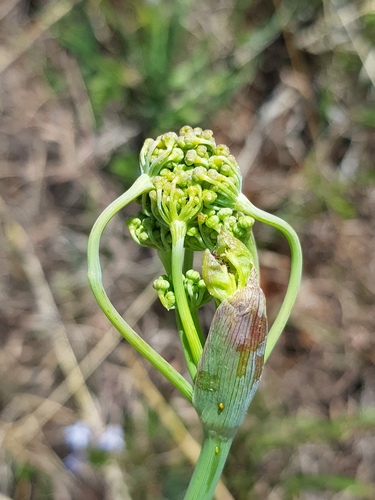
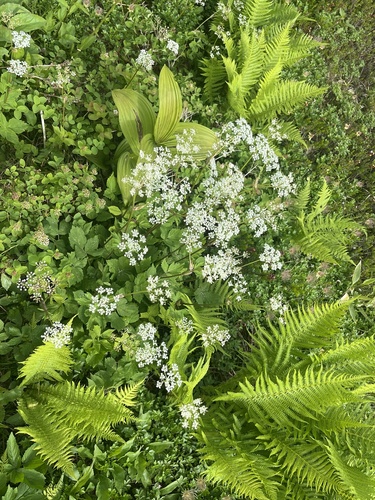
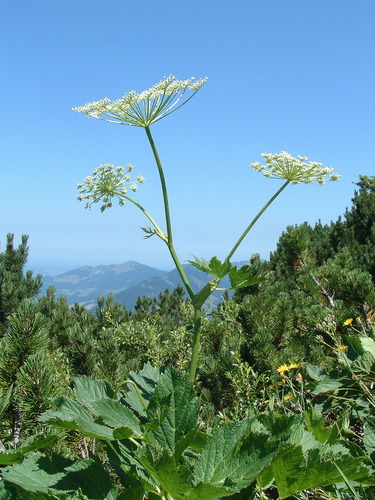
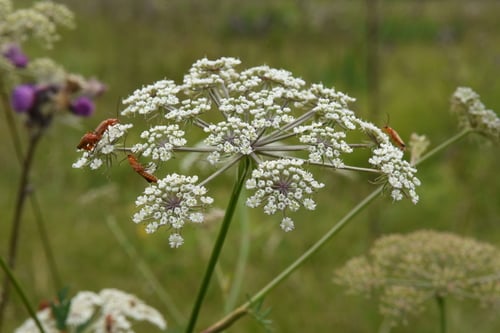
A herb. It grows each year from seeds. It is like dill but slightly taller. It grows 1.2 m high. The stem is white. The leaves are finely divided. The fruit are twice as long as wide.
Edible Uses
The leaves flavor rice and soups, the seeds are used in curries, and oil extracted by steam distillation is used in pickles and processed foods.
Traditional Uses
Oil extracted by steam distillation is used in pickles and processed food. The seeds are used in curries. The leaves are used to flavour rice and soups.
Distribution
It is a temperate plant.
Where It Grows
Africa, Asia, East Africa, India, Japan, Madagascar, Nepal, Zambia,
Cultivation
Plants are grown from seed.
Notes
Some authorities regard Anethum sowa as a species, others as a variety of Anethum graveolens.
Synonyms
Also Known As
Ansoa, Sabsige, Sata kuppi, Satapushpi, Sounf sag, Sowa, Soya, Surva
References (13)
- Ambasta S.P. (Ed.), 2000, The Useful Plants of India. CSIR India. p 41
- Arora, R. K., 2014, Diversity in Underutilized Plant Species - An Asia-Pacific Perspective. Bioversity International. p 100
- Asiat. Res. 11:156. 1810
- Bremness, L., 1994, Herbs. Collins Eyewitness Handbooks. Harper Collins. p 229
- Brown, D., 2002, The Royal Horticultural Society encyclopedia of Herbs and their uses. DK Books. p 121
Show all 13 references Hide references
- Burkill, I.H., 1966, A Dictionary of the Economic Products of the Malay Peninsula. Ministry of Agriculture and Cooperatives, Kuala Lumpur, Malaysia. Vol 1 (A-H) p 159
- Facciola, S., 1998, Cornucopia 2: a Source Book of Edible Plants. Kampong Publications, p 15
- Fowler, D. G., 2007, Zambian Plants: Their Vernacular Names and Uses. Kew. p 76
- Hemphill, I, 2002, Spice Notes. Macmillan. p 164
- Martin, F.W. & Ruberte, R.M., 1979, Edible Leaves of the Tropics. Antillian College Press, Mayaguez, Puerto Rico. p 222 (As Apium sowa)
- Singh, A. G., et al, 2012, Wild Plants Used as Vegetable in Rupandehi District of Nepal and Their Ethnomedicinal Importance. J. Nat. Hist. Mus. Vol. 26, 2012, 111-125
- Terra, G.J.A., 1973, Tropical Vegetables. Communication 54e Royal Tropical Institute, Amsterdam, p 25
- World Checklist of Useful Plant Species 2020. Royal Botanic Gardens, Kew