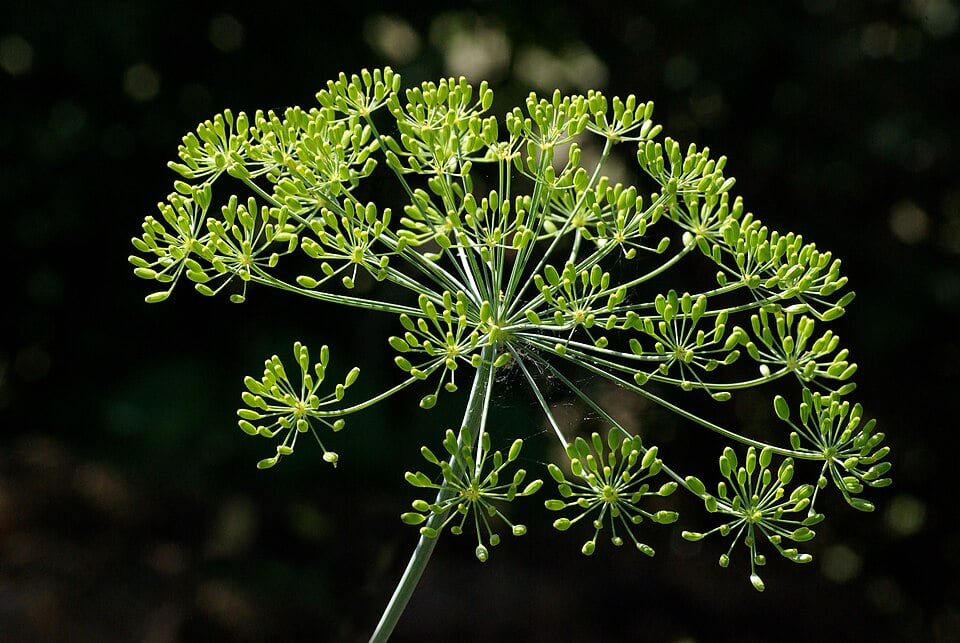
Angelica acutiloba
(Siebold & Zucc.) Kitag.
Dong dang gui
iNaturalist· cc-by-nc
(c) onidiras-iNaturalist, some rights reserved (CC BY-NC), uploaded by onidiras-iNaturalist
iNaturalist· cc-by-nc
(c) onidiras-iNaturalist, some rights reserved (CC BY-NC), uploaded by onidiras-iNaturalist
iNaturalist· cc-by-nc
(c) onidiras-iNaturalist, some rights reserved (CC BY-NC), uploaded by onidiras-iNaturalist
Summary
Source: WikipediaAngelica acutiloba is a perennial herb from the family Apiaceae or Umbelliferous (carrot or parsley family). It is predominately in Japan and perhaps endemic (unique). It is now distributed widely and cultivated in Jilin, China, Korea, Taiwan and Indonesia. The common name of Angelica acutiloba is known as tōki (トウキ, 当帰) in Japanese. The root was used as a substitute for the crude drug tōki (当帰) in Kampō medicine (漢方製薬 Kanpō Seiyaku), which is a Japanese adaptation of Traditional Chinese medicine. The Traditional Chinese medicine uses the root of a different species A. sinensis, Chinese: 当归; pinyin: dāngguī. The Latin pharmacological name for the crude drug, Radix Angelica sinensis, refers to the dried roots of A. sinensis. In China, as a substitute species, A. acutiloba, is known as Chinese: 东当归; pinyin: dōngdāngguī. Literally “东” means “eastern” or “东洋”, which is equivalent to the meaning of Japan. So the medicine is also called as Japanese Angelica root. (See #Etymology) The Japanese name, tōki (トウキ, 当帰), has a literally meaning like “recovering good health”.
Description
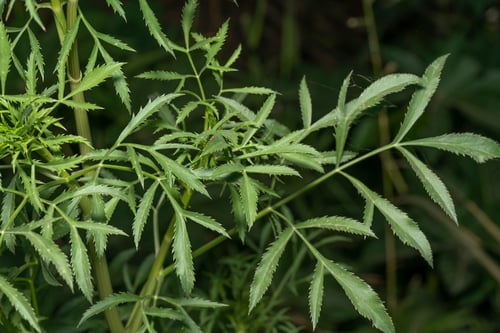
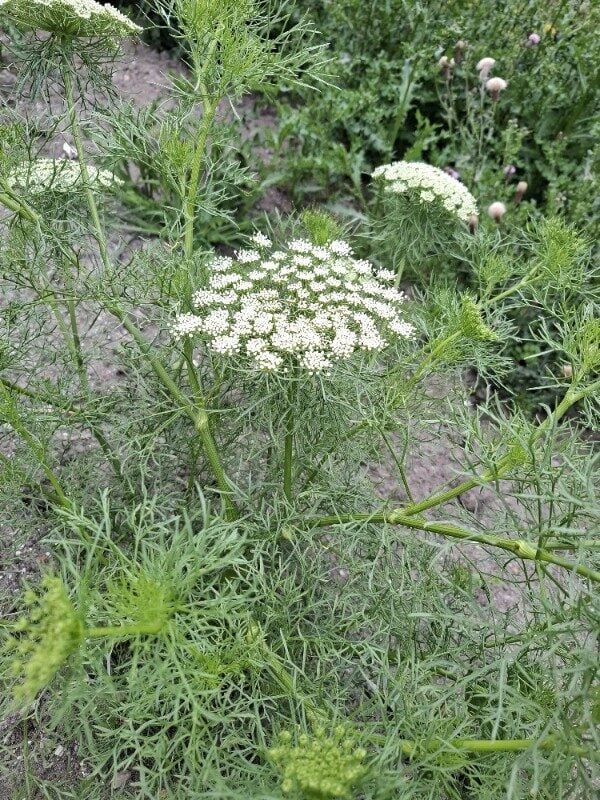
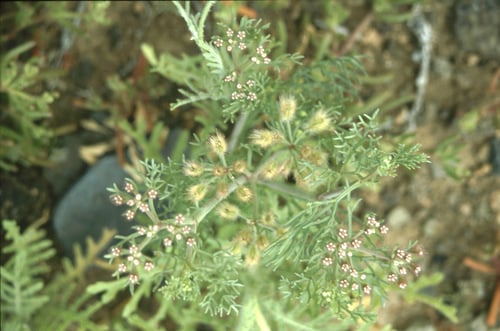
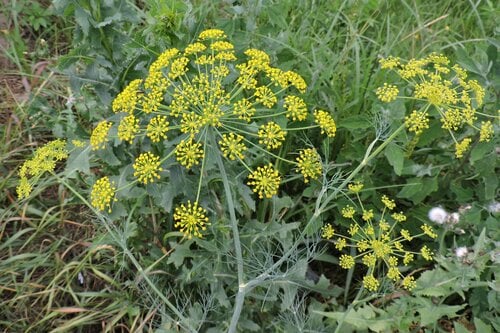
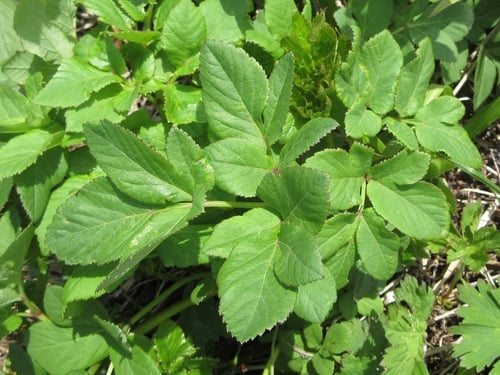
A herb. It keeps growing from year to year. It can grow 70 cm high. The stems are reddish to purple. They have thin ribs. The leaves are deep green and arranged alternately. The upper leaves are oblong and with teeth. Lower leaves have lobes. These can be 2-9 cm long by 1-3 cm wide.
Edible Uses
Young leaves are edible when cooked.
Traditional Uses
Caution: It contains furocoumarins that can make skin sensitive to sunlight and cause dermatitis.
This uses section is brief — help expand it
Medicinal Uses
The root is emmenagogue, oxytocic, sedative and tonic. It is used in the treatment of women's complaints and also helps ease dizziness.
Known Hazards
Angelica acutiloba contains furocoumarins, which increase skin sensitivity to sunlight and may cause dermatitis. The furocoumarins produced by plants are toxic and often utilized as a self-defense mechanism to prevent plants from predators. According to a study, phthalides and furanocoumarins extracted from the A. acutiloba root can be utilized as a natural insecticide, and against larvae and adult Drosophila melanogaster.
Distribution
A temperate plant. It grows in the mountains in central Japan. It suits hardiness zone 7. It suits moist soils. It can grow in light shade.
Where It Grows
Asia, Australia, China, Himalayas, Japan, Korea, Taiwan, Tasmania, Tibet,
Propagation
Seed is best sown in a cold frame as soon as it is ripe, as viability is short. Spring sowing is possible but germination rates will be lower. Light is required for germination. Once seedlings are large enough to handle, prick them out into individual pots and grow on in a cold frame through their first winter before planting out into permanent positions in spring. Seed can also be sown in situ as soon as it is ripe.
Other Uses
None known.
Notes
There are 50 (90) Angelica species. They are temperate plants. It has anticancer properties.
Synonyms
References (6)
- Bot. Mag. (Tokyo) 51:658. 1937
- Hibbert, M., 2002, The Aussie Plant Finder 2002, Florilegium. p 28
- Kintzios, S. E., 2006, Terrestrial Plant-Derived Anticancer Agents and Plant Species Used in Anticancer research Critical Reviews in Plant Sciences. 25: pp 79-113
- Plants for a Future database, The Field, Penpol, Lostwithiel, Cornwall, PL22 0NG, UK. http://www.scs.leeds.ac.uk/pfaf/
- Seidemann J., 2005, World Spice Plants. Economic Usage, Botany, Taxonomy. Springer. p 40
Show all 6 references Hide references
- USDA, ARS, National Genetic Resources Program. Germplasm Resources Information Network - (GRIN). [Online Database] National Germplasm Resources Laboratory, Beltsville, Maryland. Available: www.ars-grin.gov/cgi-bin/npgs/html/econ.pl (10 April 2000)