Cassipourea congoensis
R. Br. ex DC.
Bastard onion wood, Lesser onionwood
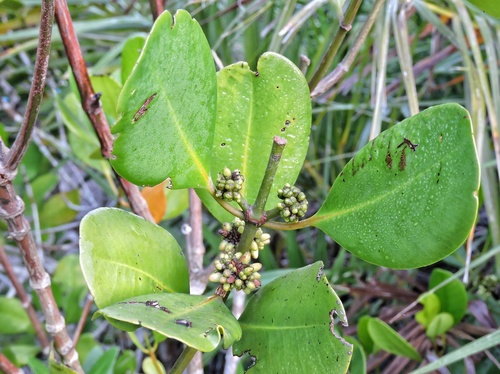
iNaturalist· cc-by-nc
(c) Linda Loffler, some rights reserved (CC BY-NC)
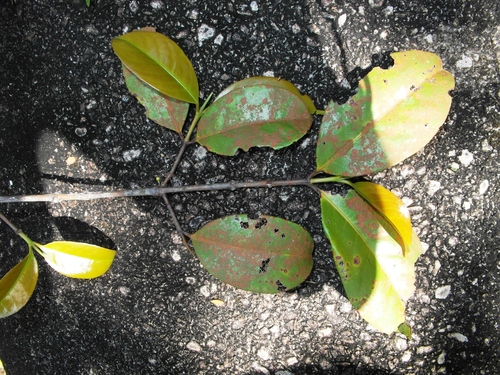
iNaturalist· cc-by-nc
(c) Linda Loffler, some rights reserved (CC BY-NC)
iNaturalist· cc-by-nc
(c) Linda Loffler, some rights reserved (CC BY-NC)
Description
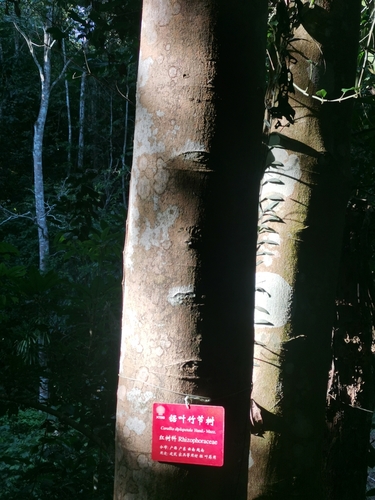
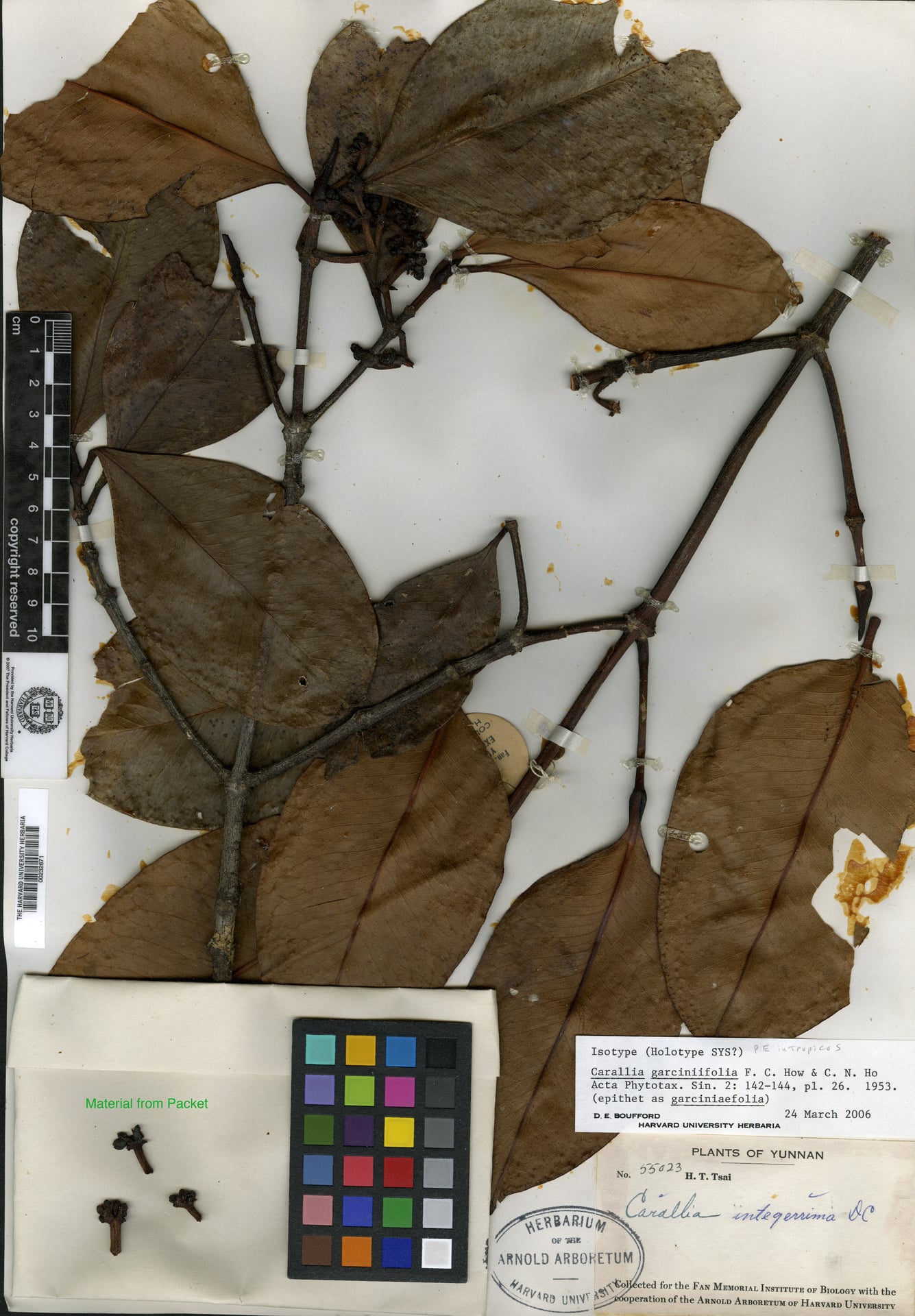
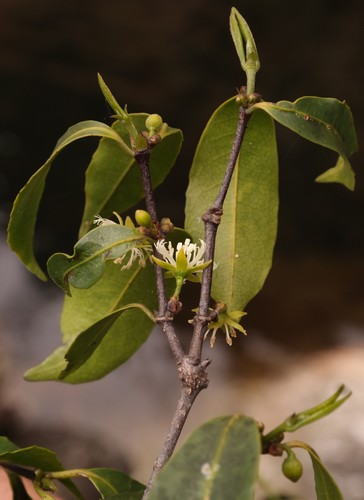
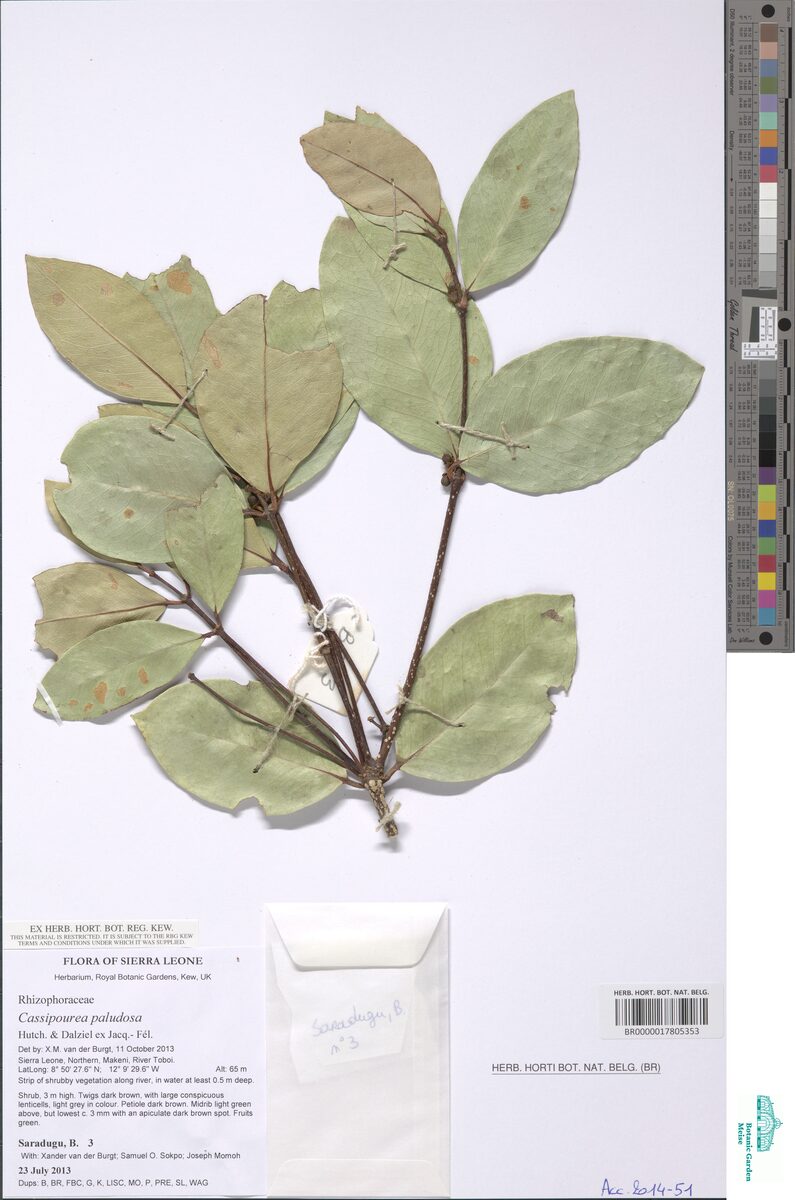
A shrub or small tree. It grows 3-4 m high. It can be 20 m high. The bark is light grey to brown and smooth. It becomes dark grey and rough with age. The trunk is straight and slender. The branches are flat and spread out. The leaves vary in size and shape. They can be oval or round and 2-3 cm long but can also be 14 cm long and narrow. They are light green when young and become dark green and glossy when mature. They are leathery. The side veins are sunken on both surfaces. The edges have slightly hooked teeth. The edges are wavy. The leaf stalk is 8 mm long. The flowers are yellow or green. They are 10 mm across. They occur in tight clusters in the axils of leaves. The fruit is a berry-like capsule. It is oval and 10 mm long. There is a thin layer of orange flesh when young. They become black and dry.
Edible Uses
The fruit is eaten, specifically the pulp and aril.
Distribution
A tropical plant. It grows at the edges of and in evergreen forest. It can be in savannah woodland and palm groves. In Zimbabwe it grows between 750-2,200 m above sea level.
Where It Grows
Africa, Burkina Faso, Central Africa, Central African Republic, CAR, Congo DR, East Africa, Guinea, Guinée, Guinea-Bissau, Malawi, Nigeria, Senegal, South Africa, Southern Africa, West Africa, Zambia, Zimbabwe,
Notes
There are 62 Cassipourea species. There are 8 species in tropical America.
Synonyms
Also Known As
Katiti, Muncanka
References (5)
- Chapman, J. D. & Chapman, H. M., 2001, The Forest Flora of Taraba and Andamawa States, Nigeria. WWF & University of Canterbury. p 196
- Fowler, D. G., 2007, Zambian Plants: Their Vernacular Names and Uses. Kew. p 55 (As Cassipourea congoensis)
- Jardin, C., 1970, List of Foods Used In Africa, FAO Nutrition Information Document Series No 2.p 125 (As Cassipourea congoensis)
- Palgrave, K.C., 1996, Trees of Southern Africa. Struik Publishers. p 657 (As Cassipourea congoensis)
- Schatz, G.E., 2001, Generic Tree Flora of Madagascar. Royal Botanical Gardens, Kew and Missouri Botanical Garden. p 313 (Genus)