Cassipourea malosana
(Baker) Alston
Onionwood
iNaturalist· cc-by-nc
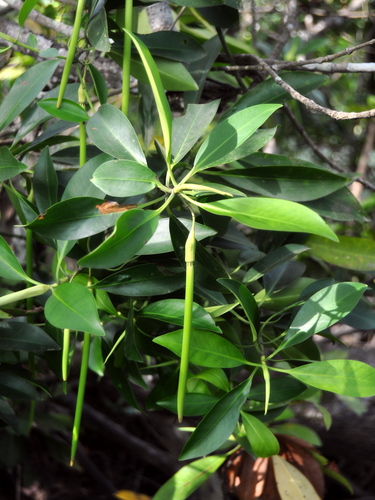
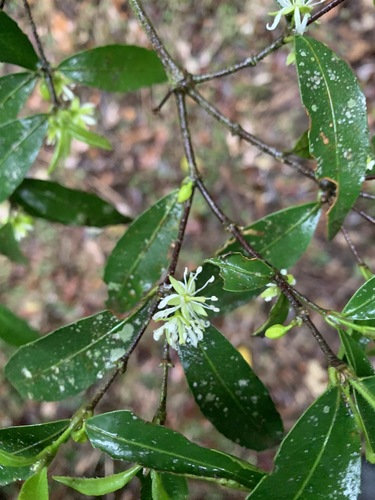
(c) Nick Helme, some rights reserved (CC BY-NC), uploaded by Nick Helme
iNaturalist· cc-by-nc
(c) Nick Helme, some rights reserved (CC BY-NC), uploaded by Nick Helme
iNaturalist· cc-by-nc
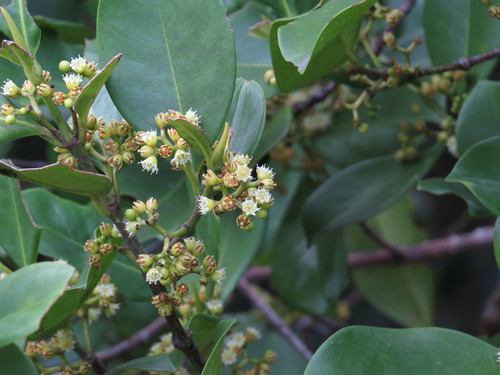
(c) magdastlucia, some rights reserved (CC BY-NC), uploaded by magdastlucia
Summary
Source: WikipediaCassipourea malosana is a species of plant native to tropical Africa.
Description
Cassipourea malosana, known as onionwood, is a tropical tree growing 6–45 m tall with a small rounded crown. It grows in moist highland areas between 1,000–3,100 m elevation in regions with yearly rainfall above 2,200 mm.
Edible Uses
The fruit are used in soups.
Traditional Uses
The fruit are used in soups.
This uses section is brief — help expand it
Medicinal Uses
The tree has fine and even-textured wood, and produces hard and heavy timber. It is exploited artisanally and commercially in East Africa, and is usually harvested from the wild. It is also used for firewood. The tree is occasionally grown as a shade or ornamental tree, and is planted in reforestation projects and for erosion control. Its flowers are a good source of nectar for bees. The bark has some local medicinal uses. It is cooked in soups to restore strength, made into a tea to help remove a placenta after birth, and applied to skin to treat skin ailments and sunburn and to lighten skin.
Distribution
It is a tropical plant. It grows between 1,000-3,100 m above sea level. It grows in moist areas with a yearly rainfall above 2,200 mm.
Where It Grows
Africa, Congo DR, East Africa, Eswatini, Ethiopia, Kenya, Malawi, Mozambique, Somalia, South Africa, Sudan, Tanzania, Uganda,
Cultivation
A plant of the moist tropics, it is found in areas where the mean annual rainfall is in excess of 2,200mm.
Other Uses
The heartwood is white to light brown often with purplish streaks resulting from fungal attack; it is not differentiated from the sapwood. Texture is fine and even; grain usually straight but with a slight to marked tendency to spiralling. A very hard and heavy timber, it is not durable and not resistant to termite attack. The wood dries slowly and is subject to distortion. Sawing of the green timber is difficult because of its tendency to spring, but the dry wood is easier to work. It is moderately easy to work using hand tools and has excellent machining properties, especially in moulding, but it may have an appreciable blunting effect on tool edges; a good finish can be obtained; it tends to split on nailing, and pre-boring is necessary; it may be somewhat troublesome to glue and is not suitable for steam bending. The wood is suitable for indoor purposes requiring great strength and elasticity such as flooring (especially heavy duty and industrial flooring), turnery, tool handles and construction work. It is also suitable for vehicle bodies, furniture and cabinet work, ladders, sporting goods, agricultural implements, joinery, sleepers, poles and piles, toys and novelties, beehives, and for veneer and plywood The wood is used for fuel. The tree is found in catchment areas (wet montane forest) and contributes to soil conservation of these areas. The flowers are a good source of nectar for bees.
Synonyms
References (2)
- Unsure - speciesselector.xls off internet
- World Checklist of Useful Plant Species 2020. Royal Botanic Gardens, Kew