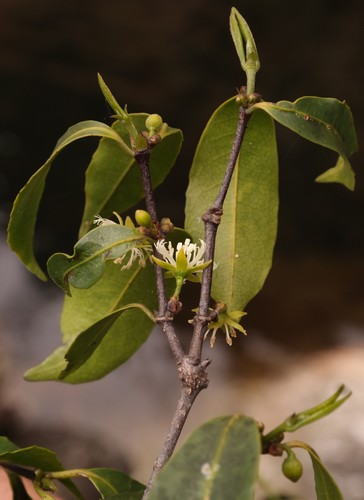
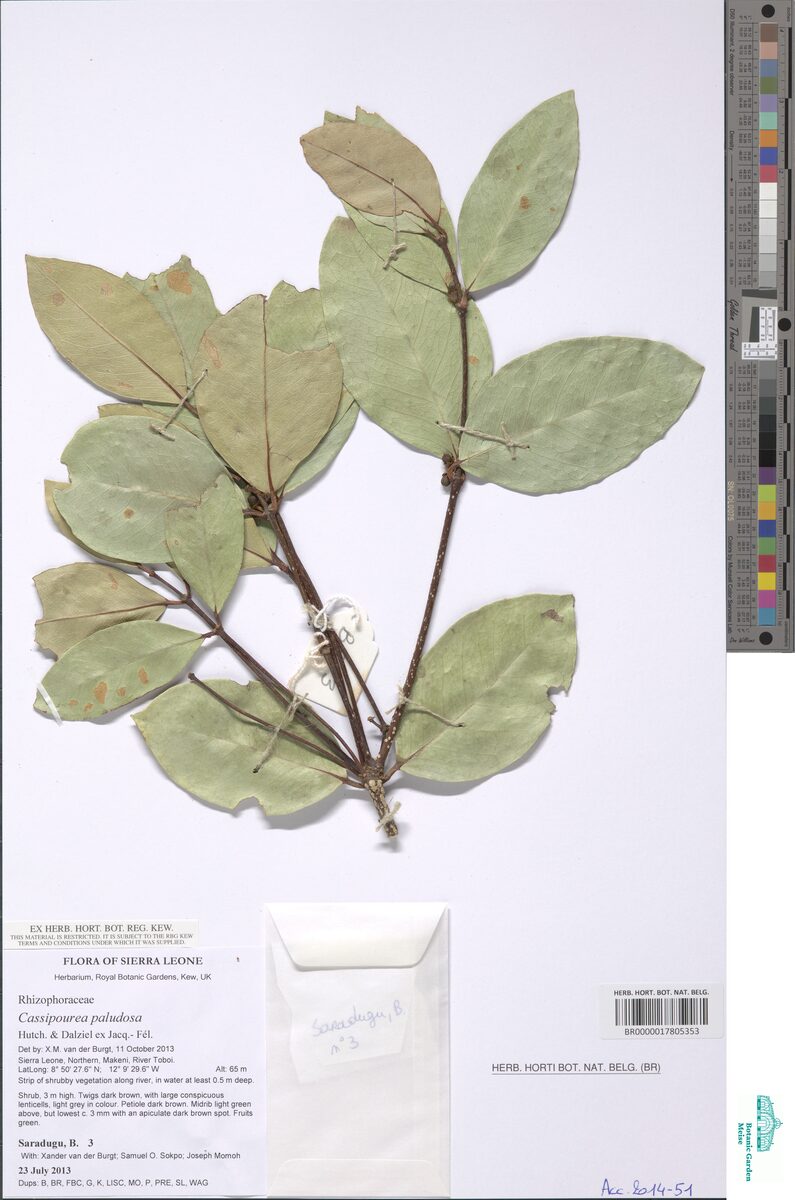
Bruguiera sexangula
(Loureiro) Poiret
Golden orange mangrove
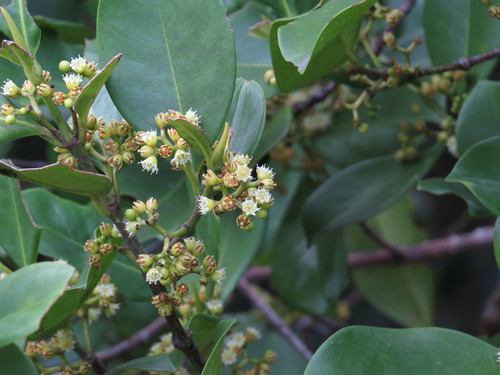
iNaturalist· cc-by-nc
(c) Zakaria Al Anshori, alguns direitos reservados (CC BY-NC), enviado por Zakaria Al Anshori
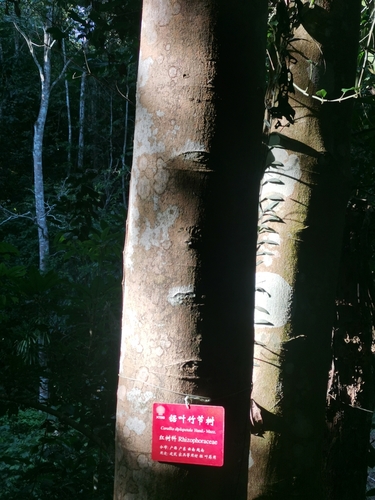
iNaturalist· cc-by-nc
(c) Cheongweei Gan, alguns direitos reservados (CC BY-NC), enviado por Cheongweei Gan
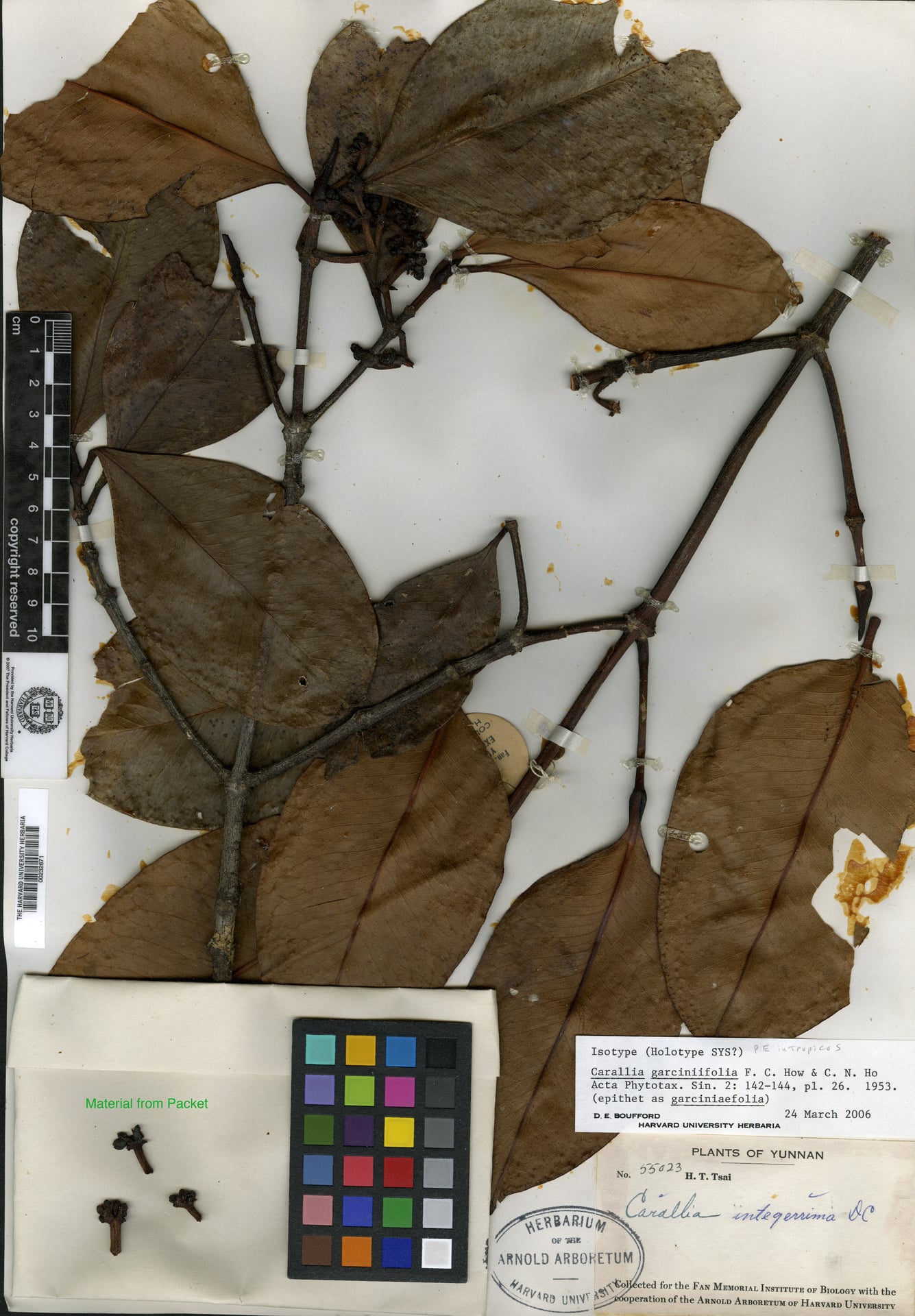
iNaturalist· cc-by-nc-sa
(c) Ria Tan, alguns direitos reservados (CC BY-NC-SA)
Summary
Source: WikipediaBruguiera sexangula is a species of flowering plant in the family Rhizophoraceae. It is sometimes referred to by the common name upriver orange mangrove. This mangrove shrub or tree grows up to 15 m, occasionally 30 m, in height.
Description
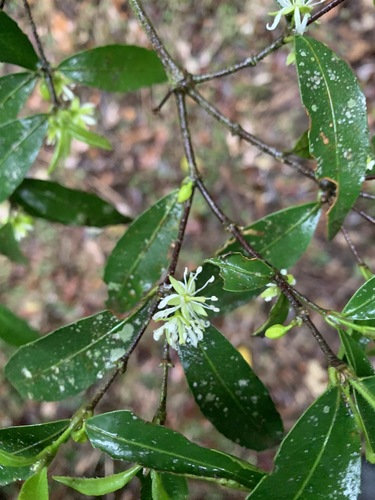
A medium sized erect tree. It grows to 40 m high. The trunk is 80 cm across. The bark is grey. The bark is thick, ridged and very dark and contains a few large brown corky spots. The leaves are pointed at the tip and wedge shaped at the base. The midrib is prominent and the upper surface shiny while the lower surface is reddish brown. The leaves are 10-13 cm long by 4-5 cm wide. The flowers are yellow and sometimes tinged with orange. They occur singly in the axils of leaves. They are about 2.5 cm long. The fruit is cylindrical similar to "busaing" except that the germinating root is shorter. Seeds germinate on the tree before falling.
Edible Uses
The fruit is sometimes used as an ingredient in the masticatory betel quid. The fruit is cooked, then soaked overnight and eaten, although it is very astringent. A flavouring is obtained from the bark.
Traditional Uses
The embryo of the fruit is soaked overnight, then cooked and eaten.
This uses section is brief — help expand it
Medicinal Uses
The mangrove has various traditional uses in Asia. The developing embryos and the fruits are cooked and eaten after soaking. Juice from the fruits is used to treat sore eyes, shingles and burns. The timber is heavy, hard and strong and is used as poles as well as for firewood and charcoal.
Distribution
It is a tropical plant. It grows in mud flats and estuaries. They are found in mangrove swamps throughout the Philippines.
Where It Grows
Andamans & Nicobar, Asia, Australia, Brunei, Cambodia, Christmas Island, India, Indochina, Indonesia, Malaysia, Maldives, Micronesia, Myanmar, New Caledonia, Pacific, Palau, Papua New Guinea, PNG, Philippines, SE Asia, Solomon Islands, Sri Lanka, Thailand, Vietnam, Yap,
Cultivation
The seeds germinate on the tree then fall and root in the mud. Seedlings transplant easily.
Propagation
Seed - in a trial in the Philippines seed germinated 5 - 10 days after sowing.
Other Uses
The bark is used as a source of tannin. Although the bark is thinner than that obtained from Rhizophora spp., it contains more tannin. An adhesive is obtained from the bark. The wood often has an attractive colour. It is straight-grained, fine-textured, heavy, very hard and very strong. It is difficult to saw and work, though it finishes well. It is non-durable to moderately durable when exposed to weather or in contact with the ground. The logs shrink and check excessively in seasoning. In the trade it is not distinguished from Rhizophora wood. The wood is often of too small a dimension to be used for much other than fuel, but that obtained from well-grown trees is suitable for poles and house construction. It is traditionally also used for fishing stakes The wood makes a good fuel and is also used to make charcoal. Wood from immature plants and branches is usually used for this purpose. The energy value of the wood is about 20,200 kJ/kg.
Other Information
It is not known if it is used for food in Papua New Guinea.
Notes
There are 6 Bruguiera species. They grow in tropical mangrove swamps.
Synonyms
Also Known As
Bodaa vaki, Klak, Kong klak hua sum, Langgadai, Mata buaya, Pang ka hua sum, Pasak deng, Phlaong, Pototan, Saung, Tumu barau, Tumu mata buaya
References (25)
- Ambasta S.P. (Ed.), 2000, The Useful Plants of India. CSIR India. p 89
- Argent, G et al, nd, Manual of the Larger and More important non Dipterocarp Trees of Central Kalimantan Indonesia. Volume 2 Forest Research Institute, Samarinda, Indonesia. p 524
- Barrau, J., 1976, Subsistence Agriculture in Polynesia and Micronesia. Bernice P. Bishop Museu, Bulletin 223 Honolulu Hawaii. Kraus reprint. p 56
- Bircher, A. G. & Bircher, W. H., 2000, Encyclopedia of Fruit Trees and Edible Flowering Plants in Egypt and the Subtropics. AUC Press. p 67
- Borrell, O.W., 1989, An Annotated Checklist of the Flora of Kairiru Island, New Guinea. Marcellin College, Victoria Australia. p 120
Show all 25 references Hide references
- Burkill, I.H., 1966, A Dictionary of the Economic Products of the Malay Peninsula. Ministry of Agriculture and Cooperatives, Kuala Lumpur, Malaysia. Vol 1 (A-H) p 379
- Castillo, C., 2013, The Archaeobotany of Khao Sam Kaeo and Phu Khao Thong: The Agriculture of Late Prehistoric Southern Thailand. Ph. D. thesis University College, London p 379
- Cooper, W. and Cooper, W., 2004, Fruits of the Australian Tropical Rainforest. Nokomis Editions, Victoria, Australia. p 428
- Ding Hou, 1958, Rhizophoraceae in Flora Malesiana 5(4) p 467
- Dobriyal, M. J. R. & Dobriyal, R., 2014, Non Wood Forest Produce an Option for Ethnic Food and Nutritional Security in India. Int. J. of Usuf. Mngt. 15(1):17-37
- Elliot, W.R., & Jones, D.L., 1982, Encyclopedia of Australian Plants suitable for cultivation. Vol 2. Lothian. p 383
- Encycl. suppl. 4:262. 1816
- Floyd, A.G., 1977, Ecology of the Tidal Forests in the Kikori-Romilly Sound Area Gulf of Papua. Ecology Report No 4 Division of Botany, Lae, Papua New Guinea. p 31
- French, B.R., 1986, Food Plants of Papua New Guinea, A Compendium. Asia Pacific Science Foundation p 322
- Frodin, D.G. & Leach, G.L., 1982, Mangroves of the Port Moresby Region. Biology Department Occasional Paper No 3 Revised edition. Papua New Guinea, p 25
- Massal, E. and Barrau, J., 1973, Food Plants of the South Sea Islands. SPC Technical Paper No 94. Noumea, New Caledonia. p 32
- Menninger, E.A., 1977, Edible Nuts of the World. Horticultural Books. Florida p 115
- Monsalud, M.R., Tongacan, A.L., Lopez, F.R., & Lagrimas, M.Q., 1966, Edible Wild Plants in Philippine Forests. Philippine Journal of Science. p 532
- Roy, S. D., et al, 2009, Mangroves of Andaman and Nicobar Islands. ICAR p 17
- Selvam, V., 2007, Trees and shrubs of the Maldives. RAP Publication No. 2007/12 p 186
- Sujanapal, P., & Sankaran, K. V., 2016, Common Plants of Maldives. FAO & Kerala FRI, p 61
- Walter, A., & Sam. C., 1990, Notes et Documents D'ethnographie No. 3. O.R.S.T.O. M. p 11
- Walter, A. & Sam C., 2002, Fruits of Oceania. ACIAR Monograph No. 85. Canberra. p 278
- World Checklist of Useful Plant Species 2020. Royal Botanic Gardens, Kew
- Yunupinu Banjgul, Laklak Yunupinu-Marika, et al. 1995, Rirratjinu Ethnobotany: Aboriginal Plant Use from Yirrkala, Arnhem Land, Australia. Northern Territory Botanical Bulletin No 21. Parks and Wildlife Commission of the Northern Territory. p 23