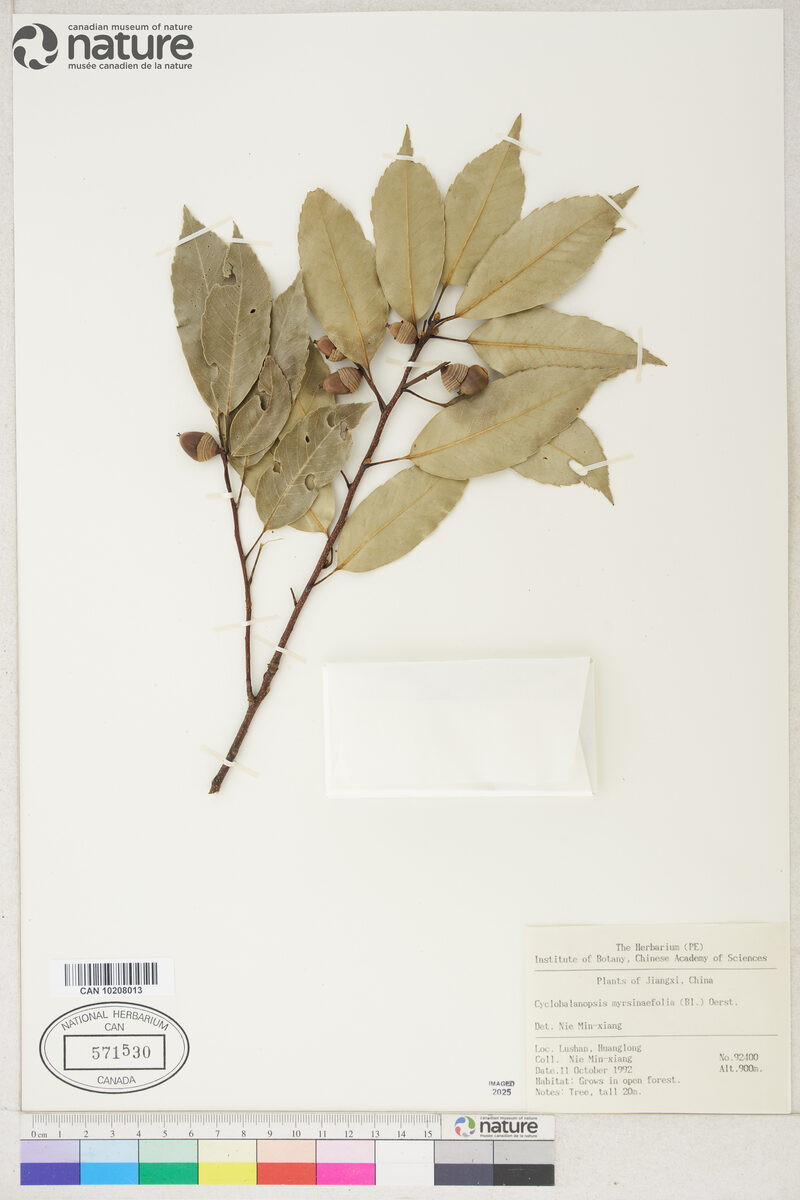
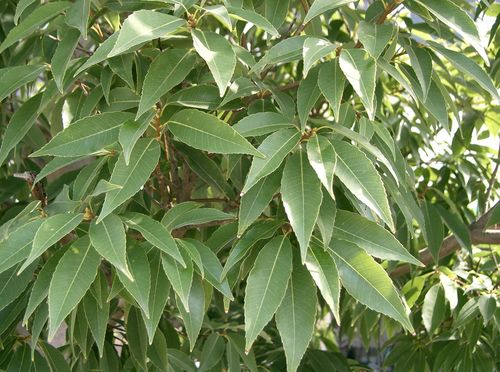
Castanopsis purpurella
(Miq.) N. P. Balakr.
Fagaceae Edible: Seeds, Nuts
wikimedia· cc-by
Wikimedia Commons - Kristof Zyskowski & Yulia Bereshpolova
wikimedia· cc-by
Wikimedia Commons - Kristof Zyskowski & Yulia Bereshpolova
Description
A subtropical tree in the Fagaceae family native to the eastern Himalayas, growing at elevations of 1,200–1,500 m in Sikkim.
This description is brief — help expand it
Edible Uses
The seeds and nuts are eaten.
Distribution
It is a subtropical plant. In Sikkim it grows between 1,200-1,500 m above sea level.
Where It Grows
Asia, Bangladesh, Himalayas, India, Indochina, Laos, Northeastern India, SE Asia, Sikkim,
Production
In Sikkim nuts are available November and December.
Synonyms
Castanea purpurella Miq.
Also Known As
Dieng-soh-stap, Kata shingu, Katus
References (6)
- Dobriyal, M. J. R. & Dobriyal, R., 2014, Non Wood Forest Produce an Option for Ethnic Food and Nutritional Security in India. Int. J. of Usuf. Mngt. 15(1):17-37
- Jeeva, S., 2009, Horticultural potential of wild edible fruits used by the Khasi tribes of Meghalaya. Journal or Horticulture and Forestry Vol. 1(9) pp. 182-192
- Pasha, M. K. & Uddin, S. B., 2019, Minor Edible Fruits of Bangladesh. Bangladesh J. Plant Taxon. 26(2): 299–313
- Sawian, J. T., et al, 2007, Wild edible plants of Meghalaya, North-east India. Natural Product Radiance Vol. 6(5): p 414
- Sundriyal, M., et al, 1998, Wild edibles and other useful plants from the Sikkim Himalaya, India. Oecologia Montana 7:43-54
Show all 6 references Hide references
- Sundriyal, M., et al, 2004, Dietary Use of Wild Plant Resources in the Sikkim Himalaya, India. Economic Botany 58(4) pp 626-638