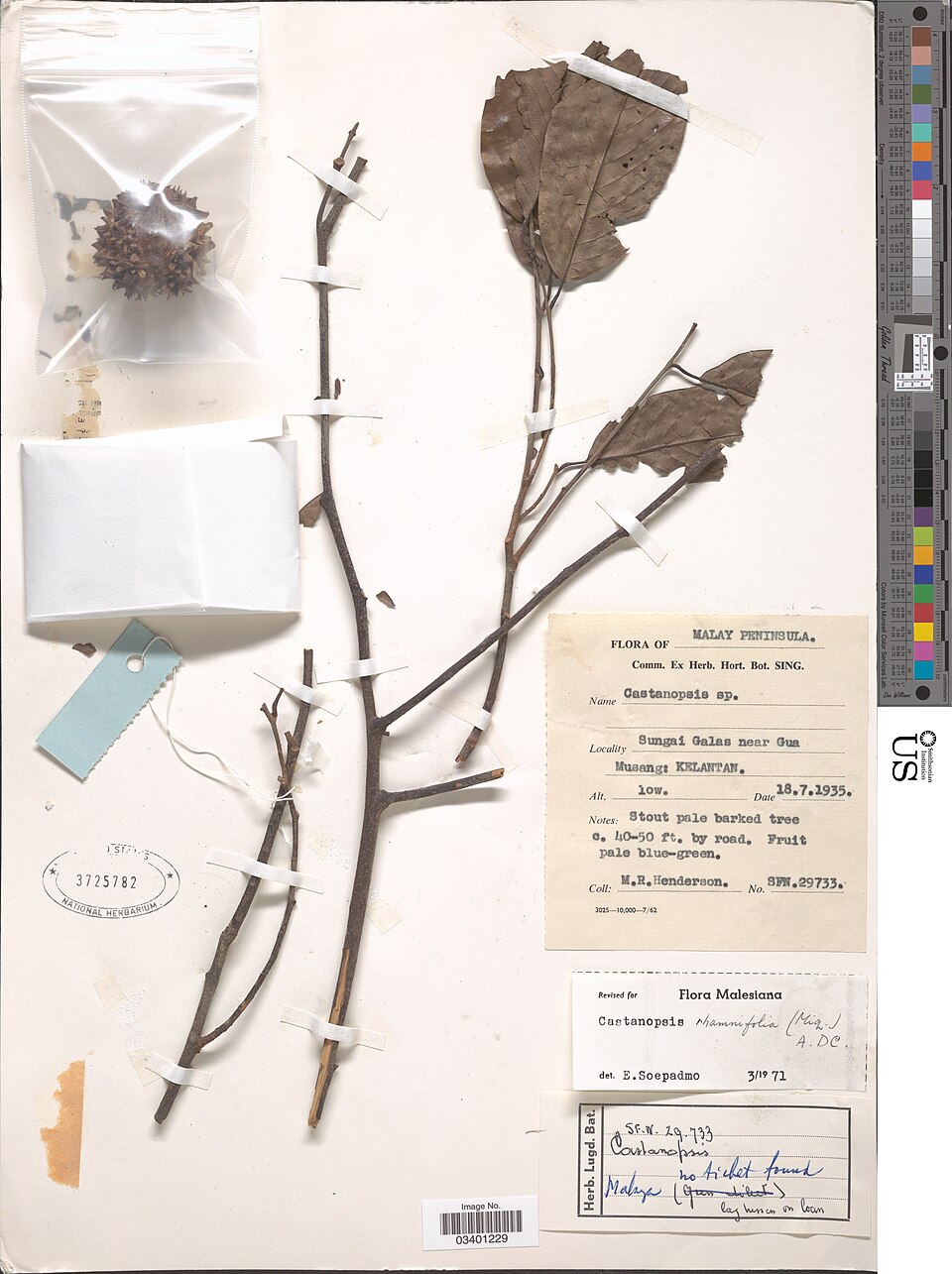
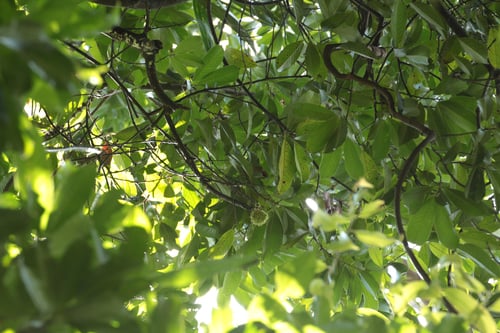
Castanopsis hystrix
J.D. Hooker & Thompson ex A. DC.
iNaturalist· cc-by-nc
(c) Pasang, some rights reserved (CC BY-NC), uploaded by Pasang
iNaturalist· cc-by
(c) Yoav Daniel Bar-Ness, some rights reserved (CC BY)
Summary
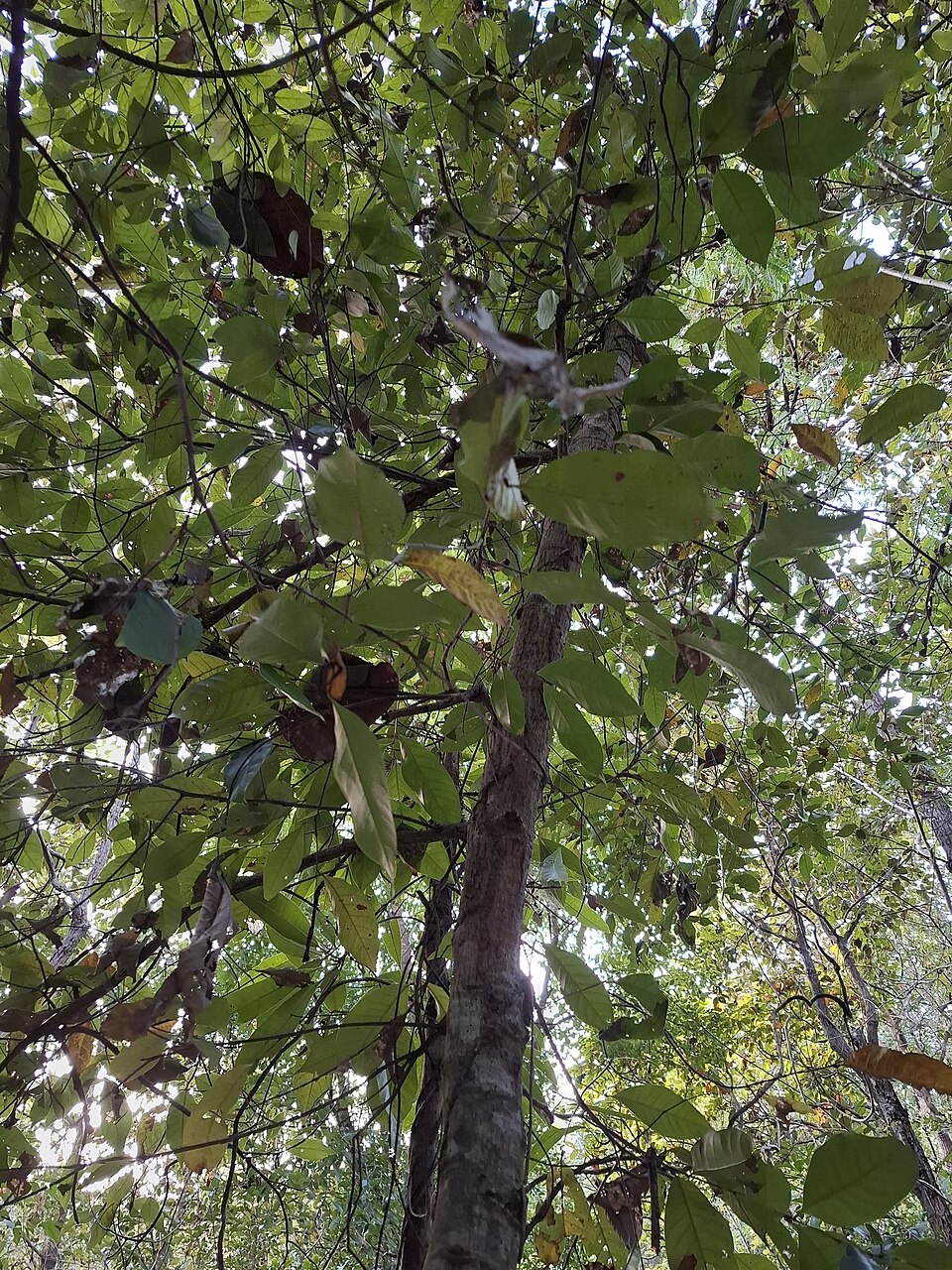
Source: WikipediaCastanopsis hystrix or Patle katus is a species of evergreen broadleaf tree, which grows up to 30 meters in height. The tree is found in subtropical broadleaved evergreen forests, ranging from the eastern Himalayas of Nepal, Bhutan, and northeastern India, across Indochina (Cambodia, Laos, Myanmar, Thailand, Vietnam), southern China (Fujian, Guangdong, Guangxi, Guizhou, Hainan, southwestern Hunan, southeastern Tibet, and southern Yunnan), and Taiwan. It ranges up to 2400 meters elevation in the Himalayas, and up to 1600 meters elevation in southern China. It thrives in moist soils, and is often found in association with trees of family Lauraceae.
Description
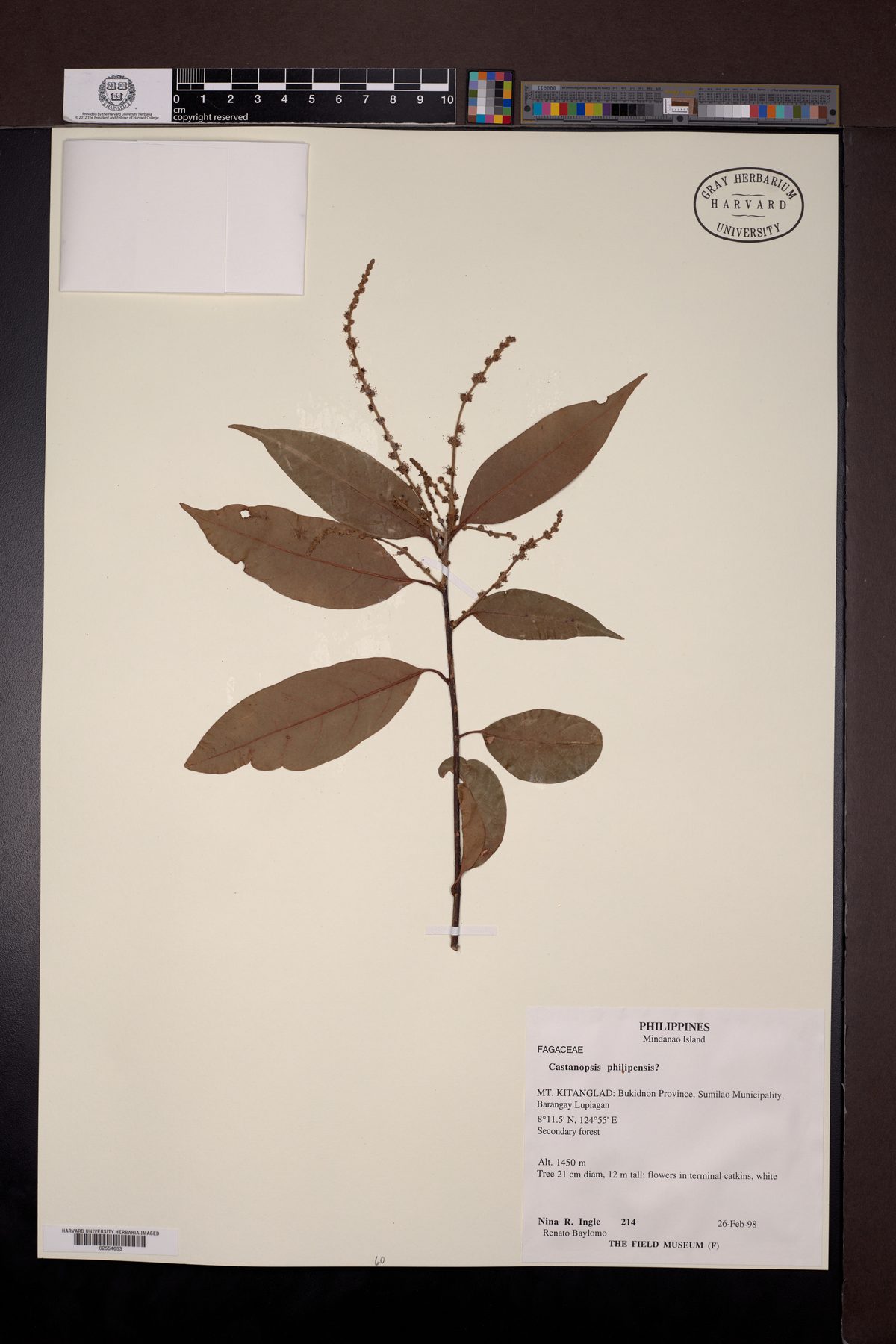
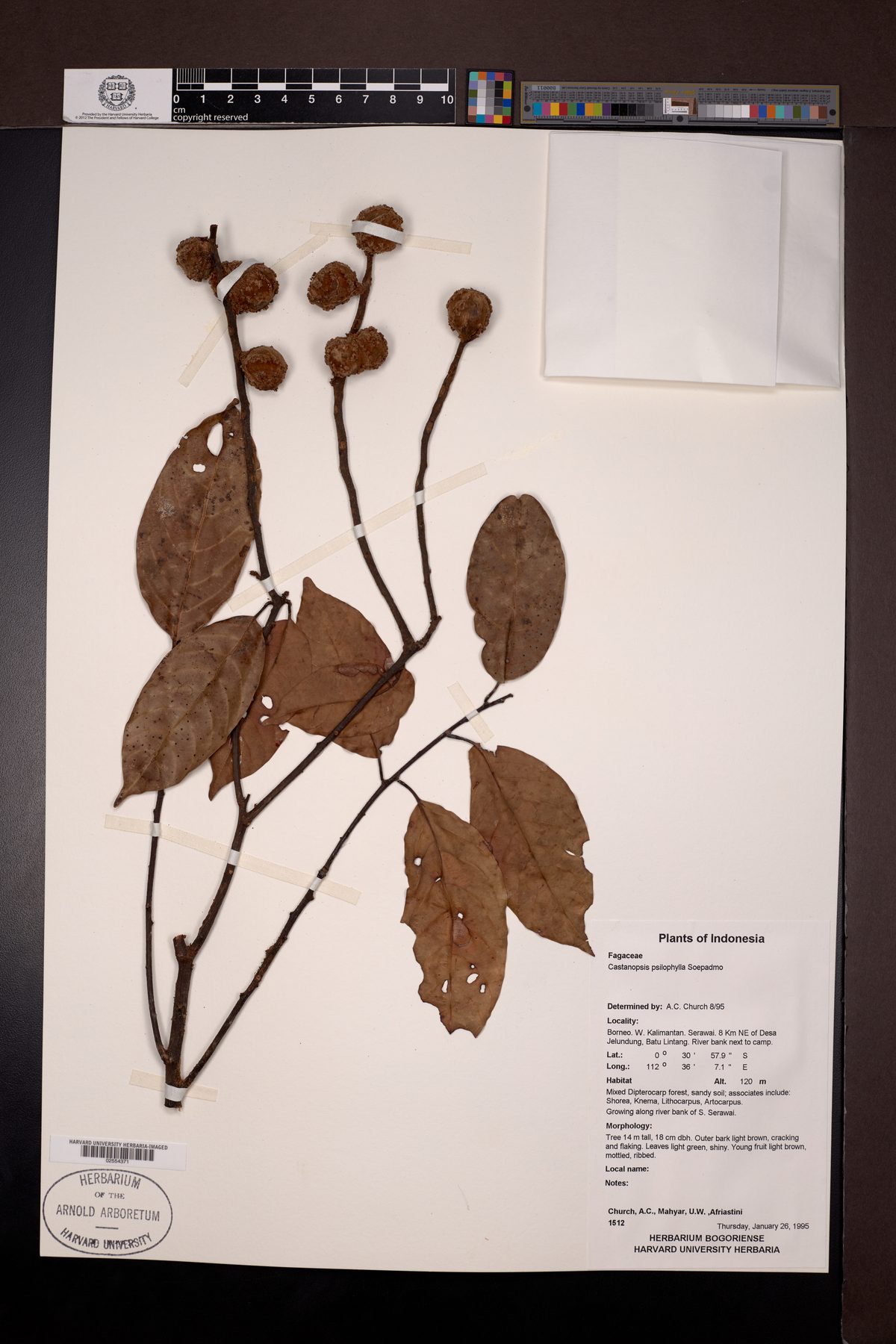
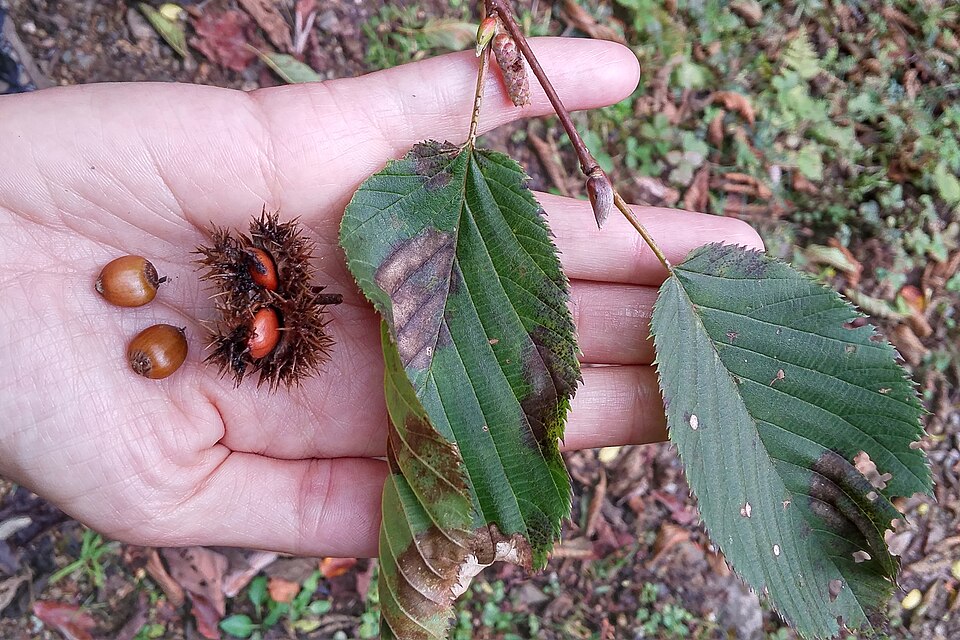
A large evergreen tree. It grows 25-30 m tall. The trunk is 1 m across. The young leaves are purple-brown. They bare slender and hairy. The leaf stalk is 1 cm long. The leaves are 2.5-15 cm long by 1.5-5 cm wide. They are oval or sword shaped. They are papery to thinly leathery. The base is rounded and unequal. There are fine reddish hairs underneath. There are 9-15 sides veins on each side of the midrib. The flowers are yellow and in drooping spikes. They occur singly in the axils of leaves. They are 15 cm long. The fruit is a nut 0.8-1.5 cm across. It is in a cup 2.5-4 cm across. This splits into 4 segments.
Edible Uses
The seeds can be eaten raw or cooked and have a good flavour despite their small size, reaching up to 14mm in diameter. The flowers are also edible, though they are very small and produced in catkins, and no further preparation details are recorded.
Traditional Uses
The seed or nut is eaten raw or roasted.
This uses section is brief — help expand it
Medicinal Uses
None known
Distribution
A tropical plant. In Vietnam it grows between 300-1500 m altitude. In Nepal they grow between 1000-2500 m altitude. Seedlings require shade. It grows in subtropical broad-leaved evergreen forest.
Where It Grows
Asia, Bhutan, Cambodia, China, Himalayas, India, Indochina, Laos, Myanmar, Nepal, Northeastern India, SE Asia, Sikkim, Taiwan, Thailand, Vietnam,
Cultivation
We have very little information on this species and do not know if it will be hardy in Britain, though judging by its native range it could succeed outdoors at least in the milder parts of this country. The following notes are based on the general needs of the genus. Prefers a good deep medium to stiff loam. Requires a sheltered position in semi-shade and a lime-free soil. Although cold hardy in Britain, this species really requires a warm continental climate if it is to prosper and it does not do well in the maritime climate of this country. The seed takes two growing seasons from fertilization to maturity. The catkins have an unpleasant hawthorn-like smell to attract midges for their pollination.
Propagation
Seed requires a period of cold stratification and is best sown as soon as it is ripe in a cold frame. The seed has short viability and should not be allowed to dry out. It can be stored for a few months if kept cool and moist — a plastic bag in the salad compartment of a fridge works well. Stored seed should be soaked in warm water for 24–48 hours before sowing. Germination usually takes place within 1–3 months at 15°C. Prick out seedlings into individual pots as soon as they are large enough to handle and plant out in mid summer if possible, otherwise overwinter in a cold frame and plant out in late spring. Give young plants some protection from cold for their first few winters outdoors.
Other Uses
The wood is hard and used for construction, fencing, and fuel. The plant is also noted for its scented qualities.
Production
Trees grow quickly after 5 years of age. It starts flowering and fruiting after 15 years. There are about 1,200 nuts per kg.
Other Information
Nuts are sold in local markets and also exported.
Notes
There are about 120 Castanopsis species. Many have edible nuts.
Synonyms
Also Known As
Ca oi la do, Dalne katus, Dhalne katus, Hingori, Hong zhui, Katoos, Katuns, Katus, Ko deng, Kora, Mabashi, Mak ko, Patale katus, Patle katus, Patley katus, Sega, Thadziisii, Thyosolothi, Zhexie
References (30)
- Altschul, S.V.R., 1973, Drugs and Foods from Little-known Plants. Notes in Harvard University Herbaria. Harvard Univ. Press. Massachusetts. no. 639
- Ambasta S.P. (Ed.), 2000, The Useful Plants of India. CSIR India. p 110
- Angami, A., et al, 2006, Status and potential of wild edible plants of Arunachal Pradesh. Indian Journal of Traditional Knowledge 5(4) October 2006, pp 541-550
- Chettri, N. & Sharma, E., Non-timber Forest Produce: Utilization, Distribution and Status in the Khangchendzonga Biosphere Reserve, Sikkim, India.
- Dangol, D. R. et al, 2017, Wild Edible Plants in Nepal. Proceedings of 2nd National Workshop on CUAOGR, 2017.
Show all 30 references Hide references
- Gautam, R. S., et al, 2020, Wild Edible Fruits of Nepal. Int. J. Appl. Sci. Biotechnol. Vol 8(3): 289-304
- Ghimeray, A. K., Lamsal, K., et al, 2010, Wild edible angiospermic plants of the Illam Hills (Eastern Nepal) and their mode of use by local community. Korean J. Pl. Taxon. 40(1)
- Huang Chengjiu, Zhang Yongtian, Bartholomew, B., Fagaceae, Flora of China.
- Forest Inventory and Planning Institute, 1996, Vietnam Forest Trees. Agriculture Publishing House p 260
- Hu, Shiu-ying, 2005, Food Plants of China. The Chinese University Press. p 344
- Jin, Chen et al, 1999, Ethnobotanical studies on Wild Edible Fruits in Southern Yunnan: Folk Names: Nutritional Value and Uses. Economic Botany 53(1) pp 2-14
- J. Bot. 1:182. 1863 prob. Jun (F. A. W. Miquel, Ann. Mus. Bot. Lugduno-Batavum 1:119. 1863 Nov; A. DC., Prodr. 16(2):111. 1864)
- Krishna, B., & Singh, S., 1987, Ethnobotanical Observations in Sikkim. J. Econ. Tax. Bot. Vol. 9 No. 1 pp 1-7
- Lehmann, L., et al, Forests and Trees of the Central Highlands of Xieng Khouang, Lao P. D. R., A field guide.
- Luczaj, L., et al, 2021, Wild food plants and fungi sold in the markets of Luang Prabang, Lao PDR. Journal of Ethnobiology and Ethnomedicine (2021) 17:6
- Manandhar, N.P., 2002, Plants and People of Nepal. Timber Press. Portland, Oregon. p 140
- Mozhui, R., et al, 2011, Wild edible fruits used by the tribals of Dimapur district of Nagaland, India. Pleione 5(1): 56 - 64.
- Pfoze, N. L., et al, 2012, Survey and assessment of floral diversity on wild edible plants from Senapati district of Manipur, Northeast India. Journal of Biodiversity and Environmental Sciences. 1(6):50-52
- Plants for a Future database, The Field, Penpol, Lostwithiel, Cornwall, PL22 0NG, UK. http://www.scs.leeds.ac.uk/pfaf/
- Polunin, O., & Stainton, A., 2006, Flowers of the Himalaya, Oxford India Paperbacks. p 376
- Shah, S. K., 2014, Dietary contribution of underutilized minor crops and indigenous plants collected from uncultivated lands and forests in Nepal. in Promotion of Underutilized Indigenous Food Resources for Food Security and Nutrition in Asia and Pacific. FAO. Bangkok p 64
- Sharma, G., et al, 2016, Agrobiodiversity in the Sikkim Himalaya. International Centre for Integrated Mountain Development, ICIMOD Working Paper 2016/5 p 20
- Shrestha, S., 2021, Wild Edible Plants of Dhankuta, Eastern Nepal. Rupantaran : A Multidisciplinary Journal Vol. V : pp 100-109, September, 2021 p 103
- Singh, H.B., Arora R.K.,1978, Wild edible Plants of India. Indian Council of Agricultural Research, New Delhi. p 81
- Singh, V. B., et al, (Ed.) Horticulture for Sustainable Income and Environmental Protection. Vol. 1 p 215
- Sundriyal, M., et al, 1998, Wild edibles and other useful plants from the Sikkim Himalaya, India. Oecologia Montana 7:43-54
- Suresh, C. P. et al, 2014, Wild Edible Tree Fruits of Sikkim Himalayas. Journal of Tree Sciences 33(1): 43-48
- Uprety, Y., et al, 2016, Traditional use and management of NTFPs in Kangchenjunga Landscape: implications for conservation and livelihoods. Journal of Ethnobiology and Ethnomedicine (2016) 12:19
- Wild edible plants of Himachal Pradesh
- www.mekonginfo.org/assets/midocs/0001714-environment-forests-and-trees-of-the-central-highlands-of-xieng-khouang-lao