Carpinus caroliniana
Walter
American Hornbeam
iNaturalist· cc-by-nc
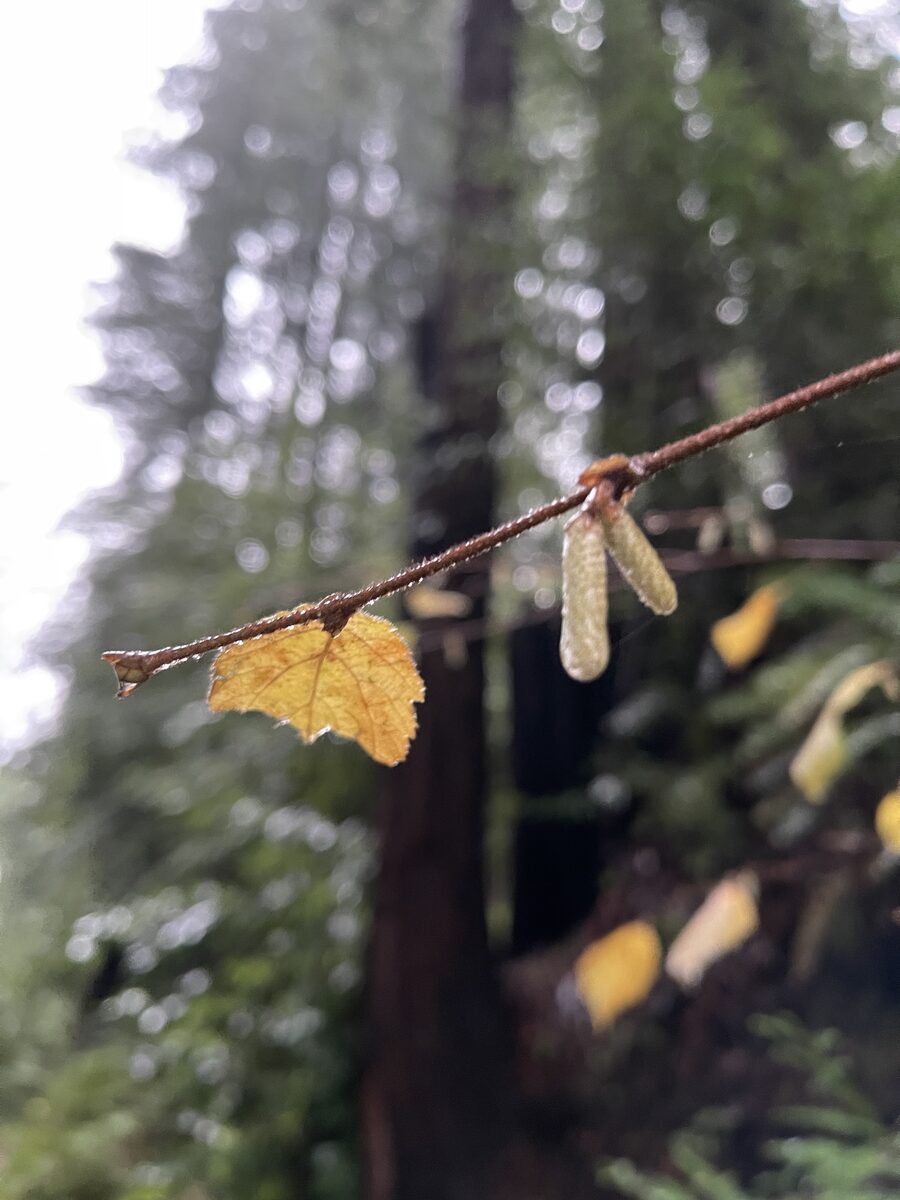
(c) ThePrairiePreacher, some rights reserved (CC BY-NC), uploaded by ThePrairiePreacher
iNaturalist· cc-by-sa
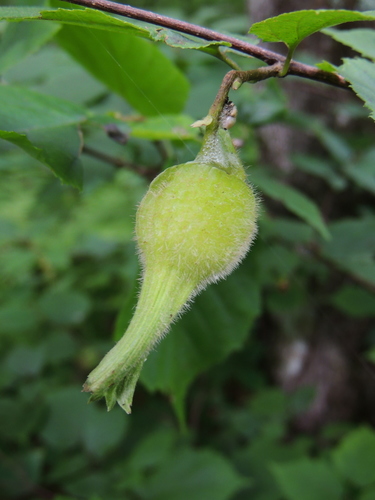
(c) Douglas Goldman, some rights reserved (CC BY-SA), uploaded by Douglas Goldman
iNaturalist· cc-by-nc-sa
(c) Tom Potterfield, some rights reserved (CC BY-NC-SA)
Summary
Source: WikipediaCarpinus caroliniana, the American hornbeam, is a small hardwood understory tree in the genus Carpinus. American hornbeam is also known as blue-beech, ironwood, musclewood and muscle beech for the distinctive sinewy, muscle-like appearance of its trunk. It is native to eastern North America, from Minnesota to southern Quebec, east to Maine, and south to eastern Texas and northern Florida. It occurs in shaded areas with moist soil, particularly near the banks of streams or rivers, and is often a natural understory species of the riverine and maritime forests of eastern temperate North America.
Description
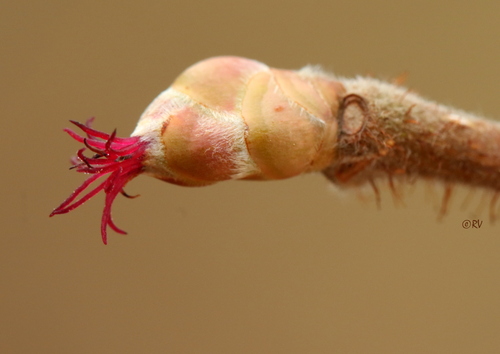
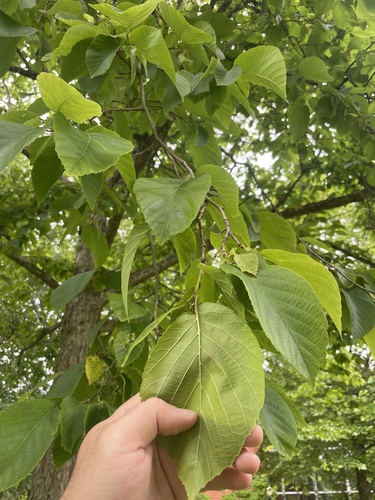
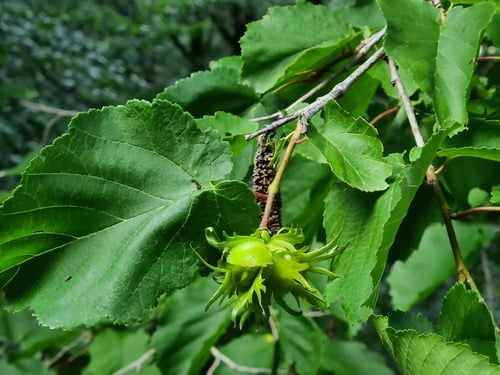
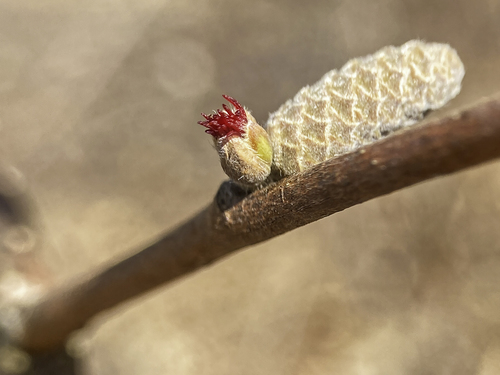
A very small deciduous tree. It grows up to 8 m tall. The trunk can be 25 cm across. The trunk is usually short and crooked. It loses its leaves during the year. The leaves are alternate and simple. They are arranged in 2 rows. They are 5-10 cm long. Leaves become larger along the shoot. They are bluish-green above and yellowish-green underneath. They turn red in autumn. The veins are straight and parallel. Each vein ends with a sharp tooth. The male and female flowers occur in separate clusters on the same tree. The fruit are a small and oval ribbed nut. It is 6-9 mm long. The fruit hang in clusters 10-15 cm long.
Edible Uses
The seed is edible when cooked, though it is considered an emergency food, used only when other options have been exhausted.
Traditional Uses
The small nut can be parched and eaten.
This uses section is brief — help expand it
Medicinal Uses
American hornbeam was used medicinally by some Native North American tribes, though it no longer features in modern herbalism. The inner bark is astringent, and an infusion has been used to treat diarrhoea and difficult urination with discharge.
Distribution
It is native to Mexico and North America. Temperate. It grows on deep, rich, moist soils. They are often in valley bottoms and along streams. They are very shade tolerant. It is found in moist forests and along streams between 1,300 to 1,800 m altitude in Central America. It suits hardiness zone 5-9. Hobart Botanical Gardens.
Where It Grows
Australia, Britain, Canada, Central America, Europe, Honduras, Mexico, North America, Tasmania, USA*,
Cultivation
Thrives in any good loam, including chalk, it does not demand much light. Prefers a deep open loam. Grows well in heavy clay soils. A slow-growing and short-lived tree in the wild, it is slower growing than C. betulinus in cultivation. Seed production is cyclic, a year of heavy yields being followed by 2 - 4 years of low yields.
Propagation
Seed is best sown in an outdoor seedbed as soon as it is ripe. Germination is usually good but may take 18 months. Seed collected while still green — after ripening but before fully drying on the plant — and sown immediately should germinate the following spring. Grow plants on in the seedbed for two years before transplanting to permanent positions in winter. Average seed viability is around 65%. Stored seed should be pre-treated with 4 weeks of warm stratification followed by 12 weeks of cold stratification, then sown in a cold frame. Prick seedlings into individual pots and grow on in a cold frame until at least 15cm tall before planting out.
Other Uses
The wood is heavy, close-grained, very hard, strong, but not particularly durable in the ground, weighing 45 lb per cubic foot. The trees are too small for commercial exploitation, but the high-quality timber is used locally for flooring, cogs, tool handles, and golf clubs. It is especially well suited for making levers and also serves as good fuel.
Notes
There are about 35-40 Carpinus species.
Synonyms
Also Known As
Blue Beech, Ironwood, Musclewood
References (16)
- Bodkin, F., 1991, Encyclopedia Botanica. Cornstalk publishing, p 216
- Brickell, C. (Ed.), 1999, The Royal Horticultural Society A-Z Encyclopedia of Garden Plants. Convent Garden Books. p 233
- Coombes, A.J., 2000, Trees. Dorling Kindersley Handbooks. p 126
- Cundall, P., (ed.), 2004, Gardening Australia: flora: the gardener's bible. ABC Books. p 332
- Duke, J.A., 1992, Handbook of Edible Weeds. CRC Press. p 60
Show all 16 references Hide references
- Etherington, K., & Imwold, D., (Eds), 2001, Botanica's Trees & Shrubs. The illustrated A-Z of over 8500 trees and shrubs. Random House, Australia. p 183
- Farrar, J.L., 1995, Trees of the Northern United States and Canada. Iowa State University press/Ames p 306
- Fl. carol. 236. 1788
- Kermath, B. M., et al, 2014, Food Plants in the Americas: A survey of the domesticated, cultivated and wild plants used for Human food in North, Central and South America and the Caribbean. On line draft. p 186
- Krochmal, A. & Krochmal, C., 1982, Uncultivated Nuts of The United States. United States Department of Agriculture Forest Service. p 4
- Little, E.L., 1980, National Audubon Society Field Guide to North American Trees. Alfred A. Knopf. p 372
- Lord, E.E., & Willis, J.H., 1999, Shrubs and Trees for Australian gardens. Lothian. p 49
- Martin, F. W., et al, 1987, Perennial Edible Fruits of the Tropics. USDA Handbook 642 p 83
- Plants for a Future database, The Field, Penpol, Lostwithiel, Cornwall, PL22 0NG, UK. http://www.scs.leeds.ac.uk/pfaf/
- Ryan, S., 2008, Dicksonia. Rare Plants Manual. Hyland House. p 13
- Smith, N., Mori, S.A., et al, 2004, Flowering Plants of the Neotropics. Princeton. p 50