Betula alnoides
Buchanan-Hamilton ex D. Don,
Indian birch
iNaturalist· cc-by-nc-sa
(c) Tony Rodd, some rights reserved (CC BY-NC-SA)
iNaturalist· cc-by-nc
(c) Rajendra Koranga, some rights reserved (CC BY-NC)
iNaturalist· cc-by-nc
(c) Rajendra Koranga, some rights reserved (CC BY-NC)
Summary
Source: WikipediaBetula alnoides (Chinese: 西桦; pinyin: xi hua; Thai: กำลังเสือโคร่ง, RTGS: kamlang suea khrong, literally: "tiger power") is a species of birch that is native to countries including Bangladesh, Bhutan, Cambodia, China, India, Laos, Myanmar, Nepal, Thailand and Vietnam, at elevations of 300–2,100 m (1,000–7,000 ft) and higher in some cases (up to 2,700 m (9,000 ft)). It is the southernmost of all known birch species, whose natural range reaches approximately 12° N in Cardamom Mountains, Cambodia.
Description
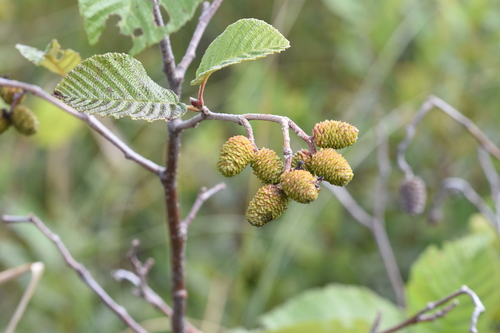
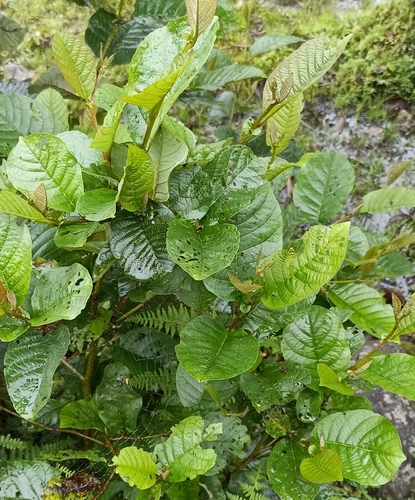
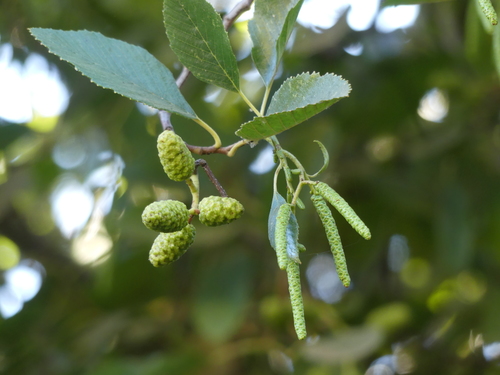
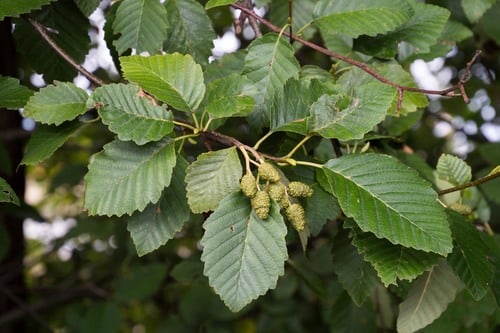
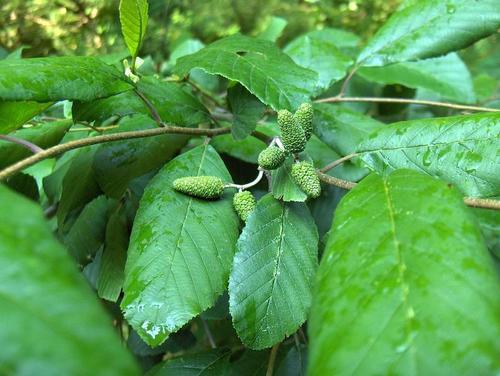
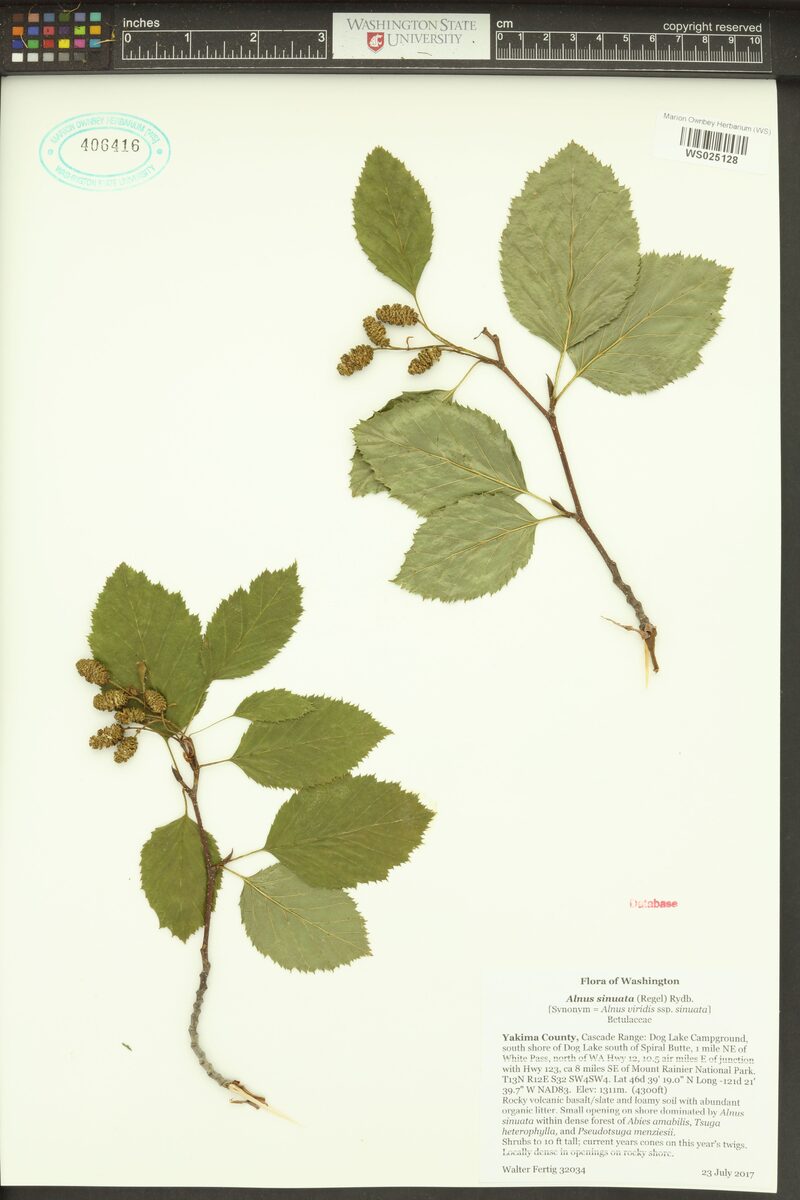
A tree up to 30 m tall. The bark is grey tinted red-brown. It peels off across the trunk in strips. The twigs are purple-red and downy when young. The leaves are 5-10 cm long. They are on red stalks. They have double teeth along the edge. The leaves taper to a fine point. The catkins are in clusters and are 8 cm long. The flowers are male and female separately. The nut is flat with 1 seed.
Edible Uses
Edible Parts: Inner bark Edible Uses: Inner bark - can be dried, then ground into a powder and added to flour for use in making bread, cakes etc. Inner bark is generally only seen as a famine food, used when other forms of starch are not available or are in short supply.
Traditional Uses
The inner bark is eaten. It is made into flour and cooked and eaten. It is also chewed as a substitute for betel nut. The young bark is added to drinking water.
Medicinal Uses
Antidote Antiseborrheic The plant has been used as an antidote in the treatment of snake bites. A decoction of the bark is used to treat dislocated bones.
Distribution
It grows in subtropical forests between 700–2100 m altitude in China. It suits hardiness zones 8-10.
Where It Grows
Asia, Australia, Bhutan, China, Himalayas, India, Indochina, Laos, Myanmar, Nepal, Northeastern India, SE Asia, Sikkim, Slovenia, Thailand, Vietnam,
Cultivation
Succeeds in a well-drained loamy soil in a sheltered position. Grows well in heavy clay soils. Dislikes wet soils. Shade tolerant. This species is not very hardy and does not always succeed outdoors in Britain but some provenances should be hardy. Hybridizes freely with other members of this genus. Trees are notably susceptible to honey fungus.
Propagation
Seed - best sown as soon as it is ripe in a light position in a cold frame. Only just cover the seed and place the pot in a sunny position. Spring sown seed should be surface sown in a sunny position in a cold frame. If the germination is poor, raising the temperature by covering the seed with glass can help. When they are large enough to handle, prick the seedlings out into individual pots and grow them on in a cold frame for at least their first winter. Plant them out into their permanent positions in late spring or early summer, after the last expected frosts. If you have sufficient seed, it can be sown in an outdoor seedbed, either as soon as it is ripe or in the early spring - do not cover the spring sown seed. Grow the plants on in the seedbed for 2 years before planting them out into their permanent positions in the winter.
Other Uses
Paper Wood The thin layer of outer bark is used as a paper. The juice of the bark is used for decorating wood. Wood - moderately hard, close grained, strong, durable. Used for minor construction. Special Uses Dynamic accumulator
Notes
There are about 60 Betula species. They grow in cool north temperate climates. The bark is used in medicine in Nepal.
Synonyms
Also Known As
Bhujapatra, Bhujpattra, Bhurjapatra, Bu-za-bat-pin, Cang lo, Cherry-bo, Dingleen, Hlosunle, Hriang, Jelšasta breza, Ketsana, Sakai, Saur, Sons, Xi hua
References (11)
- Ambasta S.P. (Ed.), 2000, The Useful Plants of India. CSIR India. p 72
- Cundall, P., (ed.), 2004, Gardening Australia: flora: the gardener's bible. ABC Books. p 235
- Etherington, K., & Imwold, D., (Eds), 2001, Botanica's Trees & Shrubs. The illustrated A-Z of over 8500 trees and shrubs. Random House, Australia. p 128
- Li Peiqiong; Alexei K. Skvortsov, BETULACEAE, Flora of China
- Manandhar, N.P., 2002, Plants and People of Nepal. Timber Press. Portland, Oregon. p 110
Show all 11 references Hide references
- Prodr. fl. nepal. 58. 1825
- Sundriyal, M. & Sundriyal, R. C., 2004, Structure, Phenology, Fruit Yield, and Future Prospects of some Prominent Wild Edible Plant Species of the Sikkim Himalaya, India. Journal of Ethnobiology 24(1): 113-138
- Uprety, Y., et al, 2016, Traditional use and management of NTFPs in Kangchenjunga Landscape: implications for conservation and livelihoods. Journal of Ethnobiology and Ethnomedicine (2016) 12:19
- Van Sam, H. et al, 2004, Trees of Laos and Vietnam: A Field Guide to 100 Economically or Ecologically Important Species. Blumea 29 (2004) 201-349
- WATT
- Wild edible plants of Himachal Pradesh