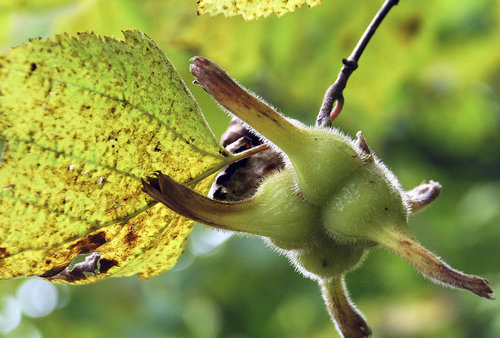
Betula alleghaniensis
Britton
Yellow birch
iNaturalist· cc-by-nc
(c) Kir Talmage, some rights reserved (CC BY-NC), uploaded by Kir Talmage
iNaturalist· cc-by-sa
(c) Douglas Goldman, some rights reserved (CC BY-SA), uploaded by Douglas Goldman
iNaturalist· cc-by-nc
(c) Kendall Lively, some rights reserved (CC BY-NC), uploaded by Kendall Lively
Summary
Source: WikipediaBetula alleghaniensis, the yellow birch, golden birch, or swamp birch, is a large tree and an important lumber species of birch native to northeastern North America. Its vernacular names refer to the golden color of the tree's bark. In the past its scientific name was Betula lutea, the yellow birch. Betula alleghaniensis is the provincial tree of Quebec, where it is commonly called merisier, a name which in France is used for the wild cherry.
Description
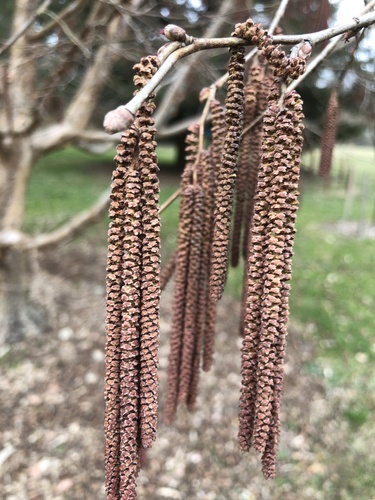
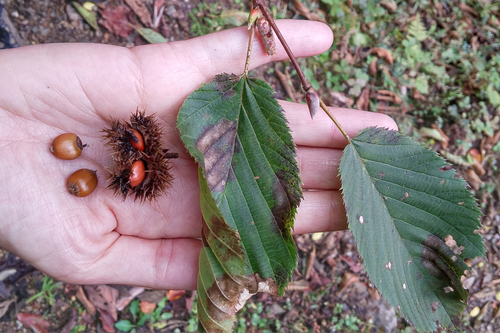
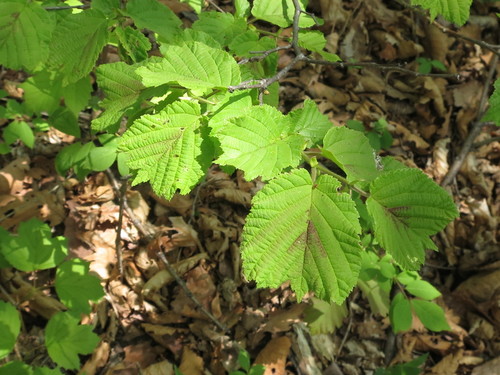
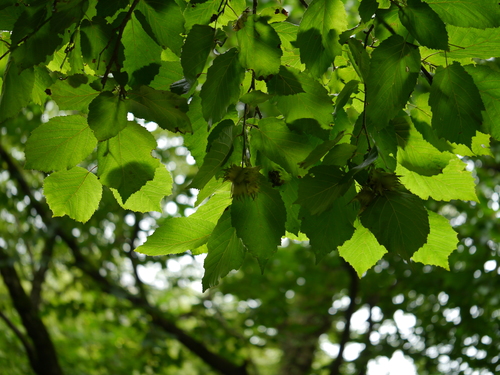
A medium sized tree. It grows 25 m tall. The trunk is 60 cm across. The bark is yellow-brown and peels off across the trunk. The leaves are oval and 8-11 cm long. The tip is slender and sharp. There are indents or teeth along the edge. They are yellowish green above and lighter underneath. The male or pollen flowers are in catkins 10 cm long and droop. The female or seed catkins are 1.5-2 cm long and erect. The fruit occur in cone-like catkins.
Edible Uses
Edible Parts: Inner bark Sap Edible Uses: Condiment Sweetener Tea Inner bark - cooked or dried and ground into a powder and used with cereals in making bread. Inner bark is generally only seen as a famine food, used when other forms of starch are not available or are in short supply. Sap - raw or cooked. A sweet flavour. The sap is harvested in early spring, before the leaves unfurl, by tapping the trunk. It flows abundantly, but the sugar content is much lower than maple sap. A pleasant drink, it can also be concentrated into a syrup or fermented into a beer. An old English recipe for the beer is as follows:- "To every Gallon of Birch-water put a quart of Honey, well stirr'd together; then boil it almost an hour with a few Cloves, and a little Limon-peel, keeping it well scumm'd. When it is sufficiently boil'd, and become cold, add to it three or four Spoonfuls of good Ale to make it work...and when the Test begins to settle, bottle it up . . . it is gentle, and very harmless in operation within the body, and exceedingly sharpens the Appetite, being drunk ante pastum.". A tea is made from the twigs and leaves. The dried leaves are used according to another report. An excellent flavour. The twigs and leaves have the flavour of wintergreen and can be used as condiments.
Traditional Uses
The sweet sap can be used for a drink. It can also be boiled down to syrup. The dried leaves are used as a substitute for tea. The leaves and twigs with the flavour of wintergreen are used as a condiment.
Medicinal Uses
Antiseborrheic Cathartic Emetic Yellow birch is little used medicinally, though a decoction of the bark has been used by the native North American Indians as a blood purifier, acting to cleanse the body by its emetic and cathartic properties. The bark is a source of 'Oil of Wintergreen'. This does have medicinal properties, though it is mainly used as a flavouring in medicines.
Distribution
It is a temperate plant. It is native to North America. It grows in rich moist soil. It is moderately shade tolerant. It will grow in clay soils. It suits hardiness zones 4-9. Arboretum Tasmania.
Where It Grows
Australia, Canada, North America*, Slovenia, Tasmania, USA,
Cultivation
Succeeds in a well-drained loamy soil in a sheltered position. Grows well in heavy clay soils. Dislikes wet soils. Shade tolerant. A slow-growing tree, it is relatively long-lived for a birch, with specimens 200 years old recorded. Plants often grow taller than the 12 metres mentioned above. The trees are highly susceptible to forest fires, even when wet the bark is highly inflammable. The bruised foliage has a strong smell of wintergreen. Hybridizes freely with other members of this genus. Trees are notably susceptible to honey fungus.
Propagation
Seed - best sown as soon as it is ripe in a light position in a cold frame. Only just cover the seed and place the pot in a sunny position. Spring sown seed should be surface sown in a sunny position in a cold frame. If the germination is poor, raising the temperature by covering the seed with glass can help. When they are large enough to handle, prick the seedlings out into individual pots and grow them on in a cold frame for at least their first winter. Plant them out into their permanent positions in late spring or early summer, after the last expected frosts. If you have sufficient seed, it can be sown in an outdoor seedbed, either as soon as it is ripe or in the early spring - do not cover the spring sown seed. Grow the plants on in the seedbed for 2 years before planting them out into their permanent positions in the winter.
Other Uses
Containers Fuel Waterproofing Wood The bark is waterproof and has been used by native peoples as the outer skin of canoes, as roofing material on dwellings and to make containers such as buckets, baskets and dishes. Wood - close-grained, very strong, hard, heavy. The wood is too dense to float. An important source of hardwood lumber, it is used for furniture, boxes, tubs of wheels, floors etc. It is also often used as a fuel. A dynamic accumulator gathering minerals or nutrients from the soil and storing them in a more bioavailable form - used as fertilizer or to improve mulch. Special Uses Dynamic accumulator Food Forest Scented Plants
Production
It is a slow growing tree. Trees live for 150 years.
Notes
There are about 60 Betula species. They grow in cool north temperate climates. Wintergreen (methyl salicylate) is extracted from this one.
Synonyms
Also Known As
Rumena breza
References (18)
- Beckstrom-Sternberg, Stephen M., and James A. Duke. "The Foodplant Database." http://probe.nalusda.gov:8300/cgi-bin/browse/foodplantdb.(ACEDB version 4.0 - data version July 1994) (As Betula lutea)
- Bull. Torrey Bot. Club 31:166. 1904
- Coombes, A.J., 2000, Trees. Dorling Kindersley Handbooks. p 119
- Cundall, P., (ed.), 2004, Gardening Australia: flora: the gardener's bible. ABC Books. p 235
- Duke, J.A., 1992, Handbook of Edible Weeds. CRC Press. p 48 (As Betula lutea)
Show all 18 references Hide references
- Elias, T.S. & Dykeman P.A., 1990, Edible Wild Plants. A North American Field guide. Sterling, New York p 122, 254
- Esperanca, M. J., 1988. Surviving in the wild. A glance at the wild plants and their uses. Vol. 2. p 360
- Etherington, K., & Imwold, D., (Eds), 2001, Botanica's Trees & Shrubs. The illustrated A-Z of over 8500 trees and shrubs. Random House, Australia. p 128
- Facciola, S., 1998, Cornucopia 2: a Source Book of Edible Plants. Kampong Publications, p 49
- Farrar, J.L., 1995, Trees of the Northern United States and Canada. Iowa State University press/Ames p 294
- Grandtner, M. M., 2008, World Dictionary of Trees. Wood and Forest Science Department. Laval University, Quebec, Qc Canada. (Internet database http://www.WDT.QC.ca)
- Hibbert, M., 2002, The Aussie Plant Finder 2002, Florilegium. p 43(As Betula lutea)
- Jackes, D. A., Edible Forest Gardens
- Little, E.L., 1980, National Audubon Society Field Guide to North American Trees. Alfred A. Knopf. p 364
- Lord, E.E., & Willis, J.H., 1999, Shrubs and Trees for Australian gardens. Lothian. p 48 (As Betula lutea)
- MacKinnon, A., et al, 2009, Edible & Medicinal Plants of Canada. Lone Pine. p 53
- Toupal, R. S. & Hollenback, K., 2009, An Ethnobotany of Indiana Dunes National Lakeshore: Plant Uses of the Ojibwa People. Bureau of Applied Research in Anthropology. University of Arizona (As Betula lutea)
- Tozer, F., 2007, The Uses of Wild Plants. Green Man Publishing. p 47