Solanum schumannianum
Dammer
iNaturalist· cc-by-nc
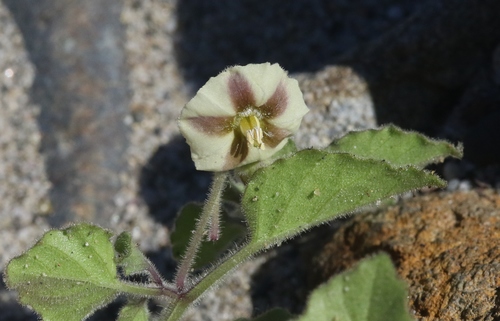
(c) Nicholas Wightman, some rights reserved (CC BY-NC), uploaded by Nicholas Wightman
iNaturalist· cc-by-nc
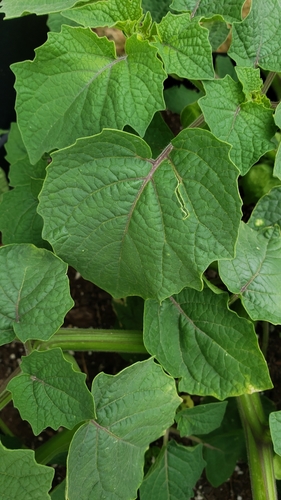
(c) Nicholas Wightman, some rights reserved (CC BY-NC), uploaded by Nicholas Wightman
iNaturalist· cc-by-nc
(c) Nicholas Wightman, some rights reserved (CC BY-NC), uploaded by Nicholas Wightman
Description
An erect herb or shrub. It grows 3.5 m high. The branches have dense bristles. The leaves are simple and arranged in spirals. They are 6-25 cm long by 2-8 cm wide. The base is wedge shaped and they taper to the tip. The flowers are in groups near the ends of the branches. The fruit are round berries. They are 6-8 mm across. They turn yellow then red as they ripen.
Edible Uses
The fruit are eaten cooked or raw, and can be dried and pounded into powder for storage. The fruit are also pounded and mixed with onion and lemon juice to create a vinegar substitute.
Traditional Uses
The fruit are cooked and eaten as a vegetable. They are also eaten raw. The fruit can be dried and pounded and stored as powder for later use. The fruit are pounded and mixed with onion and lemon juice and used as a substitute for vinegar.
Medicinal Uses
The fruits are pounded, boiled and the decoction used as a remedy for constipation and intestinal worms.
Known Hazards
Although providing many well-known foods for people, including the potato, tomato, pepper and aubergine, most species in this genus also contain toxic alkaloids. Whilst these alkaloids can make the plant useful in treaing a range of medical conditions, they can also cause problems such as nausea, vomiting, salivation, drowsiness, abdominal pain, diarrhoea, weakness and respiratory depression. Unless there are specific entries with information on edible uses, it would be unwise to ingest any part of this plant.
Distribution
It is a tropical plant. It grows in the mountains of Kenya and Tanzania. It grows between 1,300-2,700 m above sea level.
Where It Grows
Africa, East Africa, Kenya, Tanzania,
Propagation
Seed - sow in trays in a nursery. Prick out the seedlings into individual pots when they are large enough to handle and grow them on fast. Plant them out when 10cm or more tall. Cuttings of half-ripe wood. Very easy, the cuttings root within a couple of weeks.
Other Uses
The plant is grown as a hedge and used as a boundary marker.
Production
Fruit are collected during the rainy season. Dried fruit can be pounded and stored.
Other Information
Fruit are offered in markets. It is occasionally cultivated.
Also Known As
Mndujwi, Mtula, Mtunguja, Njujui, Omutura
References (4)
- Grubben, G. J. H. and Denton, O. A. (eds), 2004, Plant Resources of Tropical Africa 2. Vegetables. PROTA, Wageningen, Netherlands. p 498
- Ruffo, C. K., Birnie, A. & Tengnas, B., 2002, Edible Wild Plants of Tanzania. RELMA p 612
- Samuels, J., 2015, Biodiversity of Food Species of the Solanaceae Family: A Preliminary Taxonomic Inventory of Subfamily Solanoideae. Resources 2015, 4. 277-322
- World Checklist of Useful Plant Species 2020. Royal Botanic Gardens, Kew