Solanum vestissimum
Dunal
Toranja, Tumo
iNaturalist· cc-by-nc
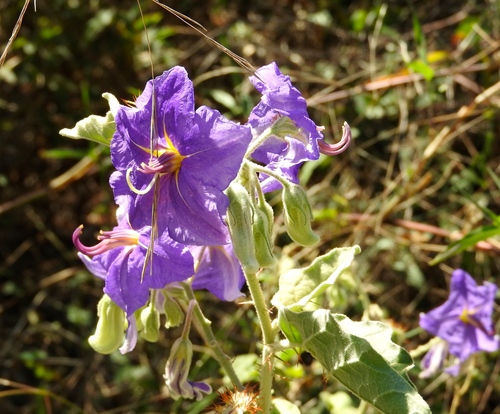
(c) Diego Amaya, some rights reserved (CC BY-NC), uploaded by Diego Amaya
iNaturalist· cc-by
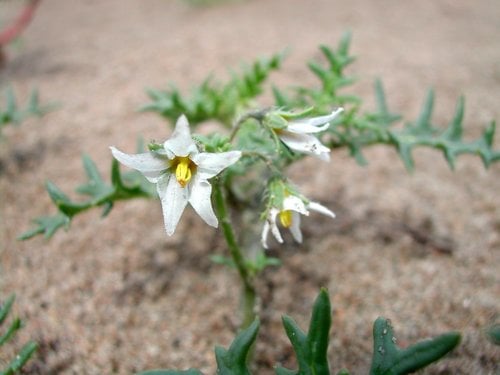
(c) Nicolás Baresch Uribe, some rights reserved (CC BY), uploaded by Nicolás Baresch Uribe
iNaturalist· cc-by-nc
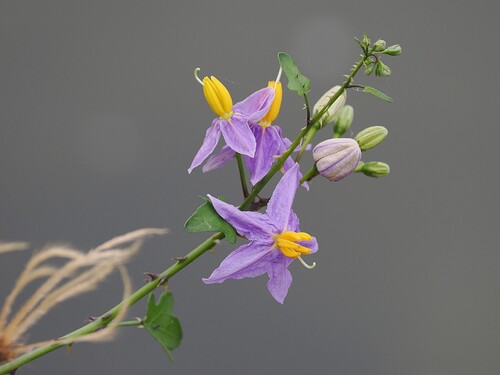
(c) Apipa, some rights reserved (CC BY-NC), uploaded by Apipa
Summary
Source: WikipediaSolanum vestissimum is a subtropical perennial plant from northwestern South America. Also known within its native range as toronjo, tumo, or coquina melón, S. vestissimum is a large semi-woody plant or shrub, up to 8 meters in height, though usually much smaller. The very large heart-shaped leaves are lined with spines along the top and bottom of the dorsal vein, similar to the naranjilla or pseudolulo. The leaves and stems of the plant are otherwise covered in short, felt-like hairs. Native to temperate, cloud forest zones of Colombia and Venezuela, the toronjo bears edible fruit, but is rarely cultivated. Instead, the plant proliferates as a weedy species at medium-altitude locations in its native countries. Like the naranjilla, the toronjo prefers shaded or semi-shaded growing environments. The fruit is a large berry, green when unripe, ripening to yellow or yellow-orange, about the size of a small tomato or a large tomatillo. The orange flesh is filled with an abundance of small seeds. The strong, sweet-tart flavor is regarded as excellent, and worthy of further agricultural investigation, but the fruit is also covered with sharp bristles which persist upon full ripening, and which can be irritating to the skin Unharvested fruit will often swell and burst, releasing seeds. Some botanists consider the toronjo to be worthy of investigation as an agricultural fruit plant, though a significant amount of breeding and selection for less bristly fruits would be needed.
Description
A shrub or small tree. It has one stem. It grows 3-5 m tall. Stems and leaves have short hairs. The leaves are large and heart shaped. They have spines along the main vein. The fruit are bristly. They are green when unripe and yellow or orange when ripe. They are oval or round and 5-8 cm long. They are orange. They have many small seeds. Ripe fruit that are not harvested burst open releasing the seed.
Edible Uses
Fruit - raw. The juice is used for making refreshing beverages. Although the fruits are large and the orange flesh has an excellent flavour, they are difficult to eat or use in beverages. They are armed with a dense and persistent covering of stiff, sharp bristles which break off and become lodged in the fingers when the fruits are handled. The ellipsoidal to globose, orange fruits are 50 - 75mm long and somewhat smaller in diameter.
Traditional Uses
The fruit are eaten raw. The juice of the fruit is used to make a drink.
This uses section is brief — help expand it
Medicinal Uses
A decoction of the pith of the stem is used to treat earaches.
Known Hazards
The fruits are armed with a dense and persistent covering of stiff, sharp bristles which break off and become lodged in the fingers when the fruits are handled. Although providing many well-known foods for people, including the potato, tomato, pepper and aubergine, most species in this genus also contain toxic alkaloids. Whilst these alkaloids can make the plant useful in treaing a range of medical conditions, they can also cause problems such as nausea, vomiting, salivation, drowsiness, abdominal pain, diarrhoea, weakness and respiratory depression. Unless there are specific entries with information on edible uses, it would be unwise to ingest any part of this plant.
Distribution
A tropical plant. It grows in cloud forests between 1,200-2,800 m above sea level. It is best in light shade.
Where It Grows
Andes, Colombia, South America, Venezuela,
Propagation
Seed - sow in trays in a nursery. Prick out the seedlings into individual pots when they are large enough to handle and grow them on fast. Plant them out when 10cm or more tall. Cuttings of half-ripe wood. Very easy, the cuttings root within a couple of weeks.
Synonyms
Also Known As
Lulo de la tierra fria, Toronja
References (6)
- Facciola, S., 1998, Cornucopia 2: a Source Book of Edible Plants. Kampong Publications, p 238
- Fern, K., 2012, Tropical Species Database http://theferns.info/tropical/
- Kermath, B. M., et al, 2014, Food Plants in the Americas: A survey of the domesticated, cultivated and wild plants used for Human food in North, Central and South America and the Caribbean. On line draft. p 827
- Lopez-Diago, D. & Garcia, N., 2021, Wild edible fruits of Colombia. Biota ColomBiana 22 (2) p 52
- Roa, J. A. G. & Boada, D. S. G., 2018, Fundación para el Fortalecimiento de la Fruticultura y Plantas Alimenticias no Convencionales en Colombia.
Show all 6 references Hide references
- Samuels, J., 2015, Biodiversity of Food Species of the Solanaceae Family: A Preliminary Taxonomic Inventory of Subfamily Solanoideae. Resources 2015, 4. 277-322