Pomaria burchellii
(DC.) B. B. Simpson & G. P. Lewis
iNaturalist· cc-by-nc
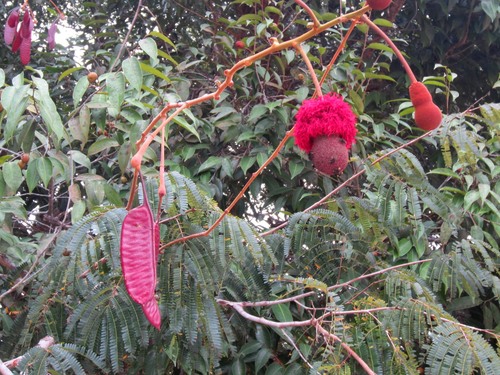
(c) tanderson, some rights reserved (CC BY-NC), uploaded by tanderson
iNaturalist· cc-by-nc
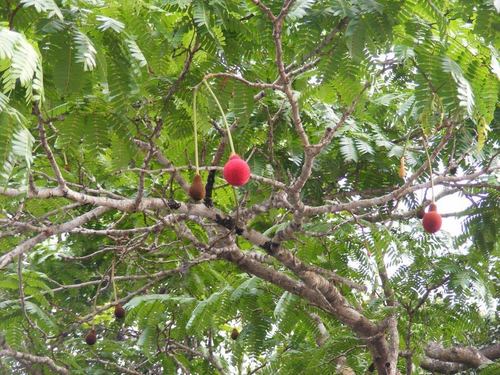
(c) Tony Benn, some rights reserved (CC BY-NC), uploaded by Tony Benn
iNaturalist· cc-by-nc-nd
(c) Christien Steyn, some rights reserved (CC BY-NC-ND), uploaded by Christien Steyn
Description
A herb or small shrub. It has a taproot but no stem. It grows 50 cm high. It keeps growing from year to year by putting up annual shoots. The roots are 20 cm long with a brown skin and white flesh. The leaves are compound with leaflets along the stalk and one at the end. The flowers are pink or red. The fruit are oblique pods. They are 2-3 cm long by 1 cm wide. There are 3-4 seeds per pod.
Edible Uses
The root tubers are eaten raw or roasted in ashes, and are also chewed particularly by children.
Traditional Uses
The root tubers are eaten raw and as a vegetable by roasting in the ashes.
This uses section is brief — help expand it
Distribution
It is a subtropical plant. It grows in hot arid places with a marked dry season. The dry season can be 6-11 months. It grows in deep sandy soils. It grows between 800-1,350 m above sea level. It can grow in arid places.
Where It Grows
Africa, Botswana, East Africa, Namibia, South Africa, Southern Africa, Zimbabwe,
Other Information
The roots are chewed especially by children.
Synonyms
Also Known As
Kwabasa
References (4)
- Royal Botanic Gardens, Kew (1999). Survey of Economic Plants for Arid and Semi-Arid Lands (SEPASAL) database. Published on the Internet; http://www.rbgkew.org.uk/ceb/sepasal/internet [Accessed 26th April 2011]
- Ruiters-Welcome, A. K., 2019, Food plants of southern Africa. Ph.D. thesis. Univ. of Johannesburg p 59
- van Wyk, Ben-Erik, 2019, The diversity and multiple uses of southern African legumes. Australian Systematic Botany, 2019, 32, 519–546
- Welcome, A. K. & Van Wyk, B.-E., 2019, An inventory and analysis of the food plants of southern Africa. South African Journal of Botany 122 (2019) 136–179