Parkia biglobosa
(Jacq.) R. Br. ex G. Don
African locust bean, Twoball Nitta-Tree
iNaturalist· cc-by
(c) TREEAID, some rights reserved (CC BY)
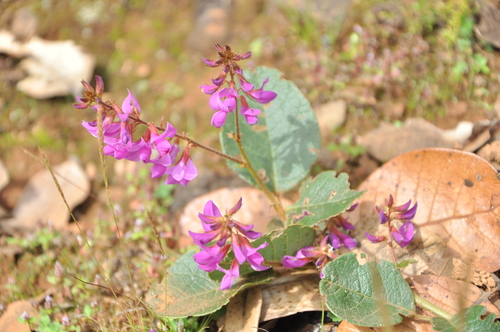
iNaturalist· cc-by-nc-sa
(c) Ahmad Fuad Morad, some rights reserved (CC BY-NC-SA)
iNaturalist· cc-by-nc
(c) Scamperdale, some rights reserved (CC BY-NC)
Summary
Source: WikipediaParkia biglobosa, the African locust bean, is a perennial deciduous tree in the family Fabaceae. It is found in a wide range of environments in Africa and is primarily grown for its pods that contain both a sweet pulp and valuable seeds. Where the tree is grown, the crushing and fermenting of these seeds constitutes an important economic activity. Various parts of the locust bean tree are used for medicinal and food purposes. As a standing tree, locust bean may have a positive effect on the yield of nearby crops, like other leguminous plants.
Description
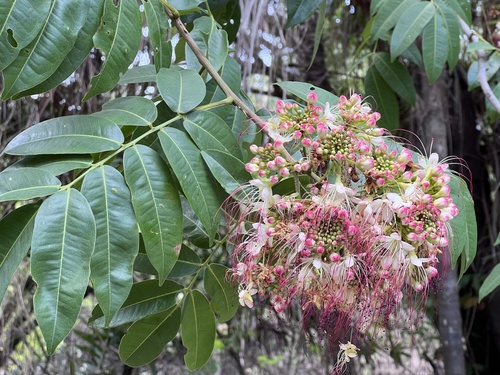
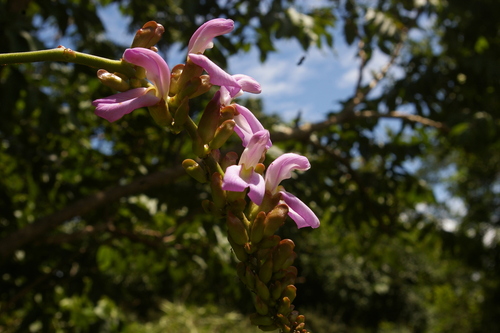
A large tree. It grows to 20 m tall. The trunk is 1 m across. The crown is spreading. The bark is scaly. The leaves are dark green and twice divided. There are 50-70 pairs of leaflets along 14-30 pairs of leaflet stalks. The flower clusters are pink or red. These are in round balls on stalks 30 cm long. The fruit are pods 50 cm long. A cluster of pods occur together. The ripe seeds develop a yellowish tinge when ripe. There is pink, dry, powdery flesh around them. The fruit are edible.
Edible Uses
The pods contain a sweet, yellow, starchy pulp surrounding the seeds, which can be eaten fresh, made into sweetmeats and drinks, or processed into a flour widely used across parts of Africa. The pulp contains up to 29% crude protein, up to 60% saccharose, is rich in vitamin C, and has a high oil content. The pink-brown to dark-brown pods are about 45cm long and 2cm wide. Seeds are fermented to make dawadawa, a black, strong-smelling, protein-rich food. Dried fermented seeds keep for more than a year in traditional earthenware pots without refrigeration and are crumbled in small amounts into soups and stews typically eaten with sorghum- or millet-based dumplings and porridges. Dawadawa is rich in protein, lipids, and vitamin B2; though deficient in methionine, cystine, and tryptophan, fermented beans are rich in lysine. Approximately 60% of the fat is unsaturated. The seeds contain antinutritional factors and must be processed before eating; boiled and fermented seeds contain 35% proteins, 29% lipids, and 16% carbohydrates, have good organoleptic properties, and a positive effect on intestinal flora. Roasted seeds can be ground into a powder and used as a coffee substitute. Young pods are sometimes roasted on embers and eaten. Leaves are edible but not commonly consumed; when eaten they are usually boiled and mixed with cereal flour or similar foods. Young flower buds can be added to mixed salads.
Traditional Uses
The seeds are normally roasted. They are then bruised and allowed to ferment in water. They are then washed and ground into powder. It can be stored for long periods. The seeds can be processed into a vegetable cheese. This is used as a spice to season sauces and soups. The flesh of the fruit is edible. A drink is also made from the flesh of the fruit. The bark is used in relishes and chutneys as a flavouring.
Medicinal Uses
The bark is used as a mouthwash, a vapour inhalant for toothache, and a treatment for ear complaints. It is macerated in baths for leprosy and used for bronchitis, pneumonia, skin infections, sores, ulcers, bilharzia, fever washes, malaria, diarrhoea, violent colic and vomiting, sterility, venereal diseases, guinea worm, oedema, rickets, and as a poison antidote. Leaves are used in lotions for sore eyes, burns, haemorrhoids, and toothache. Seeds are taken for tension, and the pulp is used for fevers, as a diuretic, and as a mild purgative. Roots are used in a lotion for sore eyes. An alcoholic extract of crude seeds showed antihypertensive activity, a contractile effect on intestinal smooth muscle, and increased uterine tonus and mobility. Ichthyotoxic and molluscicidal activities have been recorded for the seeds due to the presence of saponins. The bark, leaves, and pod husks are rich in tannins, which have general antidiarrhoeal activity. Bark extracts have demonstrated analgesic and anti-inflammatory activity. Flavonoid aglycones in the leaves have spasmolytic activity on smooth muscle as well as vasodilatory and antiseptic effects. Coumarin derivatives in leaf extracts have anticoagulant activity.
Known Hazards
The bark and pods contain substances toxic to fish - the alkaloid parkine that occurs in the pods and bark may be responsible.
Distribution
It is a tropical plant. It often grows near water. It grows in the Sahel. It grows in savannah. It grows in areas with a rainfall between 500-700 mm per year. It is best on deep loamy sands. It can grow in arid places. In Rockhampton Botanical Gardens.
Where It Grows
Africa, Antigua and Barbuda, Asia, Australia, Barbados, Benin, Burkina Faso, Cameroon, Caribbean, Central Africa, Central African Republic, CAR, Chad, Congo DR, Côte d'Ivoire, Cuba, Dominican Republic, East Africa, Gambia, Ghana, Grenada, Guinea, Guinée, Guinea-Bissau, Haiti, Indonesia, Ivory Coast, Jamaica, Malawi, Mali, Martinique, Niger, Nigeria, Puerto Rico, Sahel, Sao Tome and Principe, SE Asia, Senegal, Sierra Leone, St Lucia, St Vincent and the Grenadines, Sudan, Tanzania, Togo, Trinidad and Tobago, Uganda, Virgin Islands, West Africa, West Indies, Zambia,
Cultivation
Plants can be grown from seeds. The seeds are put into boiling water then allowed to cool to improve their germination. They can be transplanted after 10-14 weeks. Plants can be grown from root suckers. Plants can be budded.
Propagation
The hard seedcoat benefits from scarification before sowing. Pour a small amount of nearly boiling water over the seeds (taking care not to cook them) and soak in warm water for 12–24 hours until they have swollen and imbibed moisture. If they have not swollen, carefully nick the seedcoat without damaging the embryo and soak for a further 12 hours before sowing. The plant produces two seed types per pod — reddish-dark seeds with thinner coats that germinate more easily and quickly, even without scarification, and black seeds. Sow in individual deep containers as young plants quickly form a deep taproot. Around 75% of seeds can be expected to germinate. Seedlings are typically ready to plant out at 10–14 weeks. Can also be propagated by cuttings of mature wood or by grafting.
Other Uses
Pods and roots contain fibres used as sponges and as strings for musical instruments. Twigs are used to clean the teeth; the bark stains the mouth red and contains saponins that clean the teeth. A mucilage from part of the fruit is made into a fluid for hardening earth floors and giving a black glaze to pottery. Fruit pods are processed into an insecticide powder added to water and sprayed on crops. Pod husks mixed with indigo improve the lustre of dye products, and boiled pods are used to dye pottery black. Ash is applied as a mordant. Seeds and bark are a source of tannins. Wood ash is used as a source of potash in making soap and indigo dye. The wood is whitish, moderately heavy (580–640 kg/cubic m air-seasoned), relatively hard, and solid; it smells unpleasant when freshly felled but seasons without major distortion and is easily worked by hand or power tools, nailing, gluing, varnishing, and painting well. It is used as a light structural timber for vehicle bodies, agricultural implements, boxes, crates, barrels, furniture, mortars and pestles, bowls, planks, and carvings. Branches are lopped for firewood. The tree is a useful windbreak and shade tree; soils under it are improved by leaf fall, and crops such as maize, cassava, yams, sorghum, and millet are commonly grown under its canopy.
Production
Initial plant growth is slow. First fruit develop after about 8 years. Flowers are fruit develop during the dry season.
Other Information
It is an important food in West Africa. It is commonly used. It is an important fruit tree in Nigeria. It is also cultivated. Fruit tend to be available in the drier more hungry season.
Notes
Also as Mimosaceae.
Nutrition
| Part | Moisture | kJ | kcal | Protein | Vit A | Vit C | Iron | Zinc |
|---|---|---|---|---|---|---|---|---|
| Pods/Seeds | — | — | 35 | — | — | — | — | — |
| Fruit pulp | 4 | — | — | 5.3 | — | 29 | — | — |
Synonyms
Also Known As
African locust, Ahouatin, Ahwatin, Anjambane, Ayidan, Biaie, Billire, Buiai, Bu nalay, Bu niok, Canhando, Caroubier-africain, Daddawa, Daudawa, Dawadawa, Dodoli, Dondo, Donm, Dooso, 'Dorawa, Dorowa, Dours, Dowa, Dso, Duaga, Em-bando, Faroba, Farroba, Farrobe, Fernleaf Nitta-tree, Gante, Igba, Iru, Irugba, Iyere, Kalwa, Kariah, Kolgo, Mehante, Mimosa-poupre, Munuan, Muwassademu, N'andu, Nando, Narehi, Nere, Neri, Netch, Nete, Netetu, Netto, Niere, Nitta tree, Nitta-Nut, Nune, Nutta-Nut, Olele, Ogiri, Oule, Poroba, Roanga, Runo, Sikomu, Ulele, Unhando
References (87)
- Abbiw, D.K., 1990, Useful Plants of Ghana. West African uses of wild and cultivated plants. Intermediate Technology Publications and the Royal Botanic Gardens, Kew. p 48 p 42, 48 (Also as Parkia clappertonia)
- Achigan-Dako, E, et al (Eds), 2009, Catalogue of Traditional Vegetables in Benin. International Foundation for Science.
- Akintayo, E. T., 2004, Characteristics and Composition of Parkia biglobosa and Jatropha curcas oils and cakes Bioresource Technology. 92: pp. 307-309.
- Akande, F. B., Adejumo, O. A., Adamade, C. A., & Bodunde, J., 2010, Processing of locust bean fruits: Challenges and prospects, African Journal of Agricultural Research, 5(17), pp. 2268–2270
- Akinola, R., et al, 2020, A Review of Indigenous Food Crops in Africa and the Implications for more Sustainable and Healthy Food Systems. Sustainability 2020, 12, 3493;
Show all 87 references Hide references
- Alyegba, S. S. et al, 2013, Ethnobotanical Survey of Edible Wild Plants in Tiv Communities of Benue State, Nigeria. Journal of Natural Sciences Research. Vol.3, No.7
- Ambe, G., 2001, Les fruits sauvages comestibles des savanes guinéennes de Côte-d’Ivoire : état de la connaissance par une population locale, les Malinké. Biotechnol. Agron. Soc. Environ. 5(1), 43-48
- Asase, A. & Oteng-Yeboah, A. A., 2012, Plants used in Wechiau Comunity Hippotamus Sanctuary in Northwest Ghana. Ethnobotany research & Applications 10:605-618
- Assogbadjo, A. E. et al, 2013, Specific Richness and Cultural Importance of Wild Edible Trees in Benin. Acta Hort. 979, ISHS 2013
- Atato, A., et al, 2010, Diversity of Edible Wild Fruit Tree Species of Togo. Global Science Books.
- Atato, A.,et al, 2011, Edible Wild Fruit Highly Consumed during Food Shortage Period in Togo: State of Knowledge and Conservation Status. Journal of Life Sciences 5 (2011) 1046-1057
- Baa-Poku, F. & Asante, I. K., 2020, Use of Neglected and Underutilized Crop Species (NUCS) in some farming communities in the Upper Afram and Upper Dayi River Basins in Ghana. International Journal of Technology and Management Research 5 (2): 48-63
- Batawila, K., et al, 2007, Diversite et gestion des legumes de cueillete au Togo. African Journal of Food, Agriculture, Nutrition and Development 7( 3& 4): 66
- Belem, B., et al, 2007, Use of Non Wood Forest Products by local people bordering the “Parc National Kaboré Tambi”, Burkina Faso. The Journal of Transdisciplinary Environmental Studies vol. 6, no. 1 p 9
- Belem, M., et al, 2017, Strategy of Conservation and Protection of Wild Edible Plants Diversity in Burkina Faso. ANADOLU 27 (2) 2017, 82- 90
- Bernholt, H. et al, 2009, Plant species richness and diversity in urban and peri-urban gardens of Niamey, Niger. Agroforestry Systems 77:159-179
- Boedecker, J., et al, 2014, Dietary contribution of Wild Edible Plants to women’s diets in the buffer zone around the Lama forest, Benin – an underutilized potential. Food Sec. 6:833–849
- Bonou, A., et al, 2013, Valeur economique des Produits Forestiers Non Ligneux (PFNL) au Benin. Editions Universitaires Europeennes p 85
- Bremness, L., 1994, Herbs. Collins Eyewitness Handbooks. Harper Collins. p 71
- Bull. Jard. Bot. Etat 25:209. 1955 (As Parkia clappertonia)
- Burkill, I.H., 1966, A Dictionary of the Economic Products of the Malay Peninsula. Ministry of Agriculture and Cooperatives, Kuala Lumpur, Malaysia. Vol 2 (I-Z) p 1697
- Catarino, L., et al, 2016, Ecological data in support of an analysis of Guinea-Bissau's medicinal flora. Data in Brief 7 (2016):1078-1097
- Chapman, J. D. & Chapman, H. M., 2001, The Forest Flora of Taraba and Adamawa States, Nigeria. WWF & University of Canterbury. p 184
- Codjia, J. T. C., et al, 2003, Diversity and local valorisation of vegetal edible products in Benin. Cahiers Agricultures 12:1-12 (As Parkia africana)
- Danforth, R.M., & Boren, P.D., 1997, Congo Native fruits. Twenty-five of the best. Privately published. p 68 (As Parkia africana)
- Dansi, A., et al, 2012, Diversity of the Neglected and Underutilized Crop Species of Importance in Benin. The Scientific World Journal. Volume 2012, Article ID 932947, 19 pages
- Diarra, N. et al, 2016, Etude ethnobotanique des plantes alimentaires utilisées en période de soudure dans les régions Sud du Mali. Int. J. Biol. Chem. Sci. 10(1): 184-197
- Dibong, S. D., et al, 2011, Inventory and Biodiversity of species edible wild fruits sold in the markets of Douala, Cameroon. International Journal of Applied Biology and Pharmaceutical Technology. 2(3). (As Parkia clappertonia)
- Djihounouck, Y., et al, 2018, Diversité Et Importance Socio-Economique Des Espèces Fruitières Sauvages Comestibles En Zone Kasa (Sud-Ouest Du Sénégal). European Scientific Journal December 2018 edition Vol.14, No.36 ISSN: 1857 – 7881
- Djihounouck, Y., et al, 2021, Ethnobotanical Uses of Non-cultivated Edible Fruit Species in the Department of Oussouye (South Senegal). Journal of Food Research; Vol. 10, No. 4 p 20
- Facciola, S., 1998, Cornucopia 2: a Source Book of Edible Plants. Kampong Publications, p 152
- FAO, 1988, Traditional Food Plants, FAO Food and Nutrition Paper 42. FAO Rome p 388 and p 389 (As Parkia clappertonia)
- Fox, F. W. & Young, M. E. N., 1982, Food from the Veld. Delta Books. p 227
- Gallagher, D. E., 2010, Farming beyond the escarpment: Society, Environment, and Mobility in Precolonial Southeastern Burkina Faso. PhD University of Michigan.
- Gernmah, D. I., Atolagbe, M. O. and Echegwo, C. C., 2007, Nutritional Composition of the African Locust Bean fruit pulp, African Journal Online, Nigerian food Journals, 25(1), pp. 190-195.
- Gilbert, T., et al, 2017, Diversity and local transformation of indigenous edible fruits in sahelian domain of Cameroon. Journal of Animal & Plant Sciences Vol. 26 (2): 5289-5300
- Glew, R. H., et al, 1997, Amino Acid, Fatty Avid and Mineral Composition of 24 Indigenous Plants of Burkina Faso. Journal of Food Composition and Analysis 10, 205-217
- Grivetti, L. E., 1980, Agricultural development: present and potential role of edible wild plants. Part 2: Sub-Saharan Africa, Report to the Department of State Agency for International Development. p 30
- Grubben, G. J. H. and Denton, O. A. (eds), 2004, Plant Resources of Tropical Africa 2. Vegetables. PROTA, Wageningen, Netherlands. p 563
- Gueye, M., et al, 2014, Wild Fruits Traditionally Gathered by the Malinke Ethnic Group in the Edge of Niokolo Koba Park (Senegal). American Journal of Plant Sciences 5, 1306-1317
- Guinko, S. & Pasgo, L. J., Harvesting and marketing of edible products from local woody species in Zitenga, Burkina Faso. Unasylva - No. 168
- Hanawa, Y., 2013, Wild edible plants used by Guiziga people of far north region of Cameroon. Int. J. Med. Arom. Plants. Vol 3 (2) : 136-143
- Harris, F. M. A. and Mohammed, S., 2003, Relying on Nature: Wild Foods in Northern Nigeria. Ambio Vol. 32 No. 1. p 25-30
- Hedrick, U.P., 1919, (Ed.), Sturtevant's edible plants of the world. p 464 (As Parkia africana)
- Heubach, K., 2011, The socio-economic importance of non-timber forest products for rural livelihoods in West African savanna ecosystems: current status and future trends. PhD dissertation. Johann Wolfgang Goethe-Universitat. Frankfurt
- Ibrahim, H. A., et al, 2012, Ethnobotanical Survey of the Wild Edible Food Plants Consumption among Local Communities in Kano State, North-Western, Nigeria, International Journal of Science and Technology. Vol. 2. No. 10 p 715
- ILDIS Legumes of the World http:www:ildis.org/Legume/Web
- INFOODS:FAO/INFOODS Databases
- Jardin, C., 1970, List of Foods Used In Africa, FAO Nutrition Information Document Series No 2.p 22, 27, 153 and No 2.p 27, 93, 153 (As Parkia clappertonia) and (As Parkia oliveri)
- Kiple, K.F. & Ornelas, K.C., (eds), 2000, The Cambridge World History of Food. CUP p 1828
- Kiple, K.F. & Ornelas, K.C., (eds), 2000, The Cambridge World History of Food. CUP p 1714 (As Parkia africana)
- Kristensen, M and Lykke, A. M., 2003, Informant-Based Valuation of Use and Conservation Preferences of Savanna Trees in Burkina Faso. Economic Botany, Vol 57, No. 2, pp. 203-271
- Lamien-Meda, A., et al, 2008, Polyphenol Content and Antioxidant Activity of Fourteen Wild Edible Fruits from Burkina Faso. Molecules 2008,13, 581-594
- Leakey, R. R. B., 1999, Potential for novel food products from agroforestry trees: A review. Food Chemistry. 66:1-14
- Le Houerou, H. N., (Ed.), 1980, Browse in Africa. The current state of knowledge. International Livestock Centre for Africa, Ethiopia. p 163 (Also as Parkia oliveri)
- J. C. Loudon, Hort. brit. ed. 1:277. 1830 (G. Bentham, J. Bot. (Hooker) 4:328. 1841)
- Lykke, A. M., Mertz, O, and Ganaba, S., 2002, Food Consumption in Rural Burkina Faso, Ecology of Food and Nutrition, 41:119-152
- Macmillan, H.F. (Revised Barlow, H.S., et al) 1991, Tropical Planting and Gardening. Sixth edition. Malayan Nature Society. Kuala Lumpur. p 327 (Also as Parkia clappertonia)
- Martin, F. W., et al, 1987, Perennial Edible Fruits of the Tropics. USDA Handbook 642 p 35
- Maydell, H. von, 1990 Trees and shrubs of the Sahel: their characteristics and uses. Margraf. p 339
- Menninger, E.A., 1977, Edible Nuts of the World. Horticultural Books. Florida p 97
- Menninger, E.A., 1977, Edible Nuts of the World. Horticultural Books. Florida p 98 (As Parkia africana)
- Mertz, O., Lykke, A. M., and Reenberg, A., 2001, Importance and Seasonality of Vegetable Consumption and Marketing in Burkina Faso. Economic Botany, 55(2):276-289
- Moksia, F., et al, 2019, Diversity and Socio-Economic Value of Wild Edible Plants in the Mounts Mandara Region, Cameroon. International Journal of Sciences. Vol. 8:10
- MORTIMORE,
- N'Danikou, S. et al, 2010, Eliciting Local Values of Wild Edible Plants in Southern Bénin to Identify Priority Species for Conservation. Economic Botany, 20(10), 2011, pp. 1–15.
- N'Diaye, M., et al.,2003, Principle fruits of gathering consumed and marketed in Guinea. Fruits, Vol. 58: 99-116
- Nyadanu, D., et al, 2015, Agro-biodiversity and challenges of on-farm conservation: the case of plant genetic resources of neglected and underutilized crop species in Ghana. Genet. Resourc. Crop Evol. 62(7):
- Okafor, J. C., 1978, Development of Forest Tree crops for Food Supplies in Nigeria. Forest Ecology and Management 1:235-247 (As Parkia clappertonia)
- Okunlola, A. I. Adebayo, R. A. and Orimogunje, O. D., 2011, Methods of braking seed dormancy on germination and early seedling growth of African locust bean (Parkia biglobosa) (Jacq.) Benth, Journal of Horticulture and Forestry Vol. 3(1), pp. 1-5.
- Peters, C. R., O'Brien, E. M., and Drummond, R.B., 1992, Edible Wild plants of Sub-saharan Africa. Kew. p 130
- Raebild, A., et al, 2010, Advances in domestication of indigenous fruit trees in the West African Sahel. New Forests (2011) 41:297–315
- Royal Botanic Gardens, Kew (1999). Survey of Economic Plants for Arid and Semi-Arid Lands (SEPASAL) database. Published on the Internet; http://www.rbgkew.org.uk/ceb/sepasal/internet [Accessed 28th April 2011]
- Sacande, M. and Clethero, C, (2007). Parkia biglobosa (Jacq.) G. Don. Millennium Seed Bank Project Kew, Seed Leaflet No 124.
- Salako, V. K. et al, 2013, Home gardens: an assessment of their biodiversity and potential contribution to conservation of threatened species and crop wild relatives in Benin. Genet Resour Crop Evol
- Sambou, A., et al, 2016, The contribution of trees and palms to a blanced diet in three rural villages of the Fatick Province, Senegal. FORESTS, TREES AND LIVELIHOODS, 2016 VOL. 25, NO. 3, 212–225
- Segnon, A. C. & Achigan-Dako, E. G., 2014, Comparative analysis of diversity and utilization of edible plants in arid and semi-arid areas in Benin. Journal of Ethnobiology and Ethnomedicine 2014, 10:80
- Terra, G.J.A., 1973, Tropical Vegetables. Communication 54e Royal Tropical Institute, Amsterdam, p 64 Terra, G.J.A., 1973, Tropical Vegetables. Communication 54e Royal Tropical Institute, Amsterdam, p 64 (Also as Parkia clappertonia and Parkia africana)
- Tindall, H.D., & Williams, J.T., 1977, Tropical Vegetables and their Genetic Resources, International Board for Plant Genetic Resources, Rome, p 76
- Unwin, A. H., 1920, West African Forests and Forestry. Fisher Unwin Ltd. pdf on Internet p 55
- USDA, ARS, National Genetic Resources Program. Germplasm Resources Information Network - (GRIN). [Online Database] National Germplasm Resources Laboratory, Beltsville, Maryland. Available: www.ars-grin.gov/cgi-bin/npgs/html/econ.pl (10 April 2000)
- Vanderjagt, F. J., et al, 2000, The trypsin inhibitor content of 61 wild edible plant foods of Niger. Plant Foods for Human Nutrition 55: 335–346, 2000. (Also as Parkia africana)
- van Wyk, B., 2005, Food Plants of the World. An illustrated guide. Timber press. p 278
- Vivien, J., & Faure, J.J., 1996, Fruitiers Sauvages d'Afrique. Especes du Cameroun. CTA p 205 (As Parkia africana)
- Wiersema, J. H. & Leon, B., 2013, World Economic Plants. A Standard Reference CRC Press. 2nd Ed. p 496
- www.worldagroforestrycentre.org/treedb/
- Zika, A., et al, 2015, Traditional plant use in Burkina Faso (West Africa): a national-scale analysis with focus on traditional medicine. Journal of Ethnobiology and Ethnomedicine 2015, 11:9