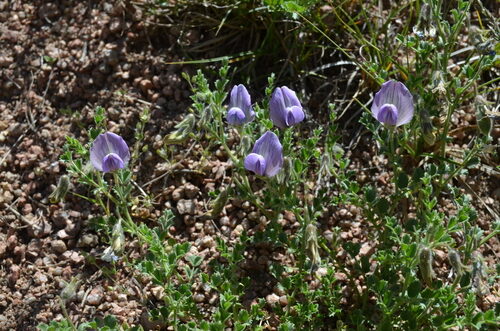
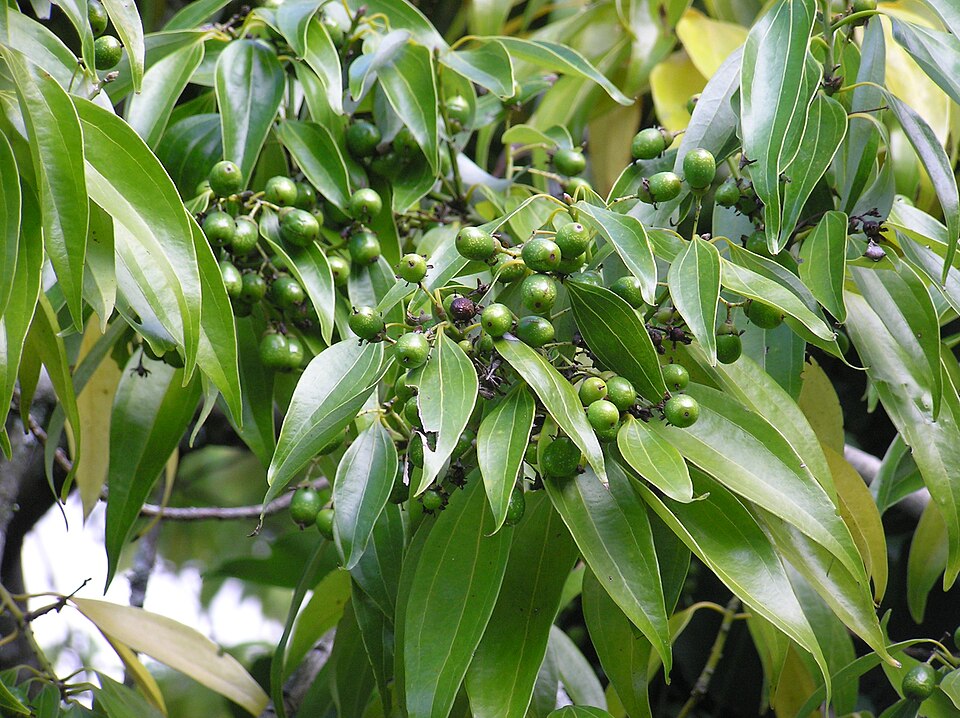
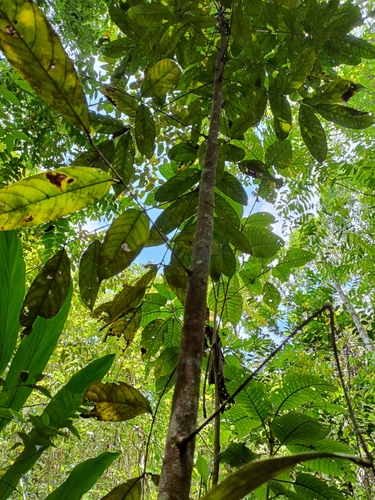
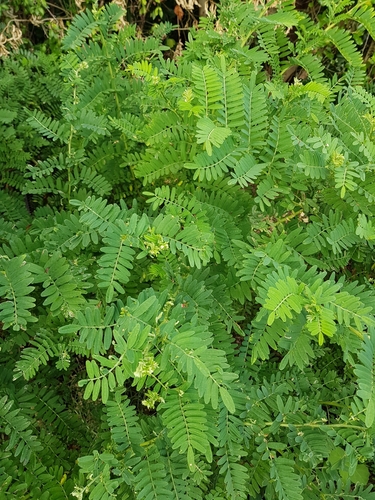
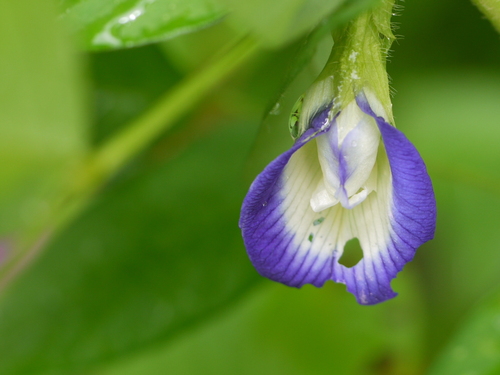
Parkia biglandulosa
Wight & Arn.
Badminton ball tree, Shuttlecock tree, African locust tree
iNaturalist· cc-by-sa
(c) Delince, some rights reserved (CC BY-SA)
iNaturalist· cc-by-sa
(c) J.M.Garg, some rights reserved (CC BY-SA)
iNaturalist· cc-by-nc
(c) Noopur🍀, some rights reserved (CC BY-NC)
Description
A large deciduous tree. It grows 25 m tall. The bark is grey-brown and slightly rough. The leaves are twice feathered. There are up to 40 pairs of side stalks and up to 100 pairs of very small crowded leaflets on each side stalk. The flowers are small and clustered in tight heads. These are 4 cm across. These are on stalks about 25 cm long. The higher flowers are bisexual and the lower flowers are male. The fruit is a long flat pod. It is on a very long stalk.
Edible Uses
The seeds are traditionally boiled and made into cakes, with a garlic-like flavor, or roasted as a coffee substitute. Sprouting seedlings and pod contents are also eaten.
Traditional Uses
The seeds are usually boiled and made into cakes. They have a garlic like flavour. The sprouting seedlings are eaten. The contents of the pods are eaten. The roasted seeds are used as a coffee substitute.
Medicinal Uses
None mentioned in available data.
Distribution
A tropical plant. It grows in mixed forests up to 1,500 m above sea level.
Where It Grows
Africa*, Asia, East Africa, India, Indonesia, Malaysia, Mozambique, Myanmar, SE Asia,
Cultivation
Plants can be grown from seeds.
Other Information
It is cultivated.
Notes
Also as Mimosaceae.
Also Known As
Chenduphul, Pohon patai gong, Sivalinga mara
References (8)
- Ambasta, S.P. (Ed.), 2000, The Useful Plants of India. CSIR India. p 430
- Ferns, Useful Tropical Plants
- Hedrick, U.P., 1919, (Ed.), Sturtevant's edible plants of the world. p 465
- Kiple, K.F. & Ornelas, K.C., (eds), 2000, The Cambridge World History of Food. CUP p 1714
- Krishen P., 2006, Trees of Delhi, A Field Guide. DK Books. p 298
Show all 8 references Hide references
- Menninger, E.A., 1977, Edible Nuts of the World. Horticultural Books. Florida p 98
- Prodr. fl. Ind. orient. 279. 1834
- Sukarya, D. G., (Ed.) 2013, 3,500 Plant Species of the Botanic Gardens of Indonesia. LIPI p 433