Parkia discolor
Spruce ex Benth.
Discolor nitta tree
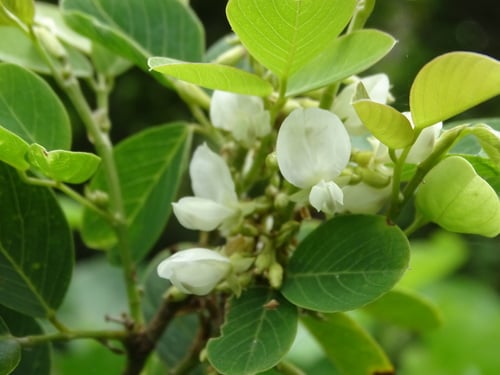
iNaturalist· cc-by-nc
(c) Floyd E. Hayes, some rights reserved (CC BY-NC)
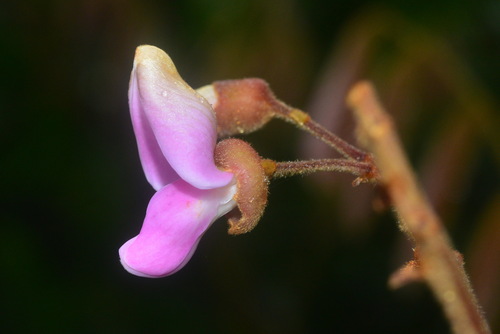
iNaturalist· cc-by-nc
(c) Floyd E. Hayes, some rights reserved (CC BY-NC)
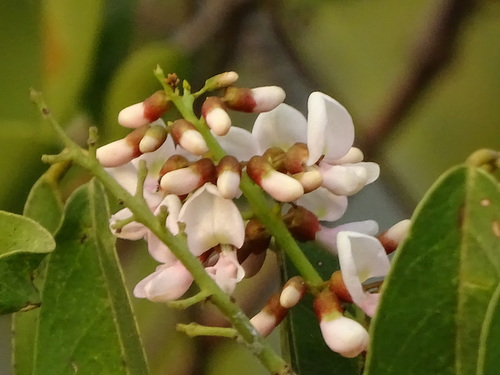
iNaturalist· cc-by-nc
(c) Silvia Alfaia, some rights reserved (CC BY-NC)
Description
A tree.
This description is brief — help expand it
Distribution
It is a tropical plant. It grows in the Amazon rainforest.
Where It Grows
Amazon, Brazil, Colombia, Peru, South America, Venezuela,
Cultivation
Grows best in a sunny position. Found in the wild on poor, white sandy soils. Tolerant of seasonal inundation of the soil. Young plants have a fast rate of growth. Although many species within the family Fabaceae have a symbiotic relationship with soil bacteria, this species is said to be devoid of such a relationship and therefore does not fix atmospheric nitrogen.
Propagation
Seed - it has a hard seedcoat and benefits from scarification before sowing in order to speed up and improve germination. This can usually be done by pouring a small amount of nearly boiling water on the seeds (being careful not to cook them!) and then soaking them for 12 - 24 hours in warm water. By this time they should have imbibed moisture and swollen - if they have not, then carefully make a nick in the seedcoat (being careful not to damage the embryo) and soak for a further 12 hours before sowing. Sow the treated seed in a partially shaded position in a nursery seedbed. A moderate germination rate can usually be expected, with the seed sprouting within 20 - 40 days.
Other Uses
The wood is coarse-textured, straight-grained, light in weight, with poor mechanical properties, durable, but susceptible to the attacks of termites. Easy to cut, it is used for veneer backing, light boxes, toys etc. A fast-growing tree tolerant of poor soils and growing well in full sun, it can be used as a pioneer plant when restoring native woodland.
Synonyms
Also Known As
Arapari, Arara-tucupi, Cacani-caritsapi, Casaba de murcielago, Cazabe de murcielago, Faviera, Gipouba, Manope, Manope-de-praia, Pira-adabi, Tankam, Visgueiro-do-igapo
References (1)
- Grandtner, M. M. & Chevrette, J., 2013, Dictionary of Trees, Volume 2: South America: Nomenclature, Taxonomy and Ecology. Academic Press p 482