Canarium pimela
K. D. Koenig
Chinese black olive
iNaturalist· cc-by-nc
(c) Crawford Law @HKCWW, some rights reserved (CC BY-NC)
iNaturalist· cc-by-nc
(c) Crawford Law @HKCWW, some rights reserved (CC BY-NC)
iNaturalist· cc-by-nc
(c) Crawford Law @HKCWW, some rights reserved (CC BY-NC)
Summary
Source: WikipediaCanarium pimela, also called Chinese black olive (Chinese: 乌榄), is a species of tree in the family Burseraceae. It is found in Indo-China; in Vietnam it is called trám đen or cà na. In Thai, it's called 'Nam Liab (หนำเลี้ยบ)'. The Catalogue of Life does not record any sub-species. Once boiled in salt water the fruit are edible, resembling the flavor of salted plums, and are used in Chinese cuisine as a seasoning.
Description
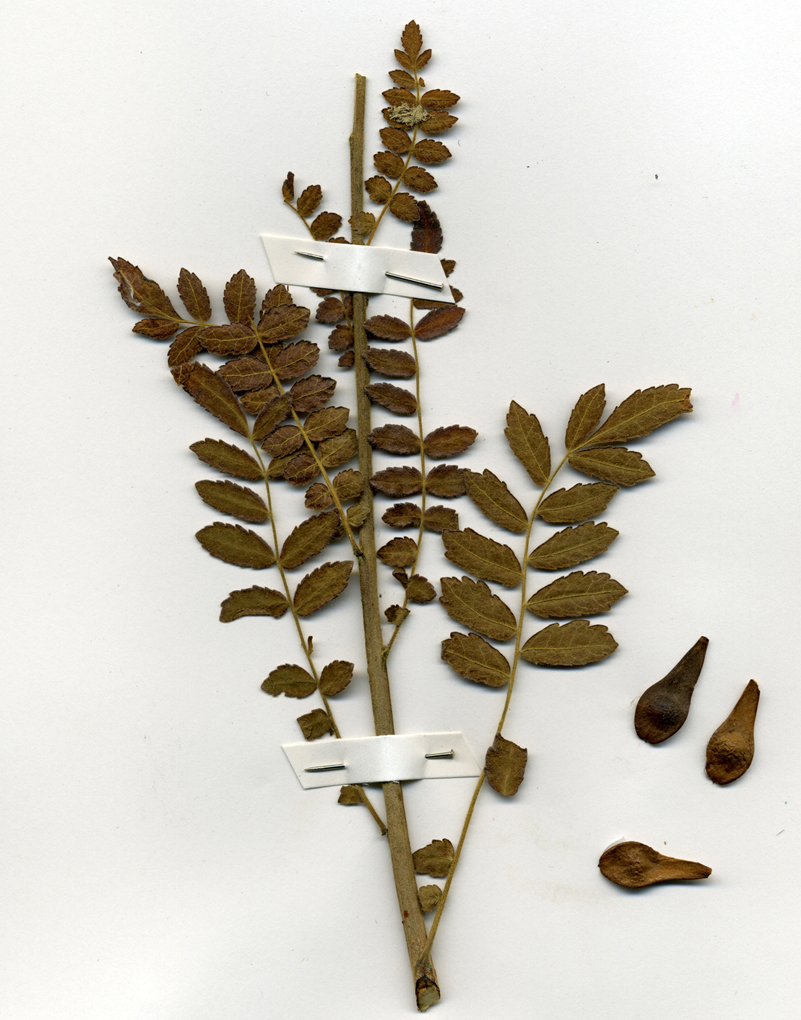
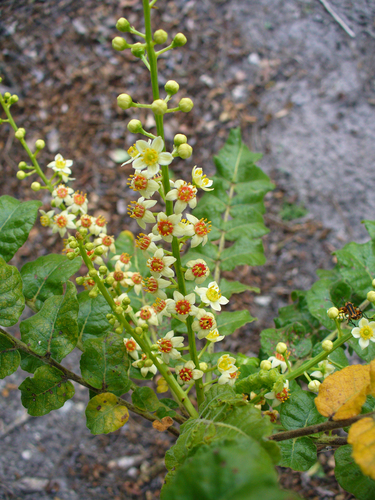
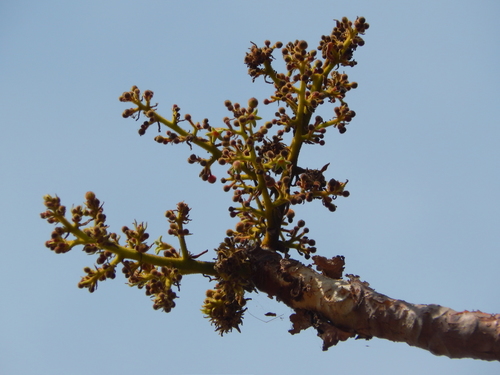
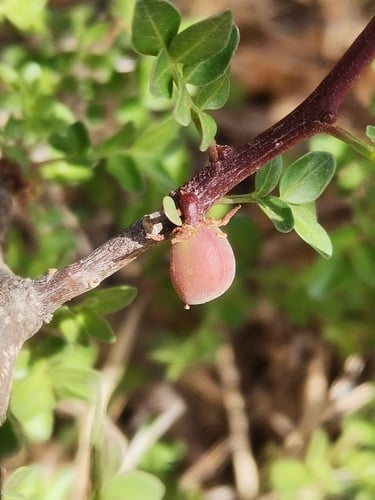
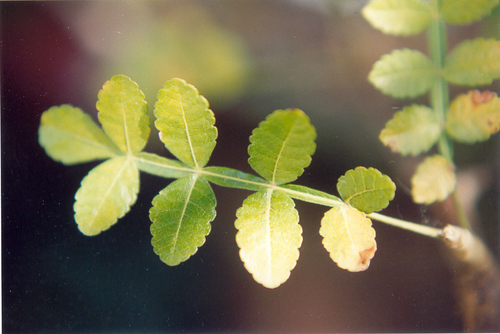
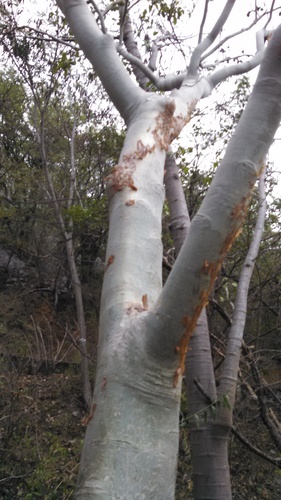
A large tree. It grows 8-15 m tall but can grow 30 m tall. The trunk is 1.5 m across. The trunk is straight and it branches high up. The bark is brown with black sap. The leaves are unequal. The leaflets are long and oval. They are 6-12 cm long by 3-6 cm wide. They are shiny above and dark coloured underneath. There are 8-10 pairs of side veins. The leaf shape of seedlings varies. The leaves have 4-6 pairs of leaflets. The flower clusters are branched. The flowering stalks are 8-35 cm long with 1-4 fruit on long stalks. The flowers are white. The fruit are narrowly oval and fleshy. They are 3-4 cm long by 1-2 cm wide. There are 3 unequal cells. The fruit are dark reddish blue to black when ripe. They contain 1 or 2 seeds.
Edible Uses
The fruit are highly esteemed and eaten fresh, crystallised, or pickled with the stone removed. The seed contains an edible oil.
Traditional Uses
The fruit are edible. Fruit are eaten fresh or crystallised. They are sometimes pickled. The stone is removed. The seed contains an edible oil.
This uses section is brief — help expand it
Medicinal Uses
The fruits and leaves are used as a treatment against diarrhoea and rheumatism. The fruit is antidote. It is used as an antidote to intoxication by alcohol or from eating poisonous fish. It is also used in the treatment of sore throat. The powdered seed is said to dissolve fish bones that have been swallowed accidentally, and also to cure earache.
Distribution
A tropical plant. It grows in dense forests. In Yunnan, China it grows between 600-1300 m altitude. They occur in northern Vietnam mostly below 500 m altitude. The tree needs plenty of light. It prefers a deep humid soil. It mostly grows on steep land.
Where It Grows
Asia, Brunei, Cambodia, China, Indochina, Indonesia, Laos, SE Asia, Vietnam,
Cultivation
Plants are grown from seeds.
Propagation
Seed - we have no specific information for this species but seeds of this genus generally have a hard seed coat and germinate erratically. Filing away some of the seed coat to allow moisture to enter more readily, without damaging the seed, will encourage a faster and more even germination.
Other Uses
A resin is obtained from the tree. It has no great value. The wood is used for sawing board, house building, and furniture.
Production
The tree is fast growing. Flowering occurs in April-May and fruiting in October-December.
Other Information
It is a cultivated food plant. The fruit are highly esteemed.
Notes
There are 80-95 Canarium species.
Synonyms
Also Known As
Bai, Blaam, Bui, Cana, Ka-na, Kanna, Si mo a si, Tram-den, Ximo
References (28)
- Altschul, S.V.R., 1973, Drugs and Foods from Little-known Plants. Notes in Harvard University Herbaria. Harvard Univ. Press. Massachusetts. no. 1977
- Ann. Bot. (Koenig & Sims) 1:361. 1805 (P. W. Leenhouts, Blumea 9:406, t. 25. 1959) an illegitimate, superfluous name (ICBN Art. 52) adopted as a nom. nov. by Leenhouts but this cannot be a new name, fide Taxon 24:461-466. 1975, as it has the same type (see ICBN Art. 6.3, Ex. 2)
- Bircher, A. G. & Bircher, W. H., 2000, Encyclopedia of Fruit Trees and Edible Flowering Plants in Egypt and the Subtropics. AUC Press. p 79 (As Canarium nigrum)
- Bot. Zhurn. (Moscow & Leningrad) 70:784. 1985 (As Canarium tramdenum)
- FAO, 1995, Edible Nuts. Non Wood Forest Products 5.
Show all 28 references Hide references
- Forest Inventory and Planning Institute, 1996, Vietnam Forest Trees. Agriculture Publishing House p 85 (As Canarium tramdenum)
- Hedrick, U.P., 1919, (Ed.), Sturtevant's edible plants of the world. p 149
- Hill, M. & Hallam, D., (eds), 1997, Na Hang Nature Reserve, Tat Ke Sector. Site description and conservation evaluation. Hanoi. p 72 (As Canarium tramdenum)
- Howes,
- Hu, 1957, (As Canarium nigrum)
- Jin, Chen et al, 1999, Ethnobotanical studies on Wild Edible Fruits in Southern Yunnan: Folk Names: Nutritional Value and Uses. Economic Botany 53(1) pp 2-14
- Luo, B., et al, 2019, Wild edible plants collected by Hani from terraced rice paddy agroecosystem in Honghe Prefecture, Yunnan, China. Journal of Ethnobiology and Ethnomedicine 15:56
- Mabberley, 1987,
- Menninger,
- Phon, P., 2000, Plants used in Cambodia. © Pauline Dy Phon, Phnom Penh, Cambodia. p 128
- Sam, H. V. et al, 2004, Trees of Laos and Vietnam: A Field Guide to 100 Economically or Ecologically Important Species. BLUMEA 49: 201-349
- Sang, D. T., & Mizoue, K. O. N., 2012, Use of Edible Forest Plants among Indigenous Ethnic Minorities in Cat Tien Biosphere Reserve, Vietnam. Asian Journal of Biodiversity Vol. 3 (1), p 23-49 (As Canarium tramdenum)
- Soepadmo, E. and Wong, K. M., 1995, Tree Flora of Sabah and Sarawak. Forestry Malaysia. Volume One. p 48
- Tanaka, p 126
- Tanaka, p 126 (As Canarium nigrum)
- USDA, ARS, National Genetic Resources Program. Germplasm Resources Information Network - (GRIN). [Online Database] National Germplasm Resources Laboratory, Beltsville, Maryland. Available: www.ars-grin.gov/cgi-bin/npgs/html/econ.pl (10 April 2000) (As Canarium tramdenum)
- Van Sam, H. et al, 2004, Trees of Laos and Vietnam: A Field Guide to 100 Economically or Ecologically Important Species. Blumea 29 (2004) 201-349
- Verheij, E. W. M. and Coronel, R.E., (Eds.), 1991, Plant Resources of South-East Asia. PROSEA No 2. Edible fruits and nuts. Pudoc Wageningen. p 322
- Walter, A. & Sam C., 2002, Fruits of Oceania. ACIAR Monograph No. 85. Canberra. p 131
- Wickens, G.E., 1995, Edible Nuts. FAO Non-wood forest products. FAO, Rome. p 112
- World Checklist of Useful Plant Species 2020. Royal Botanic Gardens, Kew
- www.ethnobiomed.com
- Zeven, A. C. & de West, J. M. J., 1982, Dictionary of cultivated plants and their regions of diversity. Wageningen. p 51