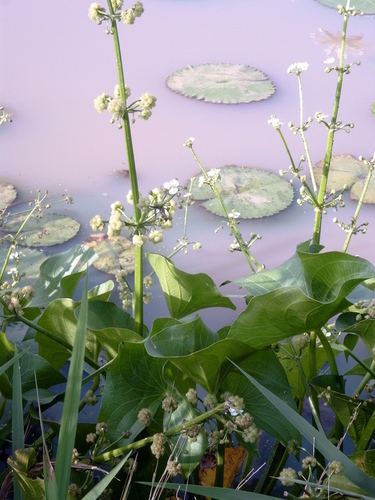
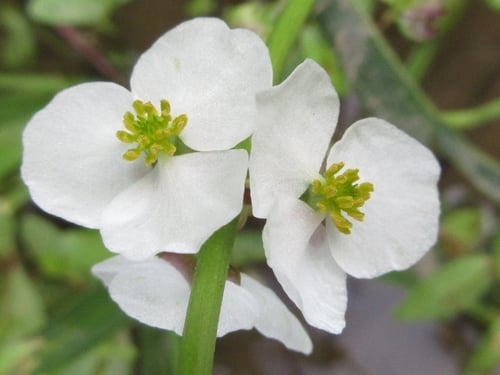
Sagittaria guayanensis
Kunth
Arrowhead, Swamp potato
iNaturalist· cc-by-nc
(c) Francisco Mendoza, some rights reserved (CC BY-NC)
iNaturalist· cc-by-nc
(c) Francisco Mendoza, some rights reserved (CC BY-NC)
iNaturalist· cc-by-nc
(c) Francisco Mendoza, some rights reserved (CC BY-NC)
Summary
Source: WikipediaSagittaria guayanensis, the Guyanese arrowhead, is a perennial aquatic plant species native to both the Old and New World. It has broadly hastate (arrow-shaped) leaves with ovate lobes. The epithet has incorrectly been spelled "guyanensis" by some authors. The type locale is not Guyana but rather in the Guayana region in what is now eastern Venezuela, regarded as part of Colombia when the specimen was collected. It is predominantly tropical, native to Mexico, Central America, the West Indies, and much of South America, as well as West Africa (from Senegal to Cameroon), south and southeast Asia (from Afghanistan to Taiwan to Indonesia), plus Sudan and Madagascar. It was unknown in the United States until a few populations were reported from Louisiana in 1969. Guyanese arrowhead were also found in the forests of Pilibhit in India.
Description
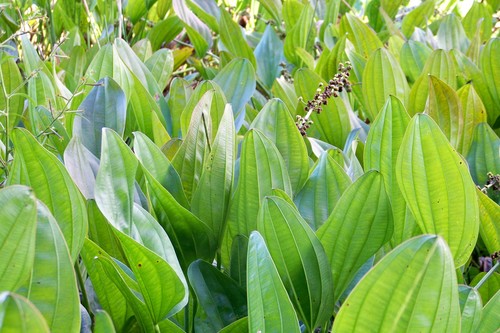
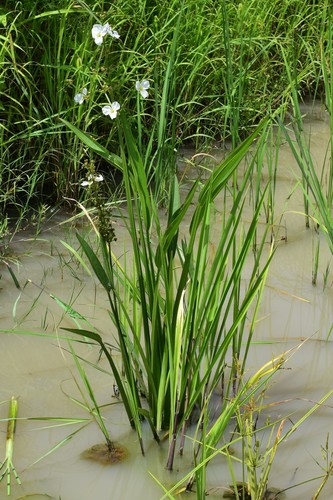
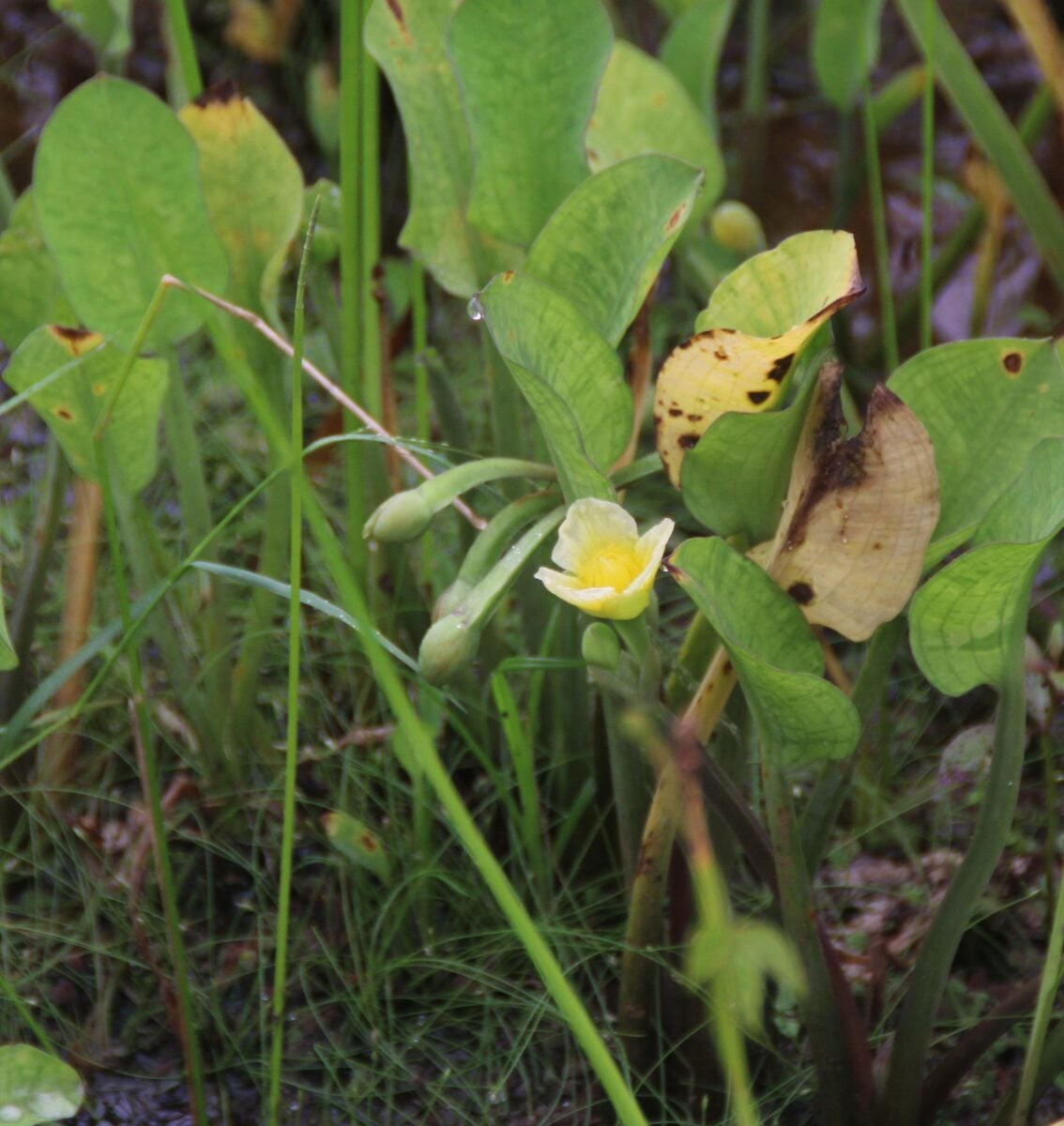
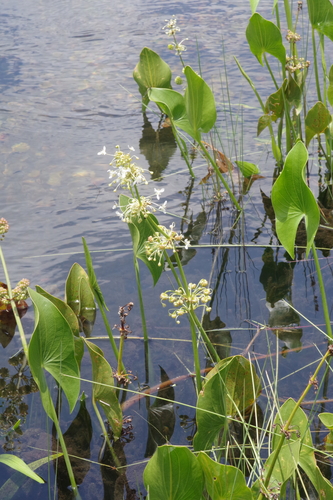
An annual herb that grows in water. It grows 50 cm tall. The leaves can float. It has a small rootstock. These corms are 2.5 cm long by 3 cm wide. The leaves are 3.5-10.5 cm long by 1.5-8.5 cm wide. The flowers are in 1-7 rings and float. There are 3 flowers in each ring.
Edible Uses
The tubers, roots, and leaves are eaten.
Distribution
It is a tropical plant. It grows in swamps and muddy pools in west Africa. In Argentina it grows from sea level to 900 m above sea level.
Where It Grows
Afghanistan, Africa, America, Argentina, Asia, Bangladesh, Bolivia, Brazil, Burkina Faso, Cambodia, Central America, Chad, China, Colombia, Costa Rica, Dominican Republic, East Africa, Ecuador, El Salvador, French Guiana, Gambia, Ghana, Guatemala, Guianas, Guinea, Guinée, Guinea-Bissau, Guyana, Himalayas, Honduras, India, Indochina, Indonesia, Ivory Coast, Jamaica, Laos, Madagascar, Malaysia, Mali, Mexico, Myanmar, Nepal, Nicaragua, Niger, Nigeria, Northeastern India, Pakistan, Panama, Paraguay, Peru, SE Asia, Senegal, South America*, Sudan, Suriname, Taiwan, Thailand, Trinidad-Tobago, Uruguay, Venezuela, Vietnam, West Africa, West Indies,
Synonyms
Also Known As
Be-chi, Kunto, Okuaba, Tame
References (6)
- Bortolotto, I. M. et al, 2018, Lista preliminar das plantas alimenticias nativas de Mato Grosso do Sul, Brasil. Iheringia, Serie Botanica, Porto Alegre, 73 (supl.):101-116 (As Lophiocarpus guayanensis)
- Burkill, H. M., 1985, The useful plants of west tropical Africa, Vol. 1. Kew.
- JSTOR Global Plants edible
- Kew Plants of the World Online
- Reis, S. V. and Lipp, F. L., 1982, New Plant Sources for Drugs and Foods from the New York Botanical Garden herbarium. Harvard. p 9 (subsp. lappula)
Show all 6 references Hide references
- World Checklist of Useful Plant Species 2020. Royal Botanic Gardens, Kew