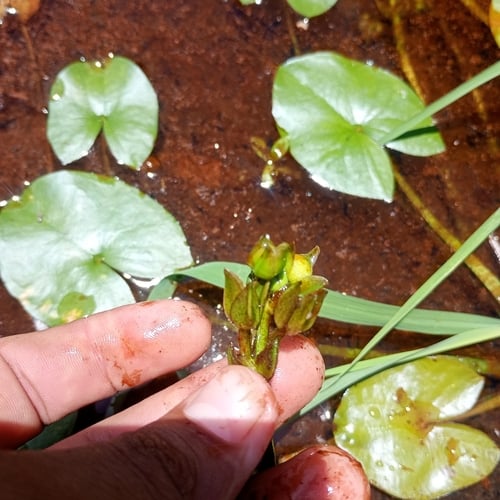
Sagittaria macrophylla
Zucc.
Acuitlacpalli, Water potato
iNaturalist· cc-by-nc
(c) Jardín Botánico Xochitla, some rights reserved (CC BY-NC), uploaded by Jardín Botánico Xochitla
iNaturalist· cc-by-nc
(c) Noé Isaac Avalos Mojica, some rights reserved (CC BY-NC)
Summary
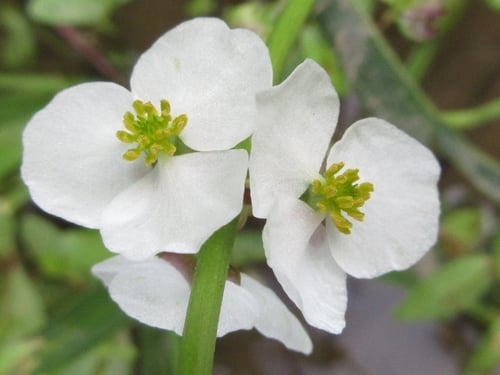
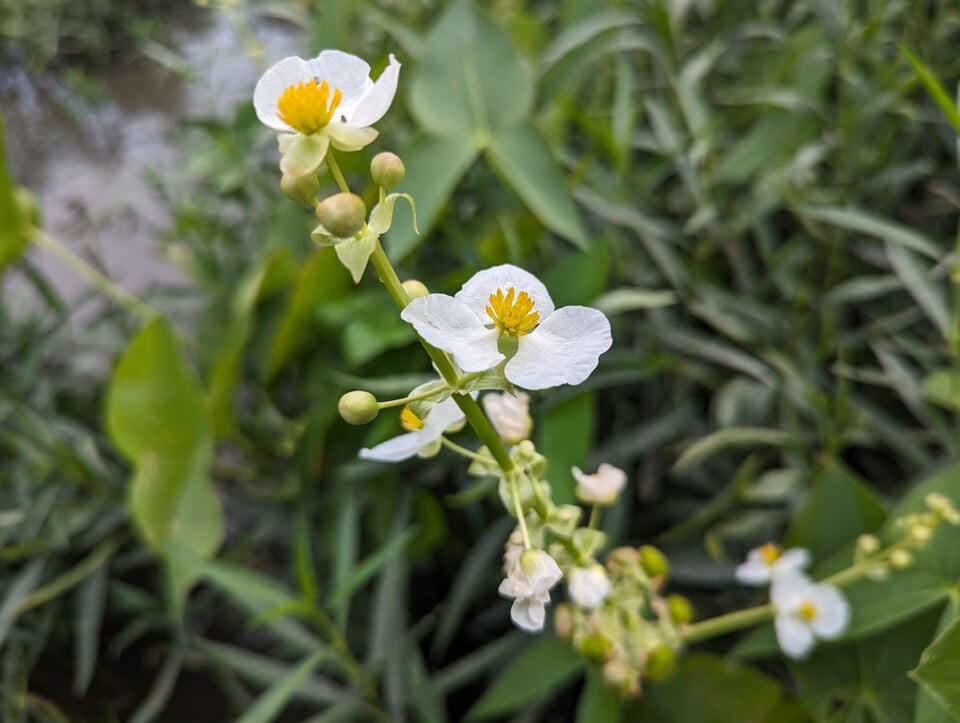
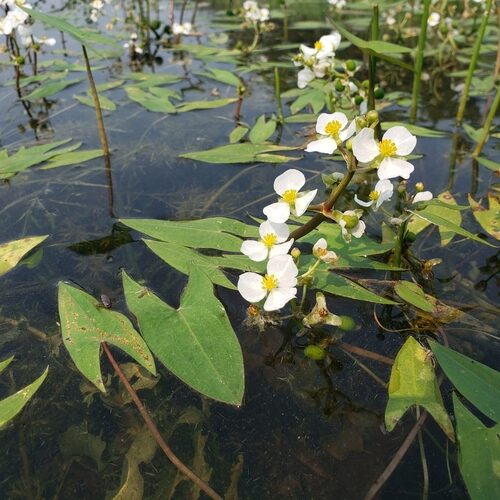
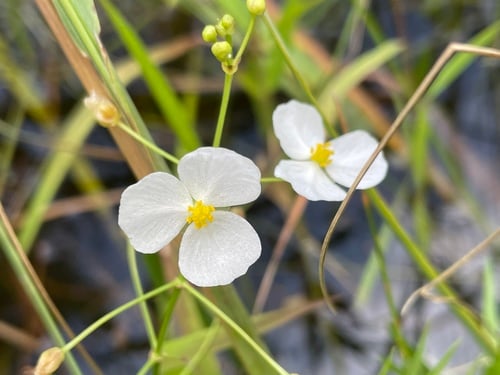
Source: WikipediaSagittaria macrophylla, common name papa de agua, is an aquatic plant species. It produces underground starchy tubers that are edible. It has large, hastate (arrow-shaped) leaves with blades up to 30 centimetres (12 inches) long. The terminal lobe is large and broadly lanceolate, while the two basal lobes are much smaller and narrower. It is endemic to central Mexico (States of Jalisco, Michoacán, México, Hidalgo, and the Distrito Federal), primarily in the region close to the nation's capital. It grows in clean, shallow, slow-moving water. It is considered threatened by habitat destruction due to urbanization. The tubers and those of other species of Sagittaria are a traditional food source in central Mexico, referred to as papa de agua ('water potato').
Description
A herb that grows in clean, shallow, slow moving water. It produces tubers. The leaves are large and arrow shaped. They are 30 cm long. The end lobe is the largest and there are 2 smaller lobes towards the base.
Edible Uses
The tubers are eaten boiled or roasted over a fire. The leaves are also edible, as are the roots.
Traditional Uses
The tubers are eaten boiled or roasted over a fire.
This uses section is brief — help expand it
Distribution
It is a tropical plant.
Where It Grows
Australia, Mexico, North America,
Other Information
It is sold in markets.
Synonyms
Also Known As
Papa de agua
References (3)
- Kermath, B. M., et al, 2014, Food Plants in the Americas: A survey of the domesticated, cultivated and wild plants used for Human food in North, Central and South America and the Caribbean. On line draft. p 774
- World Checklist of Useful Plant Species 2020. Royal Botanic Gardens, Kew
- Zepeda, C. and lot, A., 1999, Acuitlacpalli or Sagittaria macrophylla (Alismataceae): A Mexican Endemic Hydrophyte and a threatened Food Resource. Economic Botany, Vol. 53, No. 2, pp. 221-223